Winter Exterior Home Maintenance Checklist
Winter tests every weak point on a house from the outside. This ground-level checklist helps you watch for ice, frozen gutters and storm damage — safely, without ever climbing.
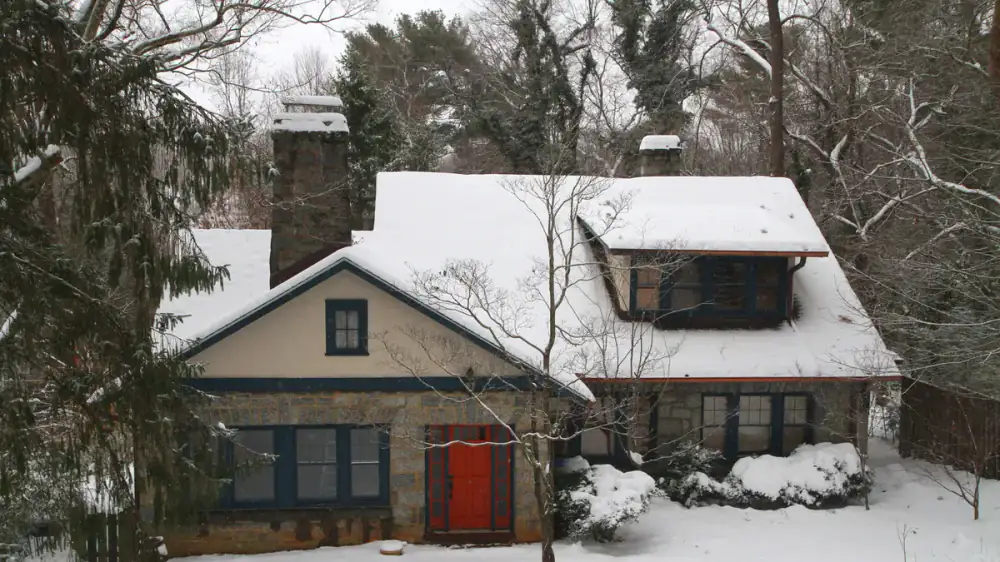
Winter exterior maintenance is almost entirely about safe observation from the ground: watch for heavy snow load, ice and icicles at the roof edge, frozen or overflowing gutters, and meltwater pooling at the foundation. Do not climb onto icy roofs or ladders — cold, slick surfaces make winter the most dangerous season for DIY exterior work. When you see heavy ice, ice dams, or loose gutters, call a professional.
Most seasonal checklists are lists of things to do. This one is mostly a list of things to notice — and one big thing not to do. Winter is when a house's weak points show themselves: water trapped in a clogged gutter freezes and expands, snow load bears down on the roof edge, and ice forms, thaws and refreezes, prying at every seam it can reach. The damage is real and worth catching early. But the conditions that cause it — cold, ice, slick surfaces — are exactly what make climbing up to deal with it so dangerous. In winter, the smartest, safest move is almost always to look rather than to climb.
So build this as a walk-around, not a work session. Every item can be checked with both feet on solid, non-icy ground, ideally with binoculars that let you read the roof edge and upper walls without getting any closer. Do it during daylight, on stable footing, and repeat it after each snowfall or storm rather than on a fixed date — winter damage happens event by event. When something clearly needs to be handled up high, the answer here is always the same: write it down and call someone equipped for it.
Reading the roofline under snow
You can learn a surprising amount about how the roof is coping just by standing back and looking at it. Note heavy or uneven snow sitting on top, especially deep drifts piled on one side where wind or roof shape has concentrated it. Watch for any sag or dip in the roofline under that weight, and look for the large ice masses that build at the roof edge and in the valleys where meltwater runs down and refreezes. Keep yourself out from under anything that could slide or fall while you're doing this.
If the snow load looks heavy or the roofline appears to be sagging, that's a signal to have it assessed — not an invitation to climb up and clear it. Roof snow removal is genuinely risky work for people with the right tools, and a snow-covered or icy roof is a serious fall hazard that also damages shingles under boots. For a closer read of the edge itself from safe ground, how to inspect the roof edge from the ground is the companion piece.
Ice in the gutters — and why you leave it there
Gutters take some of winter's hardest hits, and a clogged one does the most damage, because the trouble starts with water that couldn't drain before it froze. Look for ice filling the trough or hanging off the front lip, meltwater running behind the gutter and streaking the fascia during a thaw, and any run that has sagged or pulled away under the sheer weight of ice. Check, too, that the downspouts aren't plugged with ice at the base, which forces water to back up into the trough.
The instinct to fix all this by chipping the ice out is a natural one, and it's a mistake. Hacking at frozen gutters damages the metal, rarely clears the real blockage, and puts you on a ladder over an icy surface for no good reason. Let the ice thaw, and address the drainage that let it form in the first place — clearing debris before winter and confirming downspouts run freely is the actual prevention. For the underlying mechanics, how snow and ice damage gutters explains why ice is so hard on a system.
The hazard hanging over the walkway
Icicles look decorative, and they're easy to dismiss until you consider their weight. A large icicle is heavy and can drop without warning onto whatever — or whoever — is below it. Identify the big ones hanging from the roof edge and gutters, and keep the area beneath them clear: warn the household and keep pets off walkways that pass under heavy ice. Read rows of icicles as a symptom rather than a nuisance, too, since they often point to ice buildup and drainage problems up at the edge. And do not try to knock them down from a ladder — falling ice plus a fall risk makes that a job for a professional, not a broom handle.
Loose gutters won't survive to spring
Cold, ice and wind work gutters loose over the winter, and a run that's already compromised only gets worse under the next load. Scan each run from the ground for visible sagging, tilting or separation from the fascia, gaps that opened at seams and corners as materials contracted in the cold, and any bracket or hanger that has pulled free or left a section hanging lower than the rest. Flag anything loose for repair as soon as conditions allow. A gutter sagging in December will very likely fail under January's ice, so this isn't something to leave on the "spring" pile.
Following the meltwater
Where the melt goes decides whether the foundation stays dry. During a thaw, watch the path snowmelt and ice runoff take — it should move away from the house, not toward it. Look for water pooling or refreezing against the walls and basement windows, and confirm the downspout outlets aren't buried in snow or blocked with ice, which quietly redirects water back toward the foundation. Where you can do it safely from the ground, clear snow piled directly against the walls. After any significant storm, fold in a quick pass for new sagging or ice blockage in the gutters, lifted or missing shingles at the edge, and downed limbs against the roof; the post-storm exterior inspection checklist keeps that routine consistent.
Keeping a freeze-thaw list for warmer days
Not everything you spot in winter should be fixed in winter. Repeated freezing and thawing pries at every small gap, and the early signs are worth logging even though the repairs wait: new or widening cracks in the caulk around windows, doors and trim; fresh cracks, spalling or heaving in concrete drives, steps and walkways; and stains or dampness at the foundation and lower walls after a thaw. Keep a running list. Most freeze-thaw damage is best repaired once the weather warms, and the spring exterior maintenance checklist picks up precisely where this winter watch list leaves off.
Winter, more than any other season, is the one to hire out readily. Call a professional for roof access, snow or ice removal, heavy or persistent icicles, and ice dams at the roof edge — and also when you see loose or sagging gutters, water running behind the gutter, storm damage, or a snow load that looks like more than the roof should carry. The very conditions that make these problems dangerous to you are the reason they belong to someone with the equipment and training to handle them safely.
Your questions, answered
What can I safely check on my home's exterior in winter?
Almost everything worth checking in winter can be seen from the ground: snow load on the roof, icicles and ice along the roof edge, frozen or overflowing gutters, sagging runs, and pooling meltwater at the foundation. Binoculars help. Icy ground, slick roofs and cold make winter the worst time to climb, so keep both feet down and hand risky work to professionals.
Are icicles on my gutters dangerous?
They can be. Large icicles are heavy and can fall without warning onto people, pets or anything below, and they often signal ice buildup that adds weight to the gutter and roof edge. Keep clear of the area beneath them, don't try to knock them down from a ladder, and treat persistent, heavy ice as a sign to call a professional.
Why do my gutters freeze and overflow in winter?
Gutters freeze when standing water — often from debris or poor flow — can't drain before temperatures drop. Ice then blocks the trough, meltwater backs up, and it can run behind the gutter or refreeze at the roof edge. Clearing debris before winter and confirming downspouts drain freely is the best prevention; once ice has formed, let it thaw rather than chipping at it.
Should I remove snow from my roof?
Roof snow removal is risky work best left to professionals with the right tools, especially on a second story or steep pitch. From the ground you can note heavy, uneven snow load, sagging, or large ice masses and have them assessed. Climbing onto a snow-covered or icy roof is a serious fall hazard and can damage shingles.
What is freeze-thaw and why does it damage my home?
Freeze-thaw is the repeated cycle of water seeping into small gaps, freezing and expanding, then melting. Each cycle pries seams, cracks and joints a little wider — in gutters, caulk, masonry, concrete and around windows. Over a winter it can loosen gutters, open gaps behind trim and crack hardscape, which is why post-winter spring inspection matters.
When should I call a professional in winter?
Call a pro for anything involving roof access, snow or ice removal, heavy or persistent icicles, or ice dams forming at the roof edge. Also call when you spot loose or sagging gutters, water running behind the gutter, or storm damage. Winter conditions make DIY exterior work unusually dangerous, so err toward hiring out.

Autumn Exterior Home Maintenance Checklist
A grouped, printable fall checklist for leaves, pine needles, gutter guards, downspouts, roof edge and freeze prep — with an emphasis on safe, ground-level work.
Post-Storm Exterior Inspection Checklist
A grouped, printable checklist for post-storm home exteriors, focused on safe ground-level observation and knowing when to call a roofing professional.

Fall Gutter and Downspout Checklist
The most important gutter task of the year, as a printable checklist: clear debris, check pitch and hangers, test flow and extensions before freezing weather.