How Snow and Ice Damage Gutters
Winter is hard on gutters — freeze-thaw cycles, the sheer weight of ice, and ice dams all take a toll. Here's how the damage happens and what to check safely from the ground.
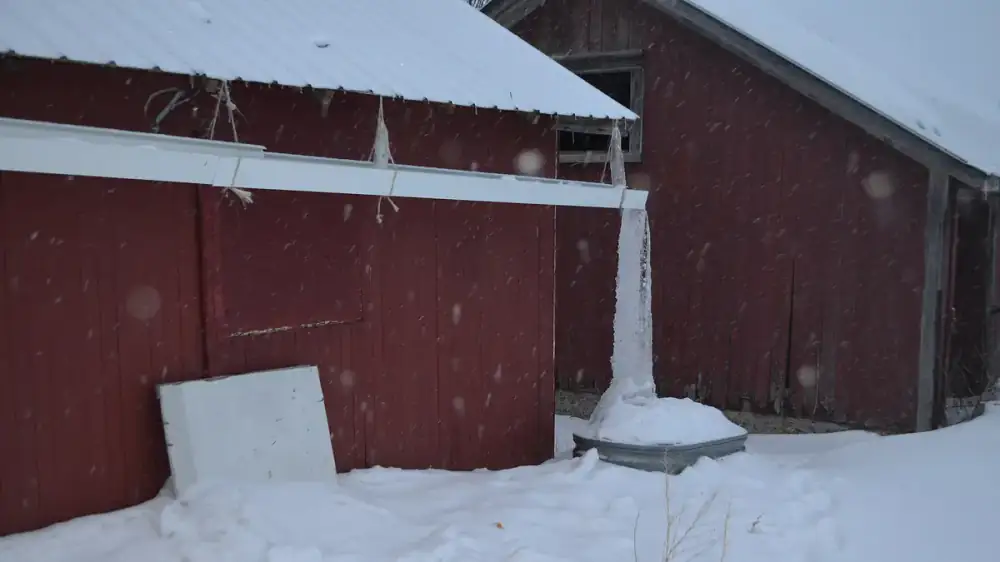
Snow and ice damage gutters in three main ways: freeze-thaw cycles that pry seams and joints apart, the sheer weight of trapped ice that bends the trough and pulls hangers loose, and ice dams that back water up under the roof edge. Gutters that go into winter full of debris fare the worst. Stick to ground-level checks, and never chip ice out of a frozen gutter.
A gutter is a channel for moving liquid water. It is not a container, and it is certainly not designed to hold a solid block of frozen water for weeks at a stretch. That mismatch is the whole story of winter gutter damage. The moment water stops draining and starts freezing, the system is being asked to do something it was never built for, and the consequences are some of the costliest a house sees in a given year.
The encouraging part is that almost all of it traces back to a handful of physical mechanisms. Understand those, and you can tell what is happening at your own roofline from the safety of the yard — and know which winter habits quietly make things worse.
The quiet damage of freezing and thawing
Water expands by roughly a tenth of its volume when it turns to ice, and it does not care what is in the way. Water sitting in a seam, a corner, or a joint pushes outward on every surface around it as it freezes. When a thaw comes, the metal eases back. The next cold night, it pushes again.
Repeat that a few dozen times across a single winter and the effect is cumulative. Fasteners work loose. Sealed seams open into hairline gaps. A joint that shed water perfectly in October begins to weep by March. None of it is dramatic on any one night — the damage is slow, mechanical fatigue driven by the same cycle over and over.
Where that cycle bites hardest is anywhere water lingers rather than drains: a low spot in a run with poor pitch, a section held back by a clog, a pocket behind a jam of leaves. That is the first reason autumn preparation matters so much. Water that drained cleanly in the fall has nothing to freeze into a wedge.
When the trough turns into a load it cannot carry
The second mechanism is simpler and more brute-force: weight. Flowing water passes through a gutter and keeps going. Frozen water stays, and it is heavy — a fully iced run, with snow packed on top, can carry hundreds of pounds it was never sized for.
Gutters and their hangers are engineered for the weight of water in transit, not for a trough packed solid edge to edge. Push past that, and predictable things happen:
- the trough bends and deforms under the sustained load;
- hangers and spikes loosen or tear straight out of the fascia;
- an entire run can sag or peel away from the roofline;
- downspouts split where the ice inside them expands with nowhere to go.
The trouble is that metal stretched or bent by ice rarely springs back true. Its pitch shifts, low spots appear, and now the next winter has an even better place to pool and freeze. One severe season quietly sets up a spring of gutter repairs.
Ice dams begin on the roof, not in the gutter
Ice dams get blamed on the gutter more than any other winter problem, and it is worth being precise, because the gutter is the victim here, not the cause.
Picture snow lying across the whole roof. Heat leaking up from the living space warms the upper part of the roof deck, so the snow there melts. That meltwater trickles down toward the eave — the roof edge above the gutter — which has no heated room beneath it and stays cold. At the cold edge, the water refreezes.
Keep that going for a few days and a ridge of ice builds along the eave and into the gutter. That ridge is the dam. Fresh meltwater arriving from above can no longer drain past it, so it pools behind the ice, and standing water at the roof edge is exactly what works its way under shingles and into ceilings and walls.
So an ice dam is really a temperature story — warm at the top of the roof, cold at the edge. The gutter is simply where the ice piles up and becomes visible.
Why a dirty gutter deepens the problem
A trough already choked with leaves cannot drain the early-season melt, so that trapped water freezes first and hands the dam a ready-made foundation to grow on. A clean gutter will not stop a dam by itself, but a clogged one reliably makes one worse. That is the practical case for the autumn pass, and our guide on how often gutters should be cleaned explains why the fall cleaning is the one to never skip — a fall gutter and downspout checklist helps you get there before the first freeze.
Where the real fix usually lives
Because the root cause is an uneven roof temperature, the durable solution tends to sit in the attic, not the gutter. Insulation slows warm household air from reaching the underside of the roof, keeping the deck colder; balanced ventilation lets outside air flow through so the deck stays near the outdoor temperature instead of forming warm patches. You do not solve this mid-winter, and it is not a gutter chore — but if dams return year after year, that pattern is telling you to have the attic assessed rather than replacing perfectly good gutters.
The hazard hanging over your head
Icicles look like a postcard and behave like a falling weight. A large one can weigh several pounds and let go without warning over a doorway, a walkway, or a driveway. A whole row of them is also a diagnosis: water is freezing at the roof edge instead of draining, which often means a dam is forming behind them.
Treat any loaded eave as a no-go zone. Do not walk or park directly beneath it, keep children clear, and resist the very human urge to knock the big ones down — that sends heavy ice toward you and can wreck the gutter on the way past.
Reading the winter damage from your yard
Nearly everything worth knowing can be seen from the ground with your feet planted. Here is what to look for and what each sign tends to mean.
| What you notice | What it points to |
|---|---|
| A run sagging or dipping under snow and ice | Overloaded hangers, trapped ice weight |
| Ice ridges building along the roof edge | A dam forming |
| Rows of heavy icicles at the eave | Water freezing instead of draining |
| Stains on interior walls or ceilings near exterior walls | Meltwater backing under the roof edge |
| A downspout still iced and silent during a thaw | A frozen or clogged downspout |
| A gutter pulling away from the fascia | Ice load loosening the fasteners |
| Icicles forming behind the gutter, against the wall | Water running behind the trough — see why water runs behind gutters |
Note what you find and act on it once conditions are safe. Interior stains deserve the fastest response, because they mean water is already inside.
Winter habits that backfire
A few well-meant reactions do more harm than the cold. Chipping ice out of a gutter with a hammer, axe, or shovel dents the trough, splits seams, and knocks hangers loose — you destroy the thing you are trying to save, on slick footing, at height. Pouring salt into a gutter corrodes the metal and finish; pouring hot water simply refreezes and can extend the dam. And climbing onto a snow-covered roof to deal with any of it puts you in one of the most dangerous spots around a house. No gutter is worth a fall.
The safe line is the same one that runs through all winter roof work: look from the ground, prepare in the fall, and hand off anything that requires height, ice removal, or getting onto a snowy roof to someone equipped for it. When ice dams keep coming back, that is a signal to have the attic's insulation and ventilation looked at rather than fighting the ice each January. After the thaw, a full post-storm exterior inspection is the smart way to catch what a hard freeze left behind — before it turns into rot, leaks, and a spring of repairs.
Questions people also ask
How does ice actually damage a gutter?
In a few ways at once. Water expands as it freezes, so trapped water in seams and joints pries them apart with each freeze-thaw cycle. Solid ice is also heavy — a gutter full of it carries far more load than it was designed for, which bends the trough, loosens hangers and pulls the whole run away from the fascia. Ice forming at the roof edge can back water up under the shingles as well.
What is an ice dam and why is it a problem?
An ice dam forms when heat escaping through the roof melts snow higher up, and that meltwater runs down and refreezes at the cold eave and gutter. The ice builds into a ridge that traps more meltwater behind it. That standing water can seep under the shingles and into the house, while the ice itself adds heavy load to the gutter. Uneven roof temperature is the root cause.
Do clogged gutters make winter damage worse?
Significantly. Gutters full of leaves and debris hold standing water instead of draining it, and that trapped water is exactly what freezes, expands and adds weight. Going into winter with clogged gutters is one of the most avoidable causes of ice damage, which is why a late-fall cleaning matters so much.
Should I chip or break the ice out of my gutters?
No. Chipping at frozen gutters with a hammer, axe or shovel almost always dents the metal, cracks seams and knocks hangers loose — you damage the gutter trying to save it. It is also dangerous work at height on slick ground. If ice is a recurring problem, address the roof warmth and drainage causes rather than attacking the ice directly, and leave removal to a professional.
How do attic insulation and ventilation affect ice dams?
They control how warm your roof deck gets. When warm household air leaks into the attic and the roof runs warm, snow melts unevenly and refreezes at the cold eave, forming ice dams. Good insulation keeps heat in the living space and balanced ventilation keeps the roof deck closer to the outside temperature, so snow melts more evenly. It is a roof-system issue, not just a gutter one.
Can falling icicles really be dangerous?
Yes. Large icicles and sheets of ice can weigh several pounds and fall without warning onto walkways, doorways and anyone below. They also signal that water is freezing at the roof edge rather than draining. Keep clear of loaded eaves, avoid parking or walking directly beneath them, and do not try to knock large icicles down yourself.
When should I call a professional about winter gutter damage?
Call one when you see sagging or detached runs, large ice dams or heavy icicles, water stains appearing inside near exterior walls, or any situation that would require getting onto a snowy roof or ladder. Ice removal and roof work in winter are hazardous and best left to professionals with the right equipment.
Related reading

How Trees Affect Gutter Maintenance
Leaves, pine needles, seed pods and shade each create a different gutter problem. Here's how tree cover reshapes your maintenance schedule.
Why Water Runs Behind Gutters
A missing drip edge, a gutter hung too low, or an overflowing clog — these three causes explain most water that ends up behind the gutter.
Signs Gutters Need Repair Instead of Cleaning
Sagging runs, leaking seams, loose hangers and standing water are repair problems, not cleaning problems. Here's how to tell them apart.