How Often Should Gutters Be Cleaned?
How often gutters need cleaning depends far more on the trees around your house than on the calendar. Here's how to set a schedule that actually fits your home.
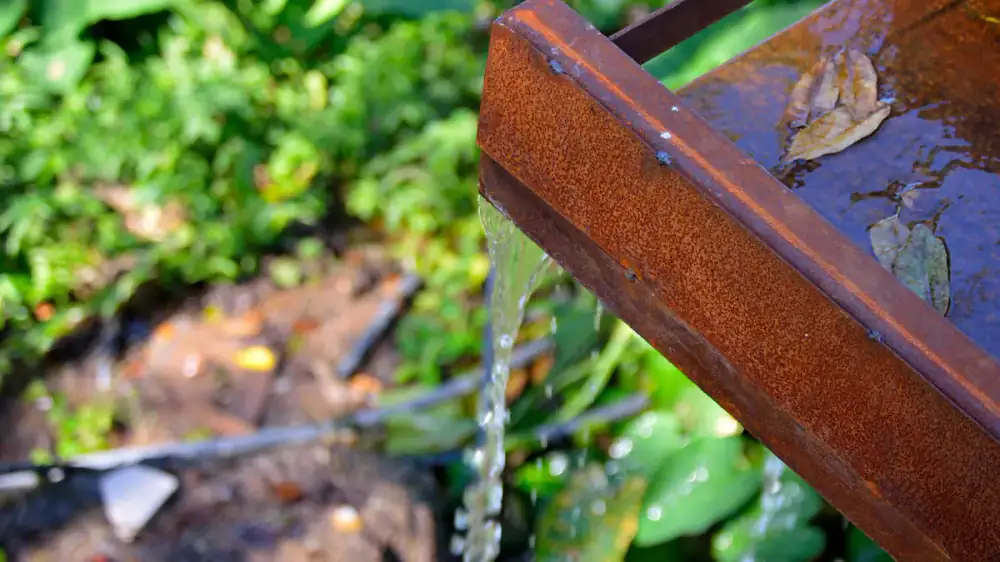
Clean most gutters at least twice a year — once in late spring and once in late fall. Homes with heavy tree cover, pine needles, or frequent storms often need three or four cleanings, while homes on open lots with little overhanging foliage may be fine with once a year. Let how the gutters behave in heavy rain, not the calendar alone, set your schedule.
A gutter has exactly one job: catch the water sheeting off your roof and route it, through the downspouts, safely past the fascia, siding, and foundation. It can only do that job while the trough is actually clear. Let leaves, seed pods, and grit build up, and the water backs up, spills over the lip, and pours down onto the precise parts of the house the gutter was installed to shield. Cleaning, in other words, isn't housekeeping — it's the thing that keeps the gutter functioning as a gutter at all.
Which is why "how often" is really a question in disguise. It isn't asking about a date on the calendar; it's asking how fast your gutters fill, and that comes down almost entirely to what's growing over your roof. Two houses on the same street can need completely different schedules. So the goal here isn't to hand you a number and send you off — it's to help you read your own house well enough to set the right interval and then adjust it by what you actually see.
Start with twice a year, then adjust
For a typical home, two cleanings a year is the sensible baseline, and the timing of each one matters as much as the count.
The late-fall cleaning, done after the leaves have finished dropping, is the most important of the year. It clears the whole season's debris before freezing weather arrives — the point at which a clogged, water-filled gutter can freeze, sag under the weight, and tear loose from the fascia. The late-spring cleaning is the lighter counterpart, clearing the seed pods, blossoms, catkins, and windblown grit that pile up over winter and into early spring.
If circumstances force you to pick just one, make it the fall. Heading into winter with packed gutters is the single most common way a routine chore turns into a genuine repair, complete with sagging runs and water damage behind the trough.
Read your house, not the calendar
Twice a year is only a starting line. What actually sets your interval is the environment your gutters live in — and a handful of factors move it far more than any date does.
Trees leaning over the roof
This is the dominant variable, full stop. A house with mature trees directly overhanging the roofline can refill its gutters within weeks of a leaf drop. If branches hang over your roof, plan on three cleanings a year or more, and always check after a big storm has stripped the canopy.
Pines and other conifers
Pine needles are their own category of problem. They're small, they shed year-round instead of in one tidy autumn burst, and they knit together into dense mats that a hose won't rinse away. Homes near pines frequently need attention every quarter, regardless of what season it is.
Roof shape and pitch
A steep roof flings water and debris off quickly, while a low-slope roof lets material settle and linger in the trough. Large roof areas funnel more runoff — and more grit shed from aging shingles — into the same length of gutter, filling it faster.
Weather and storms
Frequent heavy storms load gutters with debris and test them at the worst possible moment. In snow-and-ice country the fall cleaning carries even more weight, because it's trapped standing water that freezes, expands, and does the real damage.
Gutter guards
Guards cut down how often gutters clog, but they don't retire the chore. Fine grit, shingle granules, and pine needles still collect — often right on top of the guard — so a guarded system needs periodic checking and cleaning, just less of it.
Rather than juggle those factors in your head, use this as a rough map, then correct it by what you observe in the trough and during rain:
| Your situation | Suggested frequency |
|---|---|
| Open lot, few overhanging branches | Once a year (late fall) |
| Typical suburban lot, some deciduous trees | Twice a year (spring and fall) |
| Roof overhung by mature trees | Three to four times a year |
| Pine or other conifers nearby | Quarterly, year-round |
| Gutter guards installed | One to two checks a year, plus after big storms |
| After any major storm | Inspect regardless of schedule |
Let a rainstorm tell you it's time
The best signal that a cleaning is overdue doesn't come from a calendar reminder — it comes from watching the house in a steady rain, from the ground. Water spilling over the front edge instead of draining to the downspout is the clearest tell, and so is water running behind the gutter and streaking down the fascia or siding. A visible sag or dip in a run points to trapped weight; plants or grass sprouting in the trough mean enough soil and debris have collected to hold moisture. Watch, too, for granules and dark grit washing out of the downspout or staining below it, for peeling paint and stains on the fascia and soffits near the roof edge, and for water pooling at the base of a downspout or against the foundation. Any of these is reason to move the next cleaning up rather than wait for the scheduled date.
The habits that quietly cost people money
A few common missteps turn an easy task into an expensive one. The most basic is treating cleaning as a fixed calendar chore — the right interval is set by your trees and roof, not by a date, and clinging to "twice a year" on a lot full of pines guarantees you'll fall behind. Skipping the fall cleaning is the costliest single mistake, since going into winter with full gutters is exactly what converts maintenance into repair. Relying on the hose alone is another: water rinses fine silt but won't budge packed leaves, so you clear the bulk first and then flush to confirm the downspouts run freely. It's easy, too, to fuss over a spotless trough while ignoring the downspouts — but a clean gutter still overflows if the downspout is blocked, so always confirm water actually exits the bottom. And the mistake that matters most: cleaning from an unsafe position. Overreaching from a ladder or stepping onto a wet roof does far more harm than any clogged gutter ever will.
Why the schedule is worth keeping
Staying on top of cleaning is cheap and quick set against what neglected gutters lead to. A clear system keeps roof runoff away from the fascia and soffits, where trapped moisture rots wood; protects siding and foundations from the constant overflow that causes staining and settling; cuts winter ice damage by preventing the standing water that freezes and expands; and — often overlooked — lets you catch small problems early, when a loose hanger or a separated seam is still a five-minute fix rather than a sagging run.
There's an honest limit to all of this, though. Cleaning keeps a sound system working; it can't rescue gutters that are already rotted, detached, or pitched wrong. When you turn up that kind of damage, the job has quietly shifted from cleaning to repair — and often from a task you can handle to one worth handing off.
When the job outgrows a ladder
Cost tracks a predictable set of factors, which is why any single figure you're quoted should be treated as a rough planning number rather than a promise. Home height and the number of stories push it up, since second-story and steep-roof work carry real access and safety demands. More linear feet of gutter means more time. A heavy debris load from a long-neglected system takes longer to clear. And add-ons — downspout clearing, minor resealing, guard cleaning — often show up as separate line items.
Doing it yourself trades money for time and, crucially, for safe access. That trade only makes sense while the access stays safe, so it's genuinely worth hiring out when you can't set a ladder on stable, level ground; when the roof is steep, high, or slick; when a second story puts you well off the ground; or when you find damage — rotted fascia, loose hangers, separated seams, standing water that won't drain — that cleaning simply won't resolve. If you can't reach the gutter comfortably from firm footing, the savings were never worth the risk.
Questions people also ask
Is twice a year really enough for gutter cleaning?
For many homes, yes — typically once in late spring and once in late fall. But homes surrounded by trees, especially pines, often need three or four cleanings a year, while homes on open lots with few overhanging branches may manage with one. Watch how your gutters behave in heavy rain rather than relying on the number alone.
What time of year is best to clean gutters?
Late fall, after most leaves have dropped, is the single most important cleaning because it clears debris before winter. A second cleaning in late spring removes seed pods, blossoms and the last of the winter grit. If you clean only once, do it in late autumn.
Do gutter guards mean I never have to clean again?
No. Good guards reduce how often gutters clog and how much debris gets in, but fine grit, shingle granules, pollen and pine needles still accumulate — often on top of the guard. Guarded gutters need less frequent cleaning, not none.
How do I know my gutters are clogged without climbing up?
Watch them during a steady rain from the ground. Water spilling over the front edge, sheeting behind the gutter, or streaming from the seams instead of the downspout all point to a blockage. Plant growth in the trough and stains on the fascia are other ground-level clues.
Can I just flush gutters with a hose instead of clearing them by hand?
Flushing helps confirm the downspouts run freely and rinses out fine silt, but it won't move packed leaves or clumped debris on its own. Clear the bulk of the material first, then flush to check flow. Flushing a clogged gutter mostly just makes it overflow.
When should I call a professional instead of doing it myself?
Call a professional when safe ladder placement isn't possible, when the roof is steep or high, when a second story puts you well off the ground, or when you find damage — rotted fascia, loose hangers, separated seams — that cleaning alone won't fix.
Related guides

How Trees Affect Gutter Maintenance
Leaves, pine needles, seed pods and shade each create a different gutter problem. Here's how tree cover reshapes your maintenance schedule.
Why Water Runs Behind Gutters
A missing drip edge, a gutter hung too low, or an overflowing clog — these three causes explain most water that ends up behind the gutter.
Signs Gutters Need Repair Instead of Cleaning
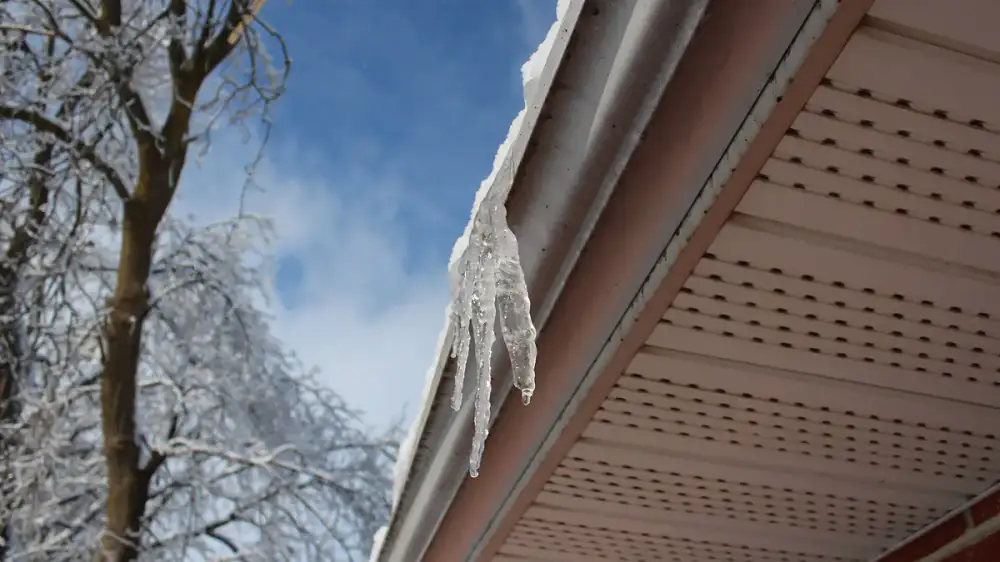
Sagging runs, leaking seams, loose hangers and standing water are repair problems, not cleaning problems. Here's how to tell them apart.