Signs Gutters Need Repair Instead of Cleaning
Cleaning solves a clog. It can't fix a gutter that's already pulling loose, leaking at the seams, or draining the wrong way. Here's how to tell the difference.
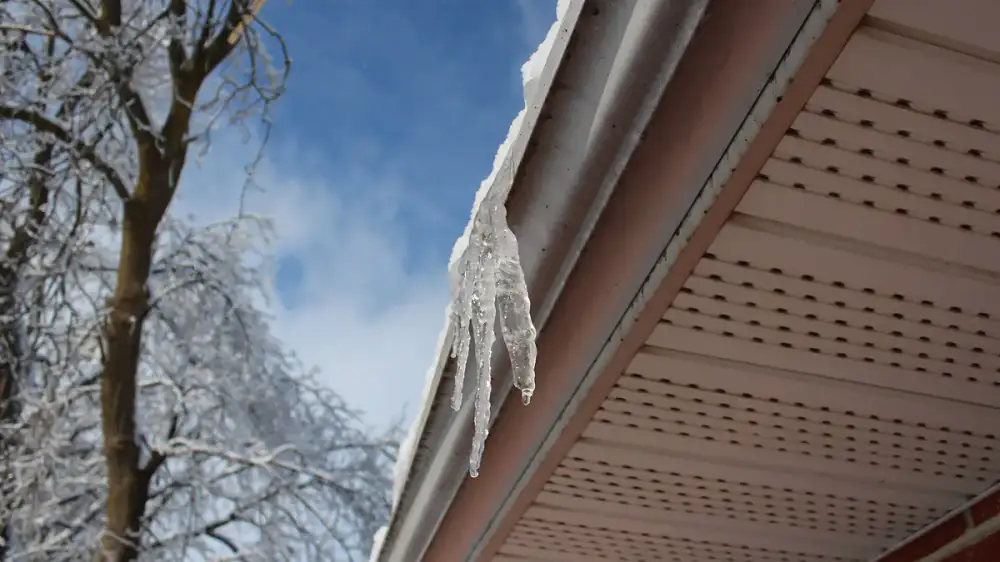
Cleaning fixes a blockage. If water still overflows, leaks, or pools after the trough is clear — or if the gutter sags, wobbles, weeps at the seams, or shows rust-through — you are looking at a repair, not a cleaning. The test could not be simpler: clear the debris and watch it rain.
It is a natural assumption that a misbehaving gutter is a dirty gutter, and often it is. A scoop and a hose put most problems right. But some symptoms don't clear no matter how thoroughly you clean, because the fault lies in the gutter itself — or in the fascia behind it — rather than in what is clogging it. Learning to tell the two apart is what keeps you from cleaning the same failing run season after season while the real damage quietly advances.
The one test that settles it
There is a single check that sorts nearly every case, and it costs nothing but patience. Clear the trough and the downspouts completely, then wait for a steady rain and watch the system work. If the water now runs cleanly to the downspouts and away, the problem was dirt, and you are done. If any of the symptoms below persist with the gutter already clear, the problem is the gutter, and cleaning it again will change nothing. Everything that follows is really just a way of reading what that rain shows you.
The symptoms cleaning can't touch
Sagging or a visible dip
A run that dips in the middle or leans away from the roofline has lost its support — loose hangers, hangers set too far apart, or rotted fascia that can no longer grip a fastener. Debris adds weight and hurries the process along, but the underlying trouble is structural, and no amount of clearing restores a sagging line.
Leaking seams and corners
Sectional gutters are joined at seams and corners with a sealant that degrades under years of sun and temperature swings. Drips at these joints during rain are a repair item, not a cleaning one. One or two are routine and usually resealable; many failing at once suggests a system reaching the end of its service life.
Loose or missing hangers
If a gutter shifts when you nudge it gently, or you can see gaps opening where it separates from the fascia, the fasteners have loosened or failed. Left alone, a single loose hanger passes its load to its neighbors, and the whole run begins to droop from there. The mechanics of that cascade are worth understanding on their own — see loose gutter hangers.
Standing water after cleaning
A correctly pitched gutter empties toward the downspout. Water that pools in the trough after the debris is gone means the slope is wrong or a low spot has formed — a re-hanging job, not a cleaning one. The full picture is in standing water and why pitch matters.
Water running behind the gutter
When water sheets down the fascia behind the trough, the cause is usually a missing drip edge or a gutter hung too low. That water lands straight on the fascia and soffits, so it is worth addressing promptly rather than watching to see whether it gets worse.
Rust, holes, and cracks
Rust streaks, pinholes, or cracked troughs mean the metal itself is failing. A small hole can sometimes be patched; widespread corrosion is a replacement conversation rather than a repair one.
Cleaning, repair, or replace?
Once you have watched the system in the rain, most problems drop into one of three buckets. Treat this as a rough guide for thinking, not a diagnosis of your particular gutter.
| Symptom | Likely fix |
|---|---|
| Overflow that stops once debris is cleared | Cleaning |
| Sag from loose or too-few hangers | Repair — refasten or add hangers |
| One or two leaking seams | Repair — reseal |
| Standing water after cleaning | Repair — re-hang for correct pitch |
| Widespread rust, holes, or fascia rot along a run | Replacement |
What tips a gutter over the edge
Gutters rarely fail overnight; a few slow forces do most of the damage over years. The heaviest is weight — trapped debris and water that loosens hangers and bows the trough, which is why homes under dense tree cover load their gutters far faster and benefit from a schedule matched to the trees around the house. Freeze-and-thaw comes next, standing water expanding as it freezes and prying fasteners loose, a leading reason snow and ice damage gutters over a single hard winter. Then there is age and sun, hardening seam sealant and weathering the metal until pinholes and streaks appear. And behind all of it, rot in the fascia, which removes the sound wood the hangers depend on.
Knowing which force is at work tells you whether a fix will actually hold. Refastening a hanger into solid fascia lasts for years; the identical hanger driven into soft, wet wood will not, which is why adding hardware to a rotted board only resets the countdown. The same logic explains why resealing over a wet or dirty seam fails within a season, why chasing a pitch problem with yet another cleaning never resolves it, and why patching rust-through again and again on a gutter that has reached the end of its life is throwing effort after a run that needs replacing.
What a repair depends on
Cost tracks the nature of the failure more than anything else, so any figure you hear is a planning guide rather than a quote. The scope of the work is the main driver — resealing a seam or adding a hanger is minor, while re-hanging a run for pitch or swapping a corroded section is a larger undertaking. The state of the fascia matters just as much, because soft or rotted wood behind the gutter has to be rebuilt before anything is refastened. Height and access add up too, since upper-story and steep-roof work is slower and needs more equipment. And how widespread the trouble is decides everything at the margin: isolated problems are spot fixes, while failures running the length of a gutter begin to favor replacement over repeated patching.
That last point is also what settles when to stop doing it yourself. Repairs and replacement mean working at the roof edge, often from a ladder or the roof itself, so it is sensible to bring in a professional when safe ladder placement isn't possible or the work is on a second story; when the fascia is soft and needs rebuilding before anything is refastened; when failures are widespread rather than isolated; or when you genuinely can't tell whether a spot repair or a full replacement makes more sense, and an on-site inspection would weigh the two better than a guess from the driveway.
Why the distinction earns its keep
Cleaning a gutter that is actually damaged wastes the effort twice over — the run keeps failing, and the real problem, usually moisture reaching the fascia and soffits, keeps advancing while you are busy with the symptom. Caught early, a loose hanger or a failed seam is a small, cheap fix. Ignored, that same small fault grows into a sagging run, rotted trim, and water arriving exactly where the gutter existed to keep it out. The rain test takes one storm to run. The repair it points to is almost always smaller than the one you'll face by putting it off.
Answers to common questions
How do I know if my gutter needs cleaning or repair?
If clearing the debris restores normal flow, it was a cleaning problem. If water still overflows, leaks or pools after the trough is clear — or if the gutter sags, wobbles or shows rust-through — it's a repair problem. Cleaning addresses blockages; repair addresses the gutter itself.
Can a sagging gutter be fixed, or does it need replacing?
A sag caused by loose or too-widely-spaced hangers can often be corrected by refastening or adding hangers. A sag caused by rotted fascia behind the gutter, or by a bent, rusted trough, usually means replacing that section and addressing the fascia first.
Why does my gutter leak at the corners and seams?
Sectional gutters are joined at seams and corners, and the sealant there breaks down over time. Leaks at these joints are common and often resealable, but repeated failures across many seams can be a sign the system is nearing the end of its life.
Is standing water in a gutter always a problem?
Yes, if it persists after cleaning. A properly pitched gutter drains toward the downspout and shouldn't hold water once debris is gone. Standing water points to incorrect pitch, a low spot, or a downspout blockage — all repair issues, not cleaning ones.
When is full replacement the better choice over repair?
When failures are widespread rather than isolated — many leaking seams, rust through multiple sections, or fascia rot along a long run — repeated spot repairs often cost more over time than replacing the run. A professional inspection can help weigh the two.
Keep reading

How Trees Affect Gutter Maintenance
Leaves, pine needles, seed pods and shade each create a different gutter problem. Here's how tree cover reshapes your maintenance schedule.
Why Water Runs Behind Gutters
A missing drip edge, a gutter hung too low, or an overflowing clog — these three causes explain most water that ends up behind the gutter.
How Often Should Gutters Be Cleaned?
Twice a year is the common answer — but tree cover, roof pitch and climate matter more than the calendar. Here's how to judge your home's real schedule.