Why Water Runs Behind Gutters
Water sheeting down the fascia behind a gutter almost always comes down to one of three things — and none of them is fixed by cleaning.
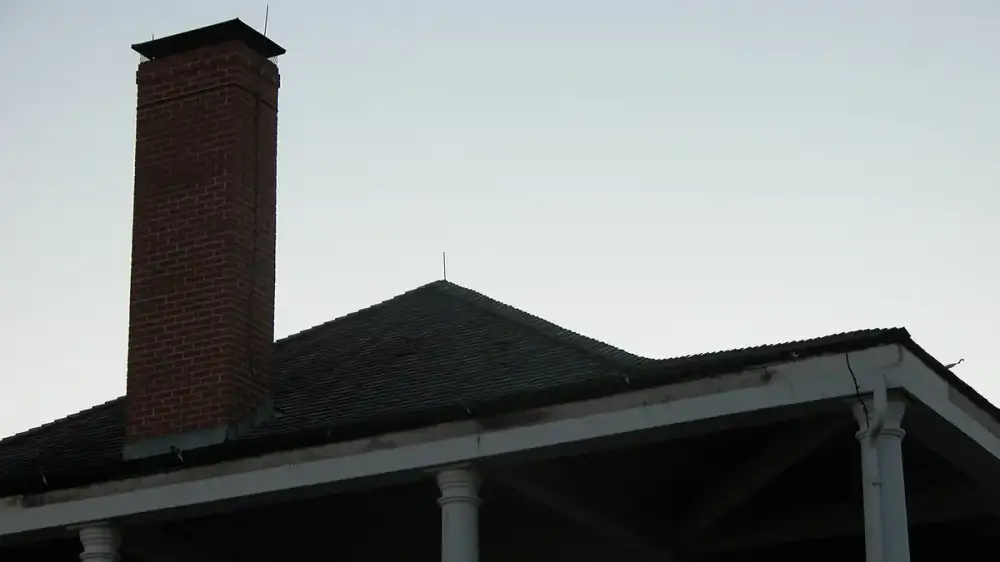
Water runs behind a gutter for one of three reasons: a missing or misaligned drip edge, a gutter hung too low relative to the roof's runoff, or overflow from a clog. Clean the gutter first — if the problem continues on a clear gutter, the cause is the drip edge or the way the gutter is hung.
Of all the things a homeowner spots at the roofline, water tracking down the fascia behind the gutter is one of the more unsettling, and rightly so. That water is reaching bare wood the whole system exists to keep dry, and it's doing it in a spot you can't easily see. The reassuring part is that the list of possible causes is short. There are really only three, and they can be told apart with nothing more than a hose, a rainy afternoon, and a look at the roof's edge.
Start with the one cause you can actually fix
Before inspecting anything, clear the gutter, because a clog is the only one of the three causes that cleaning cures. A blocked gutter doesn't merely spill over the front lip. As the trough fills, water backs up toward the roof and finds its way down behind the gutter, which is why overflow so often masquerades as a drip-edge failure. So the first diagnostic move is also the simplest repair: clean the gutter and downspouts, then watch the next steady rain.
If the water now behaves and stays inside the trough, overflow was your answer and you're finished. If a clean, free-draining gutter still leaks behind it, you've learned something valuable, the cause is structural, not debris, and no amount of further scooping will touch it. That single test cleaves the problem in two and points you straight at the roof edge for whatever remains.
When a clean gutter still leaks: drip edge and hanging height
Two causes survive a thorough cleaning, and both live where the roof meets the gutter.
The first is a missing or misaligned drip edge. A drip edge is the strip of metal flashing along the roof's edge that guides runoff off the roofing and into the trough. Without it, surface tension can pull water back under the roofing and draw it straight down the face of the fascia. A drip edge that's absent, bent, or poorly positioned is the most common reason water ends up behind a gutter on an otherwise spotless system, and it's why sealing or cleaning never seems to help.
The second is a gutter hung too low. If the back of the trough sits below the arc water takes as it leaves the roof, some of that stream simply overshoots the gutter and lands on the fascia behind it. This tends to appear on additions or on gutters that were re-hung without matching their height and angle to the drip edge, so the geometry that used to work quietly stopped working.
| Cause | Tell-tale clue | Does cleaning fix it? |
|---|---|---|
| Missing or misaligned drip edge | Problem persists on a clean, free-draining gutter | No |
| Gutter hung too low | Water arcs past the back of the trough, often on additions | No |
| Overflow from a clog | Stops once the trough and downspout are clear | Yes |
Sorting between the two structural causes takes a couple of ground-level looks. With the gutter clean, watch a rain and see whether water is arcing past the back edge, which points to hanging height, or curling down the fascia from up under the roofing, which points to the drip edge. Then check the edge itself: is there a visible strip of metal flashing, and does it tuck over the back of the gutter or stop short? A few well-meant fixes actually make things worse and are worth avoiding, assuming it's forever a clog and cleaning on repeat when the drip edge is the culprit; sealing the back of the gutter to the fascia, which traps water against the wood instead of redirecting it; and raising the gutter without checking the drip edge, so the runoff still misses the trough.
What it's already costing the trim, and what a fix involves
Water behind the gutter lands on the fascia and can wick into the soffits and roof sheathing, which is the recipe for rotted trim, peeling paint at the eaves, and stains that eventually surface on interior ceilings near the exterior walls. Because the water is hidden behind the trough, the damage tends to advance well before anyone notices, so the first evidence usually shows up on the surrounding trim rather than the gutter itself. Watch for peeling or blistering paint on the fascia and the underside of the eaves; dark staining or a soft, spongy feel to the fascia board, the early stage of fascia rot; water stains below the roof edge or on the soffits; interior marks on ceilings or upper walls near the exterior line; and mud or eroded soil directly under the eave where runoff has been landing in the wrong place. Any of these alongside water behind the gutter means the problem has moved past cosmetic and shouldn't wait.
The size of the repair varies enough that any figure is a planning guide, not a quote. Height and access drive a lot of it, since roof-edge work on a second story is slower and needs more equipment. The underlying cause matters too: resealing or re-hanging a run is a smaller job than adding or correcting drip edge along the roofline. Existing damage adds up fast, because if the fascia or soffit has begun to rot, that has to be repaired before the drainage fix goes in. And the length involved counts, an isolated corner being far less work than a full run.
Diagnosing this from the ground during rain is well within reach for most homeowners, but the fixes almost always mean working at the roof edge with the right flashing and fasteners, which is where the job crosses into professional territory. Call one in when safe ladder or roof access isn't possible, when the cause is a drip edge that needs adding or repositioning under the roofing, when the gutter needs re-hanging to change its height or pitch, or when the water has already reached the fascia or soffits, which turns this into a repair rather than a cleaning.
Frequently asked questions
Is water behind the gutter a serious problem?
It can be. Water reaching the fascia and soffits directly — rather than being carried away by the gutter — is a common cause of wood rot, peeling paint and interior water stains near the eaves. It's worth diagnosing rather than ignoring.
What is a drip edge and why does it matter here?
A drip edge is a metal flashing at the roof's edge that directs runoff into the gutter rather than letting it curl back onto the fascia. When it's missing, damaged, or installed incorrectly, water can travel behind the gutter — a frequent cause of this problem.
Can a clogged gutter cause water to run behind it?
Yes. When a gutter overflows, water doesn't only spill over the front — it can also back up and run behind the trough. If clearing the gutter stops the problem, overflow was the cause. If it continues on a clean gutter, look at the drip edge or how the gutter is hung.
Does the gutter being hung too low cause this?
It can. If the back edge of the gutter sits below the path of the water coming off the roof, runoff can miss the trough entirely and run down the fascia. Correcting the height or the relationship to the drip edge resolves it.
Can I fix water behind the gutter myself?
Diagnosing it from the ground during rain is straightforward. The fixes — adjusting or adding drip edge, re-hanging the gutter — involve roof-edge work at height and are often best handled by a professional if safe access and the right materials aren't available.
You might also like
How Trees Affect Gutter Maintenance
Leaves, pine needles, seed pods and shade each create a different gutter problem. Here's how tree cover reshapes your maintenance schedule.
Signs Gutters Need Repair Instead of Cleaning
Sagging runs, leaking seams, loose hangers and standing water are repair problems, not cleaning problems. Here's how to tell them apart.
How Often Should Gutters Be Cleaned?
Twice a year is the common answer — but tree cover, roof pitch and climate matter more than the calendar. Here's how to judge your home's real schedule.