Wet Spots on the Foundation After Rain
Damp patches that show up on the foundation after every storm are telling you where rainwater is landing instead of draining away — and the fix usually starts at the gutters.

Wet spots that appear on the foundation after every rain almost always mean roof water is being dumped at the base of the house instead of carried away. The usual causes are clogged gutters, downspouts that end at the wall, and ground that slopes toward the house. Clearing the gutters, extending the downspouts, and correcting the grade are what keep the foundation dry.
A foundation that darkens after a storm and dries out before the next one is keeping a schedule, and the schedule is the rain's. That rhythm rules out most of the alarming possibilities right away. Water rising up through the ground doesn't come and go with the weather; roof water landing where it shouldn't does exactly that. So when the damp patches track the storms, the search almost always ends up overhead — at the gutters, the downspouts, and the slope of the dirt around your house.
Follow the water, not the wall
It's easy to fixate on the foundation itself, because that's where the evidence shows up. But the wall is only the last stop. A roof sheds a startling volume of water in even a modest storm, and where all of it ends up is decided long before it reaches the ground — by whether the gutters catch it, whether the downspouts carry it off, and whether the grade lets it drain or invites it back. When any link in that chain fails, the base of the wall becomes the default collection point, and it soaks it up storm after storm.
That's the mental shift worth making before you do anything else: a wet spot on the foundation is a drainage problem wearing a masonry costume. Trace each damp patch back up its water path and you'll usually find the real culprit several feet above the mark.
The usual suspects
Clogged or overflowing gutters are the broadest cause. Once debris fills the trough, it can't deliver water to the downspout, so it spills over the whole length instead — turning one controlled stream into sheets of water dropping against the wall all the way around the house.
Downspouts that end right at the base are the most concentrated cause. A spout discharging at the corner of the foundation delivers a firehose of roof water to precisely the wrong spot, again and again. It's among the most common reasons for a wet foundation and, happily, among the easiest to fix.
Ground that slopes toward the house works against you no matter how clean the gutters are. If the soil tilts inward, surface water runs to the wall and pools there by simple gravity. Good gutters can't fully overcome a grade that keeps steering water home.
Splashback and low spots finish the job. Water falling from height throws soil and moisture up against the lower wall, and any depression beside the foundation becomes a slow-draining puddle. Both keep the base damp long after the sky clears.
Diagnosing it during a storm
The good news is that this problem shows all its cards from ground level — no ladder, no climbing, just observation at a safe distance while it's actively raining and again once things dry out.
While the storm is on, watch the whole house. Look for gutters brimming over, downspouts gushing at the wall, and water fanning toward the foundation instead of running away from it. Then work backward: trace each wet spot straight up. A damp patch sitting under a downspout or beneath a leaky gutter seam is pointing right at its source. Pay particular attention to where the downspouts release — if they let go at the base of the wall, you've very likely found your main offender, and it's worth asking whether downspout extensions would carry that water clear.
To check the grade, pour a bucket of water near the foundation on a dry day and watch which way it travels; toward the house is a problem you'll want to correct. And glance up at the troughs for a debris line or greenery sprouting inside — a sure sign they're holding water rather than moving it. The whole exercise is about linking each wet spot to the specific water path feeding it, all from a spot where you're never off the ground.
Working the fixes in the right order
Because these causes stack, the repairs work best in sequence, cheapest and highest-impact first.
Start by clearing the gutters and downspouts so water actually reaches where it's meant to go; if overflow is soaking the wall, nothing else you do will stick until the troughs are moving water again. Keeping them clean through the wet season is what stops the problem from quietly returning.
Next, get the roof water away from the base. Extensions that carry each downspout's discharge several feet from the house end the concentrated dumping that creates wet spots, and this single move often does more than everything else combined. It also ties directly into the wider issue of water pooling near the foundation.
Then turn to the ground. Correcting the grade so the soil falls away from the foundation lets surface water drain off instead of gathering; even a modest build-up of the low side can leave the base noticeably drier. Finally, fill the low spots and tame the splashback — a splash block or a bed of gravel where the water lands cuts down both the pooling and the spray that keeps the lower wall wet.
A word of caution on the ambitious end of this list: don't reach straight for a shovel and start carving trenches or burying drain lines without a clear picture of where the water needs to end up. Poorly planned digging can redirect water somewhere worse and undo the very drainage you're trying to fix. And skip the temptation to pile mulch or soil against the siding to mask a damp spot — that just traps moisture where it can rot the wall.
The point where a specialist earns their fee
Some of this crosses from maintenance into diagnosis, and that's the line to respect. Call in a drainage or foundation professional when clearing the gutters and extending the downspouts doesn't dry things out, when you see cracking, when water is seeping into a basement or crawl space, or when the soil beside the foundation looks like it's shifting. Grading corrections and buried drainage systems are exactly the situations where professional judgment about where the water should go pays for itself, and anything hinting at foundation movement deserves a specialist's eyes directly on it.
If wet spots keep coming back after you've handled the obvious roof drainage, take that persistence as the cue to have someone assess the gutters, downspouts, and grade as a single system rather than a set of separate chores. Reading through the related drainage and gutter problems can also help you spot a connected cause you'd otherwise miss.
Your questions, answered
Why does my foundation get wet only after it rains?
Because the wetness is being fed by rainwater that isn't draining away from the house. When the roof sheds water and the gutters or downspouts deliver it to the base of the wall instead of carrying it off, the foundation gets soaked with each storm and dries between them. That on-and-off pattern is the clearest sign the source is roof drainage, not rising groundwater.
Is a wet foundation something to worry about?
Repeated soaking at the base of the house is worth taking seriously. Water pooling against the foundation can find its way into the soil beside and beneath it, and over time contribute to seepage, cracking, and movement. A single damp patch isn't an emergency, but a recurring one is a signal that drainage needs correcting before it becomes a bigger problem.
Can a downspout cause wet spots on the foundation?
Very often, yes. A downspout that ends right at the wall dumps a concentrated stream of roof water exactly where you don't want it. Adding an extension that carries the water several feet away from the house is one of the simplest and most effective fixes for wet spots at the base.
How far should water be directed away from the foundation?
The goal is to move roof water well clear of the base of the wall so it can't pool or soak in beside the foundation. Extensions and proper grading that carry water away from the house — rather than releasing it at the corner — make a large difference. Exact distances depend on your lot and slope, which is where a drainage professional can advise.
Does the ground slope matter?
A great deal. If the soil slopes toward the house rather than away from it, water naturally collects against the foundation no matter how well the gutters work. Grading that directs surface water away from the base is a core part of keeping the foundation dry.
Should I seal the foundation to stop the wet spots?
Sealing treats the surface, not the cause. If roof water keeps landing at the base of the wall, the pressure and moisture remain and the problem tends to return. It's far more effective to fix the drainage first — clear gutters, extend downspouts, correct grading — and consider sealing only as a supporting step, ideally on a professional's advice.
More from this section

Why Green Growth Keeps Returning on Siding
Algae and mold return because cleaning removes the growth but not the shade and moisture that feed it. Fixing those conditions is what makes it stop.
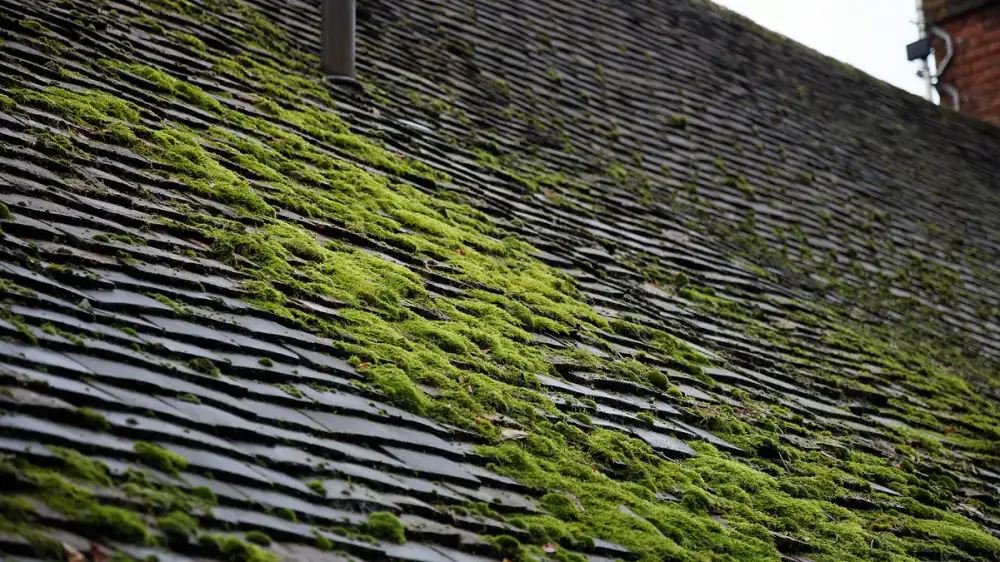
Moss Growing on the Roof: What to Do
Moss takes hold on shaded, damp roof sections and holds moisture against the shingles — but removing it from the roof is risky work for a professional.

Efflorescence: The White Residue on Brick
The white powder on brick is efflorescence — mineral salts drawn to the surface by moisture moving through the masonry and left behind as water evaporates.