Why Green Growth Keeps Returning on Siding
Scrubbing the green off your siding only buys time. If the growth keeps coming back, the shade and moisture that feed it are still there — and that's the real fix.

Green growth returns because cleaning removes the algae but not the conditions that feed it — shade and moisture. As long as the wall stays damp and shaded, spores recolonize the clean surface within a season or two. The lasting fix is to address the moisture and shade: trim for light and airflow, correct gutter overflow and drainage, and use soft washing rather than repeated scrubbing.
There's a particular frustration in washing the green off a wall, admiring the clean result for a few months, and then watching the same streaks feather back in. Most people respond by second-guessing the cleaning — wrong product, not enough pressure, missed a spot. But the cleaning almost certainly worked fine. The problem is that it was never going to be enough on its own, because the wall you cleaned is still, in every way that matters to algae, an ideal place to live.
Cleaning treats the surface, not the reason
The key thing to understand about algae and mold is that they aren't a mess you can permanently wipe away. They're opportunists. Their spores are already drifting through the air around your house, waiting for a surface that offers what they need. Wash the wall and you've reset it to zero — but you haven't changed the invitation. If the conditions that welcomed the growth the first time are still in place, recolonization isn't a risk, it's a countdown. Understanding that reframes the whole task: the durable fix isn't a better wash, it's a less hospitable wall.
So what makes a wall hospitable? Two things, working together.
Shade: the wall that never gets to dry
Algae's great enemies are sunlight and dryness, and shade robs a wall of both. A surface tucked behind trees, tall shrubs, a fence, or a neighboring building never gets the drying warmth and UV exposure that would keep growth in check. This is why the north-facing side of a house — the side that sees the least direct sun — is so reliably the worst affected, and why walls swallowed by mature tree cover green up first. The wall isn't dirtier than the others. It's just darker and slower to dry.
Moisture: the fuel that has to come from somewhere
Shade sets the stage, but moisture is what actually feeds the growth, and it arrives from more directions than people expect. Humidity gets trapped against a poorly ventilated wall. Rain splashes soil and water up onto the lower courses of siding. Air that can't circulate leaves the surface damp for hours after a storm. And then there's the moisture that has no business being there at all — runoff from a gutter that overflows or leaks.
That last source deserves its own attention, because it's the one homeowners most often miss. A gutter meant to keep water off the wall, once it overflows or springs a leak, does the opposite: it pours water down the very siding it was installed to protect, carving a permanently damp track. If your green growth runs in a distinct vertical stripe beneath a gutter seam or downspout, you can stop looking — the drainage is feeding it, and no amount of scrubbing will outpace a wall that gets rewetted every storm. Overhanging trees pile on here too, dripping moisture, dropping debris that traps dampness, and cutting the airflow that would otherwise help the surface dry.
Figuring out why this wall stays wet
You can diagnose all of this from the ground, and the diagnosis matters more than it might seem, because the fix depends entirely on which conditions are in play at your house.
Start by noticing which walls are affected. If it's the shaded, north-facing, or tree-covered sides, shade and slow drying are your drivers. Then watch the wall during and just after a rain: look for gutter overflow, drips from branches overhead, and splashback from the ground, all of which keep the siding wet. Any vertical streak is worth tracing to its top — a gutter joint, a downspout, or a spot where water collects and runs. It also helps to note how long a wall stays visibly damp after a storm; the slow-drying walls are precisely the ones that keep growing. Finally, take stock of what's crowding the wall: shrubs pressed against the siding, dense canopy overhead, and blocked airflow all conspire to keep a surface wet. The aim isn't to climb or probe — it's to answer one question honestly: why does this wall stay damp and shaded?
Breaking the cycle for good
Once you know why the wall stays wet, the plan writes itself, and it's less about cleaning harder than about changing conditions.
Do clean off what's there, but choose the method with care. For algae and mold on siding, soft washing — low pressure paired with an appropriate cleaning solution — treats the growth without forcing water behind the panels or chewing up the surface. It's a better fit than high-pressure washing, which can damage siding and drive moisture into gaps, worsening the very dampness you're fighting.
With the wall clean, go after the shade. Trimming back overhanging branches and the shrubs crowding the wall lets more light and air reach the surface so it can finally dry. You're not clear-cutting the yard, just opening things up enough that the wall stops living in perpetual damp shadow.
Then fix the moisture at its source, which is the step that actually ends the cycle. Correct gutter overflow so runoff stops streaking down the siding, confirm downspouts carry water away from the wall, and resolve any drainage keeping the base wet. A wall that finally dries between rains is a wall algae struggles to reclaim. Improving airflow supports all of this — pulling shrubs, planters, and stored items back from the siding helps the surface dry faster, and while better airflow won't fix a drainage fault by itself, layered on top of the other steps it shortens how long the wall stays damp.
What doesn't work is any of these in isolation, and especially cleaning alone — wash without changing the conditions and you've just signed up for a permanent cleaning treadmill. Two habits are worth avoiding outright: don't default to high-pressure washing, and don't seal or paint over damp, still-growing siding, which traps moisture behind the coating and trades one problem for a worse one.
Knowing when to bring in help
Some of this is straightforward ground-level work, and some of it isn't. If the affected walls are on upper stories or otherwise out of easy reach, the honest move is to stop — clearing high walls from a wobbling ladder simply isn't worth the fall risk, and that work belongs to a professional with proper access. The same goes for soft washing you'd rather not handle yourself, and for any fix that runs into gutter, drainage, or roof-edge work beyond a ground-level repair. A pro can also tell you whether persistent dampness has begun to affect the materials behind the siding, which is harder to judge from the yard.
If the growth simply refuses to quit no matter what you try, treat that as the signal to get an experienced eye on the drainage and shade together, because with recurring algae the answer almost always lives in the conditions rather than the cleaning.
Related reading
- How to remove algae from exterior walls
- Pressure washing vs. soft washing
- Can pressure washing damage siding?
- How gutters damage fascia when they overflow
- How trees affect gutter maintenance
Frequently asked questions
Why does green growth keep coming back after I clean it?
Because cleaning removes the visible growth but not the conditions that caused it. Algae and mold need moisture and shade to establish, and if the wall stays damp and shaded, spores from the surrounding air simply recolonize the clean surface. Lasting control comes from drying out and lightening the area, not just from washing it.
Is the green stuff on my siding algae or mold?
On siding it's most often algae, which appears as green or greenish-black film or streaks, particularly on shaded, damp walls. Mold and mildew tend to look darker and fuzzier and are more common where there's trapped moisture. Both thrive in the same conditions — shade plus dampness — so the prevention approach is largely the same.
Does soft washing work better than pressure washing on siding?
For algae and mold on siding, soft washing is generally the gentler, more appropriate choice. It uses low pressure with a cleaning solution to treat the growth rather than blasting it off, which reduces the risk of driving water behind the siding or damaging the surface. High-pressure washing can force moisture into places that only make the problem worse.
Can trees really cause green growth on my house?
Yes, indirectly. Trees and tall shrubs cast shade that keeps a wall from drying and hold humidity close to the surface. Overhanging branches also drip and shed debris. A wall that stays shaded and damp is exactly where algae establishes first, which is why the growth so often appears on the north side and under heavy tree cover.
How does my gutter affect algae on the siding?
An overflowing or leaking gutter runs water down the siding it was meant to keep dry, creating a permanently damp streak that algae loves. If your green growth follows a vertical line beneath a gutter joint or downspout, the drainage is likely feeding it. Fixing the overflow often does more than any amount of scrubbing.
Will the green growth damage my siding if I leave it?
It's mostly a cosmetic and moisture issue at first, but persistent dampness is not something to ignore. Growth that keeps a wall wet can contribute to staining and, over time, to problems in the materials behind it. Beyond appearance, recurring growth is a signal that the wall is holding moisture — which is worth addressing on its own.
How often will I need to clean if the conditions don't change?
If the shade and moisture remain, you can expect the growth to return within a season or two, meaning you'll be back to cleaning regularly. That cycle is the clearest sign that cleaning alone isn't the answer. Addressing the drainage, trimming for light and airflow, and improving how the wall dries stretches the interval dramatically.
You might also like
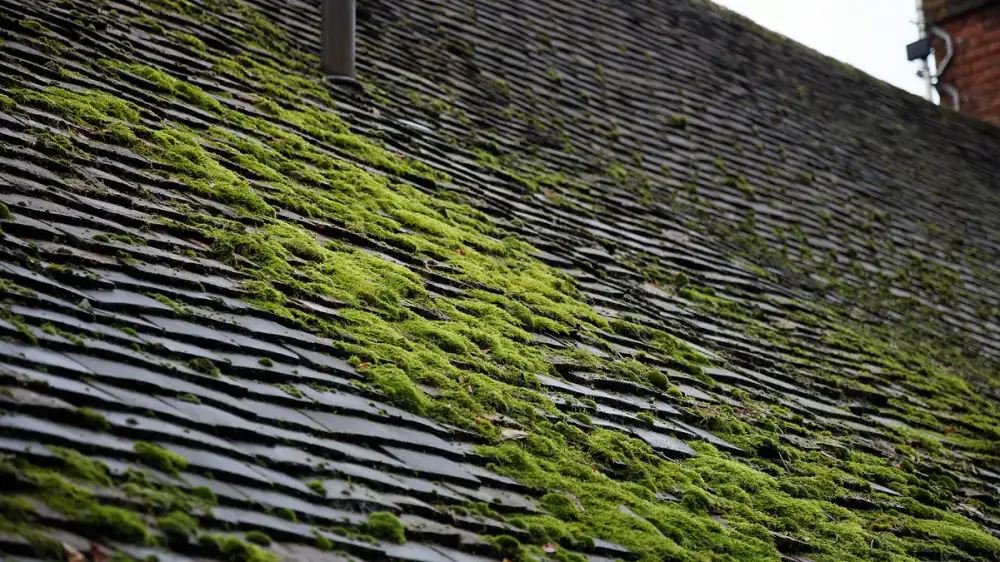
Moss Growing on the Roof: What to Do
Moss takes hold on shaded, damp roof sections and holds moisture against the shingles — but removing it from the roof is risky work for a professional.

Efflorescence: The White Residue on Brick
The white powder on brick is efflorescence — mineral salts drawn to the surface by moisture moving through the masonry and left behind as water evaporates.

Rust Stains on Exterior Surfaces: Causes and Fixes
Rust stains form where metal and water meet — corroding fasteners, fixtures, or iron-rich runoff bleeding orange-brown onto siding, brick, or concrete.