Moss Growing on the Roof: What to Do
Green moss spreading across shingles isn't just a look. It holds moisture against the roof — and removing it is riskier than most homeowners realize.
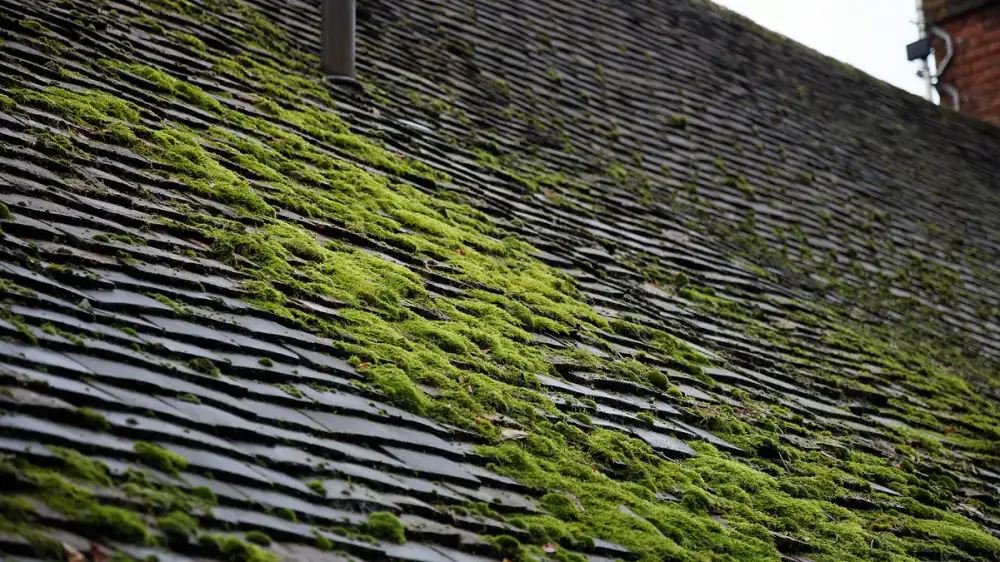
Moss grows on roofs where shade and moisture linger long enough for it to take hold — north slopes, spots under trees, and areas kept damp by debris. It matters because it holds moisture against the shingles. Removing it is genuinely hazardous roof work, made worse by how slippery moss is, so observe from the ground and leave the actual removal to a professional.
A cushion of green moss can give a roof a soft, storybook look, and plenty of homeowners live with it happily for years. But the appearance is the least interesting thing about it. Moss is a sponge, and it's sitting on a surface whose entire purpose is to shed water and dry out fast. Understanding that tension — a water-holding organism on a water-shedding surface — explains both why moss is worth dealing with and why dealing with it is more dangerous than it looks.
The green is a symptom of a wet, shaded roof
Moss spores travel on the wind and land more or less everywhere, so their arrival isn't the story. What matters is where they can actually establish, and that comes down to two conditions the roof provides in certain spots: shade and lingering moisture.
Shade is the setup. Sections that get little direct sun stay damp far longer after every rain, and moss colonizes the parts of a roof that dry slowly. That's why it shows up first on north-facing slopes and anywhere shaded by trees, a chimney, or a neighboring structure — those areas never get the drying, warming exposure that would keep growth in check.
Moisture is the fuel. Moss needs steady dampness, and it gets it wherever water sits: heavy shade, trapped humidity under a snowpack or a tree canopy, or slow drying in a protected pocket of the roof. Overhanging branches make both problems worse at once — they cast shade, they drip, and they drop leaves and needles that hold water against the shingles. That damp organic litter is a perfect seedbed. The same goes for debris that collects in valleys and along the roof edge; wherever it lingers, the roof stays wet, and moss follows.
Why it's worth addressing, not just admiring
The case against leaving moss alone is straightforward: it keeps a roof damp on purpose. A mat of moss holds a film of moisture against the shingle surface, and as it thickens it can creep under and between the shingles, prying at the edges and keeping the material beneath from ever drying. A roof is engineered to shed water and dry between storms, and moss quietly reverses that. Over time, persistent dampness in that layer can affect how well the roof sheds water at all.
There's a knock-on effect at the gutters, too. The moss and the debris that travels with it wash toward the roof edge and add to clogs there, and a roof shaded and wet enough to grow moss tends to keep the gutters working harder to keep up. So the moisture problem on the slope and the drainage problem at the edge are usually two symptoms of the same damp, shaded conditions.
What you can read from the ground
You can learn everything you need about why the moss is there without going anywhere near the roof — which is exactly where you should stay. Observation from the yard and from upstairs windows is the whole inspection.
- Map where it grows. Note which slopes and sections carry moss and how widespread it is. A concentration on the shaded, north-facing, or tree-covered areas confirms shade and slow drying as the drivers.
- Look at what's overhead. Overhanging branches that shade the roof and drop debris onto it are often the single biggest factor.
- Watch the edge and gutters. Moss and debris washing down into the gutters point to a damp roof above feeding the problem.
- Check the drying pattern. A section that stays visibly damp long after the rest of the roof has dried is the section moss will keep favoring.
- Track it across seasons. Growth that thickens year over year tells you the underlying conditions haven't changed.
What's safely yours to do — and what isn't
Here's the honest division of labor. Nearly everything that actually keeps moss from thriving is ground-level work you can handle; the one job that isn't is the removal itself.
On the conditions, start with shade. Trimming back overhanging branches so more light and air reach the roof — helping it dry faster after rain — is the single most useful thing a homeowner can safely do. Keep debris moving too: clearing leaves and needles from the gutters and roof edge, where you can reach them safely, strips away the damp bed moss relies on. If the downspouts below the mossy slope keep backing up, why downspouts keep clogging is worth a look, since standing water at the edge keeps the lower courses of shingle wet. Managing that edge dampness matters for the structure as well; when the roof edge stays saturated it feeds problems like fascia rot. And because a roof damp enough for moss keeps the whole drainage system working overtime, easing the shade also helps head off overflowing gutters.
The removal is where the line is firm. Moss makes an already treacherous surface far more slippery, so climbing up to scrape it off combines a serious fall risk with the chance of wrecking the shingles. Pressure washing is out — the force lifts and cracks shingles and drives water underneath, doing more damage than the moss ever would. Aggressive scraping and scrubbing shorten a roof's life even when nobody falls. And cleaning the moss off while the trees keep the slope dark and damp just invites it straight back; without changing the conditions, removal is temporary by definition.
Why removal belongs with a professional
This is one of the few maintenance problems where calling in help isn't a fallback — it's the recommended path from the start. Roof moss removal stacks three hazards at once: the height, the slick surface, and roofing materials that damage easily if handled roughly. A professional has the training and equipment to work up there safely and to clean gently, taking the moss off without stripping the shingles in the process.
Beyond safe removal, a pro can assess whether the moss has already affected the roof and advise on keeping it from returning. Your part is the safe, ground-level half of the job: reducing shade, managing the debris you can reach, and recognizing the point at which it's time to bring in someone who can handle the rest.
Questions homeowners ask
Why is moss growing on my roof?
Moss establishes where a roof stays shaded and damp long enough for it to take hold. North-facing slopes, sections under overhanging trees, and areas that stay wet from debris or poor drying are the usual spots. Airborne spores settle on these damp, shaded surfaces and, with steady moisture, grow into the green mats you see. Shade and moisture are the core drivers.
Is moss on the roof actually a problem?
It can be more than cosmetic. Moss holds moisture against the roofing surface and can work its way under and between shingles as it grows, keeping the roof damp and potentially affecting how it sheds water over time. Because it traps moisture where you want the roof to stay dry, established moss is worth addressing rather than ignoring — carefully, and usually with professional help.
Can I remove roof moss myself?
Roof work is genuinely hazardous, and moss makes an already slick surface far more slippery, so getting up there to remove it is not a do-it-yourself job we'd recommend. Beyond the fall risk, aggressive removal and high pressure can damage shingles. Observing the moss from the ground is fine; the actual removal from the roof is best left to a professional with proper equipment and training.
Does pressure washing remove roof moss?
Pressure washing a roof is generally a bad idea. The force can lift, crack, and strip shingles, driving water underneath and causing more harm than the moss itself. Roofs are meant to be cleaned gently, if at all, and by someone who knows the material. This is one reason moss removal belongs with a professional rather than a homeowner with a pressure washer.
How do I keep moss from coming back?
Reduce the shade and moisture that let it establish. Trimming back overhanging branches lets more light and air reach the roof so it dries faster, and keeping the roof and gutters clear of debris removes the damp organic matter moss loves. Because the conditions matter more than any single cleaning, prevention is mostly about helping the roof stay dry between rains.
Will moss damage my gutters too?
Indirectly, it can contribute. Moss and the debris that accompanies it shed onto the roof and wash toward the gutters, adding to clogs and keeping the roof edge damp. A roof that stays wet and shaded enough to grow moss often has gutters working harder to keep up. Addressing the shade and debris helps the roof and the gutters together.
More from this section

Why Green Growth Keeps Returning on Siding
Algae and mold return because cleaning removes the growth but not the shade and moisture that feed it. Fixing those conditions is what makes it stop.

Efflorescence: The White Residue on Brick
The white powder on brick is efflorescence — mineral salts drawn to the surface by moisture moving through the masonry and left behind as water evaporates.
Rust Stains on Exterior Surfaces: Causes and Fixes
Rust stains form where metal and water meet — corroding fasteners, fixtures, or iron-rich runoff bleeding orange-brown onto siding, brick, or concrete.