Fall Leaf Management Around the Home
Falling leaves clog gutters, pile into roof valleys and bury yard drains. Timing your cleanup right is what keeps autumn leaves from becoming a winter water problem.
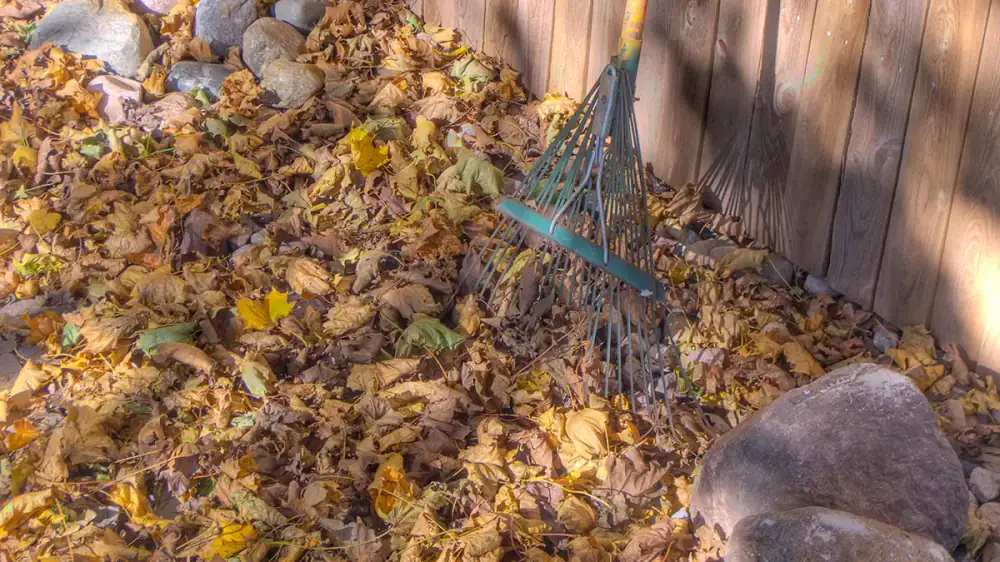
Fall leaf management comes down to timing and drainage. Clear leaves from gutters, roof valleys and yard drains as they come down — in a couple of passes matched to the leaf drop, not one late cleanup — so every water path heads into winter open. Rake and clear the low drains from the ground, watch the gutters and valleys through binoculars, and hand any roof or tall-ladder work to a professional.
Autumn leaves are wonderful until the moment they land somewhere they can do harm — in the gutter, where they cause overflow; in a roof valley, where they dam the flow; over a yard drain, where they trap water against the house. The catch that trips up most people is that leaves do not fall all at once. They come down over weeks, tree by tree, which is why the single big cleanup on a fixed weekend so often fails: you clear everything, and the trees quietly refill it. The better way to think about leaves is as a short season to manage, not a chore to check off.
Read the drop, not the date
Trees keep their own schedule, and it rarely lines up with a free Saturday. Some species let go early; oaks and a few others hang on stubbornly and drop late, sometimes well into the cold. So the first move is to watch rather than to book a date. Wait until the bulk of the canopy is actually down before the first real clearing — going up while the trees are only half-finished just guarantees a full gutter again in a fortnight.
Plan on a second pass if your trees are still shedding heavily after that, and on a third if you are surrounded by late-droppers. The finish line is a fixed target even if the timing floats: gutters and drains clear before the first hard freezes, because once the debris freezes, a clog stops being a nuisance and becomes ice. The best calibration is your own yard — note how fast the gutters actually fill in a normal year and let that set your rhythm. For the wider baseline this fits into, see how often gutters should be cleaned; leaf season is simply the busiest stretch of that schedule.
The gutters, where trouble starts
Gutters are where fall leaves cause the most visible mess and, more important, where a clog quietly seeds problems everywhere else. Clear leaves, twigs and seed debris along the full length of each trough as it accumulates rather than letting it compact. Then pay particular attention to the downspout outlets, because that is where wet leaves pack into a dense plug and back the entire run up — the trough can look half-clear while the outlet is completely stopped.
The honest test of your work is a heavy fall rain. If water pours over the front lip, a clog is forming somewhere, usually at an outlet you cannot see from below. And whatever you do, do not leave a loaded gutter to sit through winter; frozen debris blocks water at the exact moment snowmelt and rain most need a path. One firm limit applies throughout: if clearing means a tall ladder or a reach up to a second story, this is where a professional takes over rather than where you stretch. The fall gutter and downspout checklist walks the trough-and-downspout routine in detail and pairs naturally with a leaf-season rhythm.
Roof valleys: watch, don't climb
Where two roof planes meet, a valley funnels a surprising volume of water, and a mat of wet leaves parked in that channel can redirect that water in ways you very much do not want — sideways under the shingles, or straight over the gutter. Valleys collect debris behind chimneys and dormers, too, anywhere the roof changes plane and gives leaves a place to snag.
Because all of this is on the roof, treat it strictly as something to observe from the ground. A pair of binoculars will show you a leaf mat building in a valley or a pile caught behind a dormer perfectly well. Flag heavy buildup early, before it freezes into a mass no rake will move — and then hand the actual clearing to a professional. There is no version of standing on a wet autumn roof to rake a valley that is worth the fall it risks.
The drains you forget are there
The drainage story does not end where the downspout does. The paths that carry water away from the house at ground level get buried under leaves just as readily as the gutters above, and a blocked ground drain floods a foundation even when the gutters are spotless.
Rake leaves off yard drains and area-drain grates so water can still find the opening. Clear the window wells, where leaves collect and trap meltwater against basement glass. Sweep the splash zones around downspout outlets so runoff can actually flow away instead of pooling, and keep leaves from packing against the foundation itself, where a damp mat holds moisture all winter. These low points fill fastest after a windy day, so a quick walk of them during peak drop is worth the five minutes it takes.
What actually goes wrong
A handful of predictable missteps account for most leaf-season water trouble. The first is clearing too early — going up before the trees are done, which simply buys a refilled gutter. The second is cleaning the visible trough while ignoring the hidden plug at the downspout outlet, which is where the real clog usually hides. The third is leaving full gutters to freeze over winter, turning wet leaves into a solid block right when snowmelt needs to move. The fourth is the tempting, dangerous idea of climbing up to rake a roof valley yourself instead of observing it from below and handing off the height. And the last is forgetting the ground drains entirely — because clear gutters still flood a foundation if the water they shed hits a leaf-covered grate and pools at the wall.
Keep those five in mind and the season mostly manages itself. A professional earns the call whenever clearing would put you on the roof, on a tall or second-story ladder, or into a valley — and any time gutters keep overflowing or valleys keep damming despite your regular passes. To fold leaf work into the rest of the pre-winter routine, the seasonal care hub keeps the rest of the exterior on the same schedule.
Common questions
When should I clean leaves out of my gutters in fall?
Time it to the leaf drop rather than the calendar. In many yards the safest bet is to clear once the bulk of the leaves have come down, then again if trees are still shedding heavily. Homes surrounded by oaks or other late-dropping trees often need a second or even third pass before winter. The goal is clear gutters heading into the first freezes.
Why do leaves in roof valleys matter?
Roof valleys channel a large volume of water, and a mat of wet leaves there can dam that flow, forcing water sideways under shingles or over the gutter. Because valleys are on the roof, this is an observe-from-the-ground situation: note the buildup with binoculars and have it cleared by a professional rather than climbing up.
Can I just leave the leaves and deal with them in spring?
Not in the gutters and drains. Leaves left over winter turn into a wet, packed mass that blocks water exactly when snowmelt and rain need somewhere to go, and that backup can contribute to overflow and ice problems. Leaves on the lawn are a different question, but the drainage paths should go into winter clear.
How do leaves affect yard and foundation drains?
Yard drains, area drains and window wells rely on an open path to carry water away. Leaves blanket the grates and pack into the openings, so meltwater and rain pool instead of draining — often right against the foundation. Keeping these clear through the fall is as important as clearing the gutters above.
Do gutter guards mean I can skip fall cleaning?
No. Guards can cut down how many leaves reach the trough and stretch the interval between cleanings, but leaves still collect on top of them and fine debris still slips through. During heavy leaf drop you may need to sweep the guards themselves so water can get in. Treat guards as a reduction in cleaning, not an end to it.
How much leaf cleanup can I do from the ground?
Raking, clearing yard drains and window wells, and observing gutters and valleys are all ground-level tasks. Clearing the gutters and roof valleys, though, usually means safe ladder access or the roof, so those are best left to a professional if they involve a tall ladder or second story. Observe from below and hand off the height work.
Keep reading

Winter Exterior Home Maintenance Checklist
A grouped, printable winter checklist for snow, ice, frozen gutters and storm damage — built entirely around safe, ground-level observation and knowing when to call a pro.

Autumn Exterior Home Maintenance Checklist
A grouped, printable fall checklist for leaves, pine needles, gutter guards, downspouts, roof edge and freeze prep — with an emphasis on safe, ground-level work.
Post-Storm Exterior Inspection Checklist
A grouped, printable checklist for post-storm home exteriors, focused on safe ground-level observation and knowing when to call a roofing professional.