How One Skipped Season Snowballs
Skipping a single fall of gutter work rarely causes damage that fall. It causes damage the following spring, summer and autumn — a slow chain reaction most homeowners never trace back to its source.

Skipping one fall of exterior prep rarely causes damage that fall — it sets up a chain reaction. Clogged gutters lead to winter overflow and ice, which leads to spring water at the foundation, which leads to summer rot and mold, which greets you the next autumn as a repair bill. The skip and the damage are separated by months, which is exactly why the cause goes unnoticed.
The reason exterior maintenance is so easy to put off is that skipping it almost never punishes you immediately. You don't clear the gutters one October, and October ends fine. November's fine. The house looks exactly as it did. It's tempting to conclude you got away with it.
You didn't. You just moved the bill to a future season and disguised it well enough that when it finally arrives, you won't connect it to the afternoon you skipped a year earlier. That disconnect — between the cause in fall and the symptom the following summer — is the most misunderstood thing about home maintenance. So let's trace one cascade all the way through, month by month, and watch a single skipped season snowball into a year of trouble.
October: the skip that looks free
Say it's a busy autumn. The leaves come down, the gutters fill, and the weekend you meant to deal with them keeps getting eaten by other things. Eventually it's too cold and wet to bother, and you tell yourself you'll catch it in spring. The gutters go into winter packed with wet leaves and grit.
At this exact moment, nothing is wrong. The house is watertight. This is the deceptive part — the cost of the skip is entirely invisible on the day you make it. There's no leak, no crack, no stain. Just a full gutter that looks identical to an empty one from the ground. If maintenance gave you immediate feedback, none of this would happen. It doesn't, so it does.
December through February: the freeze locks it in
Then the temperature drops, and the debris in the gutter does something it couldn't do in October: it freezes solid. Now it's not just a clog, it's a dam of ice and packed leaves that water physically cannot pass.
Every time the sun warms the roof enough to melt snow, that meltwater runs down to the eave, hits the frozen blockage, and has nowhere to go. It backs up, pools, and refreezes — building the classic ice dam at the roof edge. With each thaw-freeze cycle the dam grows, and the pooled water behind it creeps up the roof, finds the seams between shingles, and works its way underneath. Some of it goes into the roof deck. Some finds the wall cavity. Some shows up as a faint brown ring on an upstairs ceiling that you'll notice in February and blame on "the roof getting old."
Meanwhile the water spilling over the front of the clogged gutter has been running straight down the exterior wall and soaking into the ground at the foundation all winter — freezing there too, heaving the soil, prying at the base of the house. Two branches of the cascade, both fed by the same skipped afternoon.
March and April: the ground gives it back
Spring is when the frozen version of the problem turns liquid, and the house presents its invoice.
The soil at the foundation, saturated all winter and repeatedly frozen, is now soft, waterlogged, and possibly heaved out of position. Snowmelt and spring rain arrive in volume — and the drainage that should carry it away is still the same clogged system from last October, now with a winter's worth of additional debris. Water pools where it shouldn't. Some of it finds its way through a foundation seam and into the basement or crawlspace, and suddenly there's a musty smell and a damp corner that wasn't there last year.
This is usually the first moment a homeowner sees a problem. And critically, it's five or six months after the cause. Nobody stands in a damp April basement and thinks "ah, the October gutters." The chain of custody is broken by time. A proper spring walk-through would catch the damp corner and the overflowing gutter and the heaved soil — but it would also, ideally, connect them, because they're the same story.
June through August: warmth finishes the job
Now add heat and time to standing moisture, and biology takes over. The damp that got into the wall over winter and spring doesn't dry out cleanly; behind siding and inside cavities it lingers, and summer warmth turns it into the ideal environment for rot and mold.
Wood that stays wet rots — it's that simple. The fascia behind the overflowing gutter, the sheathing under the ice-dam leak, the sill plate above the damp foundation: any of these that spent months wet is now softening. Paint over damp wood blisters and peels. Mildew streaks the shaded siding. What started as a clog you couldn't see has become material failure you can put a thumbnail through. And because rot is progressive, every warm week it spreads a little further into sound wood.
The next October: the bill comes due
A full year after the skipped afternoon, you're back where you started — except now the gutters aren't just clogged, they're pulling away from rotted fascia. The paint on the north side is failing. There's a soft spot in the trim, a stain on the bedroom ceiling, and a basement that smells like a problem. None of it looks like it came from a gutter. All of it did.
Here's the cruel arithmetic: the original task — a couple of hours clearing gutters, or the cost of hiring it out once — was small and bounded. The cascade it prevented is neither. Fascia repair, an ice-dam-related roof leak, foundation waterproofing, rot remediation, repainting: any one of these dwarfs the skipped chore, and a bad year serves up several at once. This is the entire case for seasonal upkeep over reactive repair — you're not paying for chores, you're buying out of the cascade.
Where the chain can be broken
The good news hiding in all this is that the cascade has stages, and you can interrupt it at any of them — each one cheaper than the last.
The cheapest break is at the source: clear the gutters before the freeze, and the chain never starts. If you missed that, the next break is winter observation — spot the ice dam or the overflow from the ground and get it addressed before it drives water inside. Miss that, and spring is your last cheap chance: find the damp and the pooling early, dry things out, and fix the drainage before summer bakes the moisture into rot. By the time you're looking at soft fascia the following fall, you're paying for every stage you let pass.
This is why a light, regular look matters so much more than it seems to. The point of walking the perimeter monthly, or keeping to a simple seasonal rhythm like the one in a year-round maintenance plan, isn't the walk itself — it's that it gives you repeated chances to catch the cascade before it compounds. And when the fix involves height — a roof-edge ice dam, a second-story gutter — the move is to hand it to a professional, not to add a ladder fall to your list of winter problems.
One skipped season is never really about that season. It's a bet that the next twelve months of weather will be kind enough to forgive you. Sometimes they are. The maintenance is just what you do so you don't have to find out.
Common questions
If I skip one fall, will something definitely go wrong?
Not guaranteed — a mild winter can let you off the hook. But you've loaded the dice. A skipped fall removes the buffer that would have absorbed a hard freeze or a wet spring, so whether damage lands comes down to weather you don't control. Doing the prep isn't about certainty; it's about not gambling the house on a mild year.
How long before a skipped season actually shows damage?
Usually months, which is exactly why the cause is so hard to spot. Clogged gutters in October might not produce a visible problem until an ice dam in January, a damp basement in April, or rotten fascia the following fall. The delay between the skip and the symptom is the whole reason the cascade catches people off guard.
Can I break the chain partway through, or is it too late?
You can almost always interrupt it, and the earlier the better. Catching a clog before the freeze is easiest; catching an ice dam before it leaks is next; catching a damp foundation before it becomes structural is harder but still far cheaper than the alternative. Each stage you stop it at saves the cost of every stage after.
Is fall really the season that starts most cascades?
For most of the country, yes. Fall prep is what stands between your house and winter, the least forgiving season. A skipped spring or summer tends to cause slower, more contained problems; a skipped fall hands winter an open door. That's why the pre-winter clear-out is treated as the highest-stakes maintenance of the year.
What's the single best insurance against this whole cascade?
Clear gutters and working downspouts heading into winter. Nearly every branch of the cascade traces back to water that couldn't drain and instead overflowed, froze, or pooled at the foundation. Get the water moving away from the house before the freeze and you've cut off the chain at its root.
You might also like
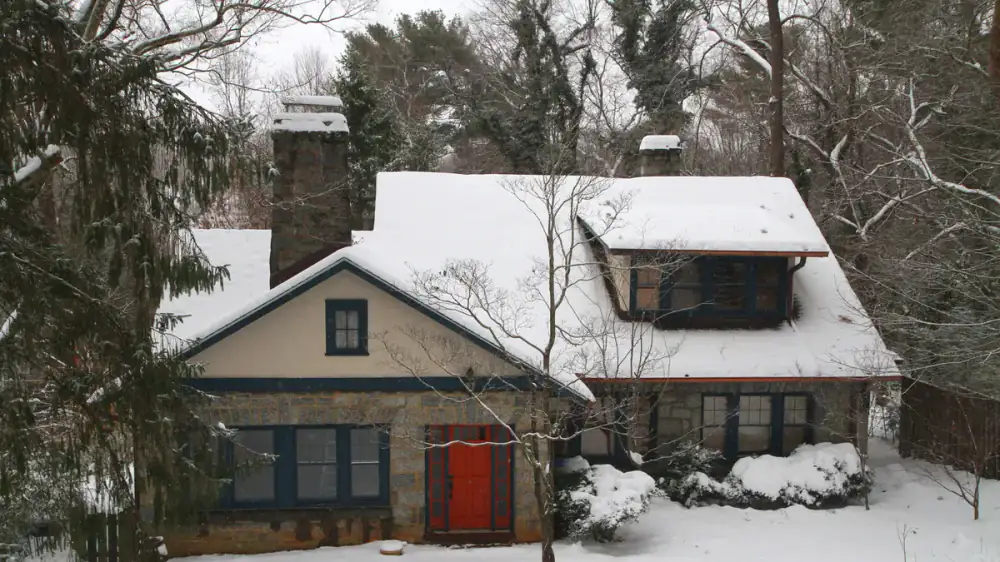
Winter Exterior Home Maintenance Checklist
A grouped, printable winter checklist for snow, ice, frozen gutters and storm damage — built entirely around safe, ground-level observation and knowing when to call a pro.
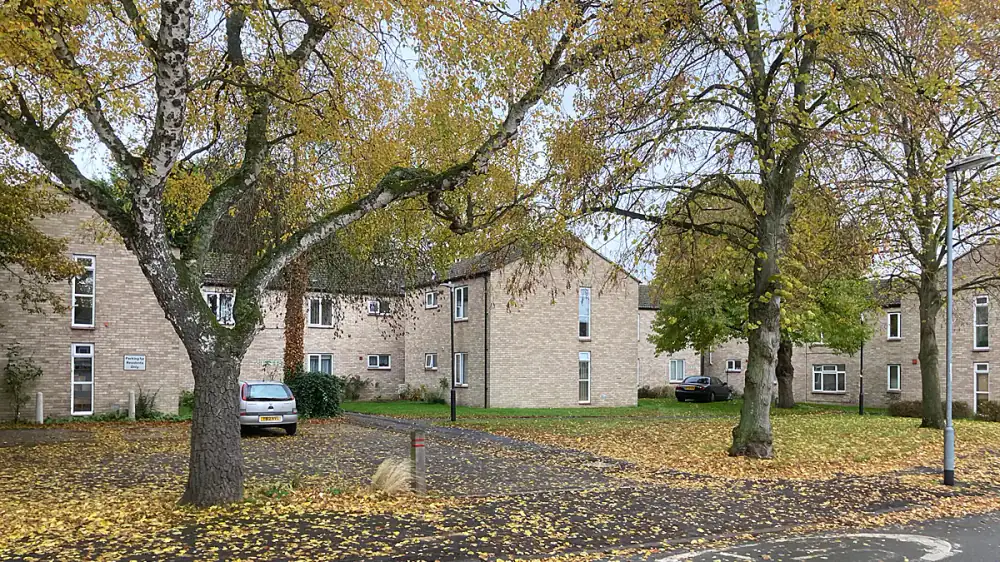
Autumn Exterior Home Maintenance Checklist
A grouped, printable fall checklist for leaves, pine needles, gutter guards, downspouts, roof edge and freeze prep — with an emphasis on safe, ground-level work.
Post-Storm Exterior Inspection Checklist
A grouped, printable checklist for post-storm home exteriors, focused on safe ground-level observation and knowing when to call a roofing professional.