Ice Dams Forming at the Roof Edge
A ridge of ice along the eaves isn't just a winter nuisance — it's a sign that heat is escaping into your attic and refreezing at the cold edge. Here's why it happens and what actually stops it.
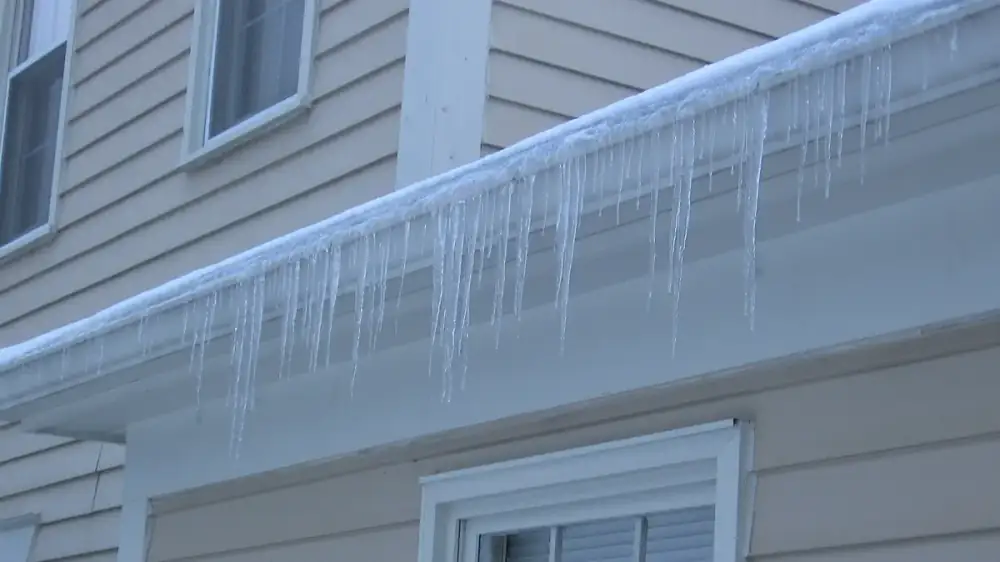
Ice dams form when heat escaping into the attic melts snow on the upper roof, and that meltwater runs down and refreezes at the cold eaves, building a ridge of ice that traps water behind it. The lasting fix isn't chipping at the ice — it's reducing attic heat loss and improving ventilation so the whole roof stays cold and the snow melts evenly.
There is a tidy logic hidden inside that ugly ridge of ice at your eaves, and once you see it, the whole problem stops looking like bad weather and starts looking like a heating diagram. The roof above the ice is warm. The edge below it is cold. Water is moving from the first zone to the second and freezing when it arrives. Everything about ice dams — why they grow, why they leak, why they return to the same spot every January — comes out of that single split in temperature.
The physics behind the ridge
Snow on a roof is a surprisingly good insulator. On a house with a cold, well-behaved roof, that blanket of snow simply sits there until the sun or a thaw takes it. The trouble starts when the roof deck underneath the snow is warmer than freezing while the air outside is not.
Heat rising from the living space warms the underside of the deck. The snow touching that warmed section melts from below, and a thin film of water begins trickling downhill under the snowpack. It travels fine until it crosses the line where the heated part of the house ends — roughly above the exterior walls. Past that point sits the overhang, and the overhang has no warm room beneath it. It stays at outdoor temperature. The meltwater reaches this cold shelf and stops being water.
Do that for a few days and the refrozen ice thickens into a wall. Now new meltwater arriving from above has nowhere to drain, so it pools behind the ridge. Standing water is patient. It finds the seams between shingles, wicks upward under the courses, and reaches the deck, the soffit, and eventually the ceiling inside. The icicles everyone photographs are just the overflow; the damage happens in the pool you can't see.
Reading your own roof from the driveway
You can learn most of what you need to know without touching a ladder — which is the only sensible way to inspect a roof in winter anyway. The evidence is all visible from the yard.
Watch how your snow behaves compared with the houses around you. A roof that goes bare while the neighbors stay white is a roof leaking heat. Look for bare streaks or melted patches in an otherwise even snow cover; each one marks a warm spot below, often a light fixture, a chimney chase, or a gap in the insulation. Note where the ice ridge and the biggest icicles form, and whether it's the same location as last winter — a repeat performance points at a fixed heat source directly above.
Then check the quieter clues. Water forming behind the gutter, between it and the fascia, means water is already backing up under the edge. Damp or discolored soffits say the same thing. Indoors, walk the upper walls and ceilings near the outside edge during a snowy stretch and look for fresh stains. The pattern you're assembling is a map of where the roof runs warm and the edge runs cold, because that gap is the only thing a real fix has to close.
Where the fix actually lives
The instinct is to attack the ice. The durable answer is to attack the heat, and almost all of that work happens inside the attic rather than out on the frozen edge.
Seal the air leaks first. Warm air doesn't just radiate through the ceiling; it pours through gaps around recessed lights, the attic hatch, plumbing stacks, chimney chases, and the top plates of interior walls. Closing those openings cuts the warm air that's melting the snow, and it's usually the single most effective step you can take.
Then add and even out insulation. Air sealing stops the drafts; insulation slows the heat that still conducts through. Together they keep the roof deck close to outdoor temperature so the snow on top has no reason to melt. Thin or uneven insulation leaves warm patches that show up as those bare streaks in the snow.
Restore the airflow under the deck. A vented roof pulls cold outdoor air in at the soffits and lets it out at the ridge, washing the underside of the deck and keeping its temperature uniform. When soffit intake is painted over, stuffed with insulation, or simply missing, warm pockets form and the melt turns uneven. Soffit ventilation explained walks through how that circulation is supposed to work.
Go into winter with clear gutters. Gutters don't create ice dams, but a trough already packed with wet leaves freezes into a solid block that gives the ice a head start right at the edge. If your gutters are overflowing before the first freeze even arrives, rule out the plumbing failure described in gutter guards overflow in heavy rain first.
Rake the lower roof as a stopgap, not a cure. A long-handled roof rake, used from the ground, pulls snow off the bottom few feet of roof after a heavy fall and removes some of the material a dam feeds on. It buys time. It does nothing about the heat loss underneath, so treat it as maintenance between real repairs.
The things that make it worse
A few well-meant reactions do more harm than the dam itself. Chipping, hammering, or prying at the ice almost guarantees a gouged shingle or a cracked edge, and the leak you create can outlast the winter. Rock salt and chemical de-icers corrode metal, stain surfaces, and rarely melt through to the core of the dam anyway. Heat cables strung along the eaves can keep a channel open in a stubborn trouble spot, but they manage a symptom and quietly leave the attic heat loss untouched — which is why cables alone tend to become a permanent fixture rather than a solution.
And climbing onto a snow-covered, ice-glazed roof to clear a dam yourself is exactly the wrong risk to take. That combination of height, slick footing, and heavy ice is what makes removal a job for someone with proper equipment and safe access, not a Saturday project.
When outside help is the right call
Some situations have already moved past prevention. If a dam has formed and water is visibly backing up, if interior stains suggest that water is finding its way in, or if the same ridge returns every winter despite your ground-level efforts, it's time to bring in a professional. Removing an established dam safely usually means steam or careful mechanical work from a secured position — not something to improvise on a ladder.
A good contractor also looks past the ice to the attic, because insulation, air sealing, and ventilation are where the cause actually lives, and they're best assessed together. Once the ice is gone, it's worth checking for the follow-on damage it leaves behind: what causes fascia rot and how snow and ice damage gutters cover the edge problems that often surface after a hard ice-dam season. For the wider set of eave and drainage issues, you can browse related problems.
Common questions
What exactly causes an ice dam to form?
Ice dams form from a temperature difference across the roof. Heat escaping from the living space warms the upper roof and melts the snow sitting on it. That meltwater runs down until it reaches the cold overhang beyond the heated walls, where it refreezes into a ridge of ice. As more snow melts above and freezes at the edge, the dam grows and starts backing water up under the shingles.
Are ice dams actually damaging or just unsightly?
They can cause real damage. The ice ridge itself is heavy, but the bigger problem is the water pooling behind it. That standing water can work its way under shingles and into the roof deck, soffits, walls, and ceilings, leading to stains, rot, and interior moisture problems. Recurring ice dams are worth taking seriously rather than treating as a normal part of winter.
Why do I get ice dams in the same spot every year?
Because the underlying conditions haven't changed. A recurring dam in the same location usually points to a fixed source of heat loss or poor ventilation directly above it, or to a spot where the roof geometry traps snow and cold. Until the heat escape and ventilation are addressed, the same warm-roof, cold-edge pattern repeats each winter.
Can I remove an ice dam myself with hot water or salt?
Pouring hot water is a temporary measure at best and adds more water that will refreeze. Rock salt can stain and corrode surfaces and rarely reaches the core of the dam. More importantly, working on or near an icy roof edge is genuinely dangerous. Removing an established ice dam is a job for a professional with the right tools and safe access.
Does insulation or ventilation matter more for preventing ice dams?
They work together. Insulation and air sealing reduce how much heat reaches the roof in the first place, while ventilation keeps the roof deck cold and even in temperature so snow doesn't melt unevenly. Fixing one without the other often leaves the problem only partly solved. A balanced approach to both is what keeps the whole roof surface near outdoor temperature.
Do gutters cause ice dams?
Gutters don't cause ice dams, but they can make them worse and more visible. Snow and ice collecting in and on a gutter give the dam a place to build and hold water at the very edge. Clogged gutters that already trap water going into winter freeze into a solid mass that adds to the problem, which is why fall cleaning matters.
Will roof rakes prevent ice dams?
Carefully removing snow from the lower edge of the roof with a long-handled roof rake, from the ground, can reduce the snow available to feed a dam. It helps as a stopgap, but it doesn't fix the heat loss and ventilation driving the problem. Treat it as one tool alongside the real fixes rather than a standalone solution.
Related guides

Why Green Growth Keeps Returning on Siding
Algae and mold return because cleaning removes the growth but not the shade and moisture that feed it. Fixing those conditions is what makes it stop.
Moss Growing on the Roof: What to Do
Moss takes hold on shaded, damp roof sections and holds moisture against the shingles — but removing it from the roof is risky work for a professional.

Efflorescence: The White Residue on Brick
The white powder on brick is efflorescence — mineral salts drawn to the surface by moisture moving through the masonry and left behind as water evaporates.