The One Task That Matters Most Each Season
If you only had time for a single exterior job each season, which one would earn its keep? For most homes, the answer comes down to one thing: where the water goes.

If you do one exterior task per season, make it the one that manages water. In spring, clear and test drainage after winter. In summer, protect finishes and seals from sun and heat. In fall, clear the gutters before the freezes. In winter, watch the roof edge for ice. Every one of them is really the same job: keep water moving away from the house.
There is a certain kind of homeowner advice that treats every task as equally urgent — forty items, all bolded, all apparently capable of ruining your house if ignored. It's paralyzing, and it's not true. Some tasks genuinely matter more than others. A lot more. So let's do the opposite of a checklist and ask a sharper question: if you could only do one exterior thing each season, what would earn its place?
The answer, once you sit with it, is almost boringly consistent. Three of the four seasons' headline tasks are directly about water, and the fourth is about the thing that lets water in. That's not a coincidence. It's the whole story of how homes fail.
The thread: it's always the water
Before the four tasks, the principle behind them. Houses don't usually die of old age. They die of water — water that got into the wrong place and stayed. Rot is water in wood. Ice dams are water refreezing at the eave. Foundation cracks widen because water in the soil freezes and heaves, or because water pooling at the base washes out support. Peeling paint, spalling brick, mildewed siding: water, water, water.
Once you accept that, seasonal prioritizing gets easy. In any given season, ask: what is water most likely to do to my house right now, and what one action best prevents it? That question is the engine behind everything below. It's also the reason a general habit of seasonal rather than reactive upkeep pays off — you're intervening before the water does, not cleaning up after.
Spring: clear and test what winter left behind
Winter is rough on the systems that move water, and spring is when you find out how rough. Freeze-and-thaw cycles loosen downspout joints, heave the ground near the foundation, and pack gutters with the debris that blew in and then froze solid. Snowmelt and spring rain arrive together, right when your drainage may be quietly compromised.
So the one spring task is to clear the drainage path and then test it. Clearing is half the job; the more revealing half is watching water actually move. Run a hose into the gutters, or wait for the first real spring downpour and go outside during it. Watch where the water goes. Is it exiting the downspouts and traveling away from the house, or is it sheeting over a gutter edge and pooling against the foundation? A downspout that dumps at the wall is worse than no downspout at all, because it concentrates the water exactly where you don't want it.
This is the season to walk the full perimeter with fresh eyes, which is what a good spring exterior walk-through is built around. But if you do only one thing: clear the gutters and downspouts, then watch them work in the rain.
Summer: protect the finishes taking the beating
Summer is the odd one out — the season where water is not the immediate villain. Here the enemy is the sun. Ultraviolet light and heat are relentless on the surfaces that face them, and they degrade slowly enough that you don't notice until the damage is done. Caulk hardens and cracks. Paint chalks and fades. Sealant around windows and trim gets brittle and pulls away.
Why does that matter, if summer's problem is sun and not water? Because every one of those failing finishes is a future water entry point. Cracked caulk at a window is the exact gap that lets the next autumn rain into the wall. The summer task is really pre-emptive water defense in disguise. Sun opens the doors; you close them before the rain arrives to walk through.
So the one summer job is to inspect and refresh the seals and finishes on the sun-facing sides of the house — typically the south and west exposures, which take the most punishment. Look for gaps at joints, caulk that's pulled loose, paint that's failing. Re-seal what needs it while the weather is dry and warm enough for the material to cure properly. If you want the fuller picture of what heat does over a summer, the summer exterior routine covers it, but the seals are the piece that quietly determines how you fare in the wet months ahead.
Fall: clear the gutters before the freeze
If there is a single most important task in the entire year, this is it. Everything about winter's ability to damage a house runs through the state of your gutters going into it.
Here's the chain. Leaves and debris fill the gutters in autumn. If they're not cleared before the first hard freezes, that debris turns into a frozen, immovable mass. Water that should be flowing to the downspouts instead backs up, spills over the edge, and — in cold climates — refreezes at the eave into an ice dam that forces meltwater up under the shingles. Meanwhile the overflow saturates the ground at the foundation right as it's about to freeze and heave. One clogged gutter, and you've set up roof leaks, foundation stress, and ice damage in a single stroke.
Clearing the gutters and downspouts before winter isn't just a fall task; it's the linchpin that determines how the entire cold season goes. A thorough fall gutter and downspout clear-out is the highest-leverage afternoon you'll spend on the house all year. If the work means a second-story ladder or getting onto the roof, this is exactly the task to hand to a professional — the value is in it getting done before the freeze, not in who does it.
Winter: watch the roof edge
Winter's one task is almost entirely observation, and that's by design — it's the season you least want to be up a ladder or on a roof. The thing to watch is the roof edge, where the story that fall set up either resolves quietly or turns into a problem.
After snow, and especially during a thaw-then-freeze swing, look at the eaves from the ground. Thick ridges of ice along the edge, or long icicles hanging from the gutter line, are telling you that meltwater is backing up and refreezing where it shouldn't. That's the visible signature of an ice dam forming at the roof edge, and catching it early — before it drives water under the shingles and into the ceiling below — is the whole point of looking.
Notice that winter's task is passive on purpose. You're not chipping at ice or climbing onto a snowy roof; both are genuinely dangerous and better left to professionals with the right gear. You're watching from safe ground and flagging trouble while it's still fixable. In the harshest season, the highest-value move is often just paying attention. The broader winter exterior routine fills in the rest, but the roof edge is the one to keep your eye on.
Four tasks, one job
Line them up and the pattern is unmistakable. Spring: make sure water can leave. Summer: seal the gaps water will try to use. Fall: clear the path before it freezes shut. Winter: watch for the water that's backing up anyway. Different seasons, different actions, one underlying job — keeping water moving away from the building instead of into it.
That's the real value of thinking in "one task per season." Not that four jobs a year is all a house needs — a fuller routine is always better — but that when time is short and everything on the list looks equally loud, this framework tells you which single thing to reach for. Do the water-first task each season and you've handled the failure that would have cost you the most. Everything else is refinement.
Questions homeowners ask
Is one task per season really enough?
It's not everything, but it's the floor that keeps small problems from becoming expensive ones. The four tasks here are chosen because each one heads off the most common and most costly failure of its season. A fuller seasonal routine is better if you have the time — but if you're only going to do one thing, these are the ones with the highest return.
Why does water come up in every season?
Because water is what actually destroys houses. Rot, foundation movement, ice damage, mold and peeling finishes all trace back to water reaching somewhere it shouldn't and lingering there. Every season's headline task is really a different version of the same job: keep water moving away from the building. Once you see that thread, the priorities pick themselves.
What if my region doesn't have a real winter?
Then swap winter's task for whatever your climate's harshest season demands. In hot, dry regions that's often sun and heat management; on the coast it's salt and wind. The framework holds — pick the one job that addresses your worst seasonal stressor — even if the specific task differs from a snowy climate's.
Can I hire out the one seasonal task?
Absolutely, and for the height-related parts you should. Clearing gutters on a second story or checking a roof edge is worth delegating. What matters is that the task gets done on schedule, not that your hands are the ones doing it. Delegating the one high-value job each season is a perfectly good version of this strategy.
Which season's task is the most important of the four?
Fall's, for most of the country. Going into winter with clogged gutters sets up the widest cascade of problems — overflow, ice, foundation saturation — because the season that follows is the least forgiving. If you could only ever do one of the four, the pre-winter drainage clear-out would be it.
Related reading
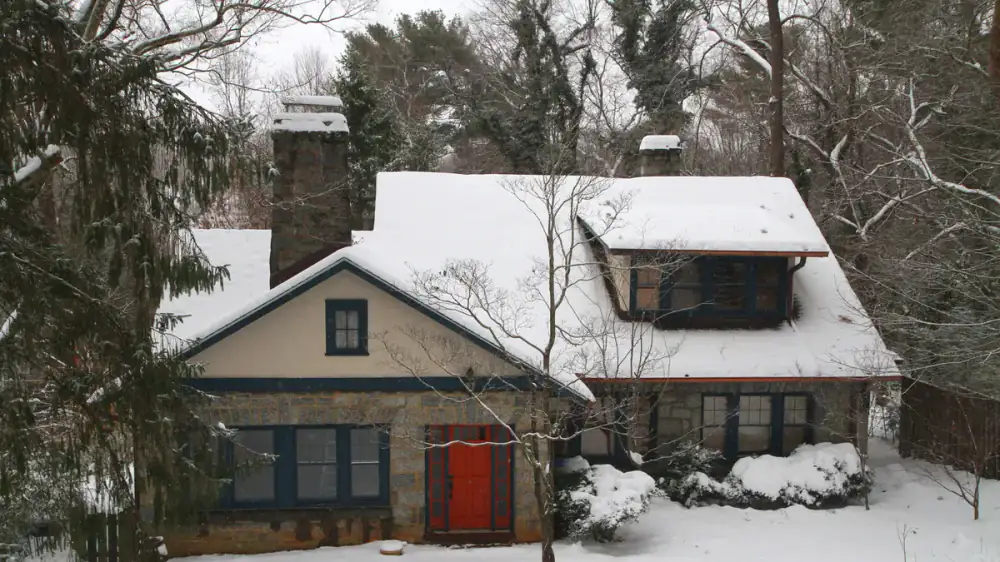
Winter Exterior Home Maintenance Checklist
A grouped, printable winter checklist for snow, ice, frozen gutters and storm damage — built entirely around safe, ground-level observation and knowing when to call a pro.

Autumn Exterior Home Maintenance Checklist
A grouped, printable fall checklist for leaves, pine needles, gutter guards, downspouts, roof edge and freeze prep — with an emphasis on safe, ground-level work.
Post-Storm Exterior Inspection Checklist
A grouped, printable checklist for post-storm home exteriors, focused on safe ground-level observation and knowing when to call a roofing professional.