Exterior Surfaces That Should Not Be Pressure-Washed
A pressure washer is a great tool aimed at the right surface — and a wrecking ball aimed at the wrong one. Here's the list of things to keep it away from, and what to use instead.

Keep the pressure washer off asphalt shingle roofs, most siding, stucco, aged brick and mortar, painted or soft wood, older windows, electrical fixtures and vents, and composite decking. Under high force these surfaces crack, strip, erode, or leak — or the water simply travels somewhere it should not. Nearly all of them clean up fine with a low-pressure solution or gentle hand cleaning instead.
A pressure washer is a genuinely excellent tool — on concrete, on sound masonry, on the handful of surfaces built to shrug off concentrated water. The catch is that the very force that lifts oil from a driveway will crack a shingle, peel paint, or shove water behind siding with equal ease. Most pressure-washing damage is not the fault of a bad machine. It is the result of aiming a good machine at something that was never meant to take it.
Read the rest of this as a reference. When you are about to clean something and a small voice asks whether it really belongs under a pressure washer, that hesitation is usually correct.
Everything at a glance
| Surface | The risk under high pressure | Safer method |
|---|---|---|
| Asphalt shingle roofs | Displaces protective granules; lifts and cracks shingles; creates leaks | Low-pressure soft washing |
| Vinyl siding | Cracks and warps panels; drives water behind them | Soft washing |
| Fibre cement siding | Erodes the finish; opens up caulked joints | Gentle cleaning, protected seams |
| Stucco | Porous and brittle; chips, pits and lets water in | Soft washing |
| Aged brick and mortar | Erodes soft mortar joints; water enters the wall | Gentle cleaning; assess first |
| Painted or soft wood | Strips paint; gouges and splinters the wood | Low pressure or hand cleaning |
| Older windows and seals | Cracks glazing; forces water past worn seals | Hand wash, low pressure |
| Electrical fixtures and vents | Water intrusion into wiring and the wall | Wipe by hand; avoid direct spray |
| Composite decking | Raises or fuzzes the surface; can affect warranty | Low pressure per maker's guidance |
The rest of the piece groups these by why they are vulnerable, because the reasons cluster more neatly than the list suggests.
Start with the roof — and stay off it
The roof earns its own category twice over. As a surface, asphalt shingles rely on a layer of embedded granules for protection; a concentrated stream knocks those loose, bares the shingle beneath, and shortens the roof's life. On tile, force cracks or dislodges pieces and opens leak paths. The dark streaks people are chasing are organic growth, and growth answers to a low-pressure cleaning solution far better than to brute force.
But the roof is also the clearest case where the surface risk is the smaller of two risks. Roof cleaning is height work performed on a sloped, often slick plane — reason enough on its own to leave it to someone equipped for it, no matter how much you would like the streaks gone.
The wall materials that fail under force
Most of the list is really about walls, and each material fails in a recognizable way.
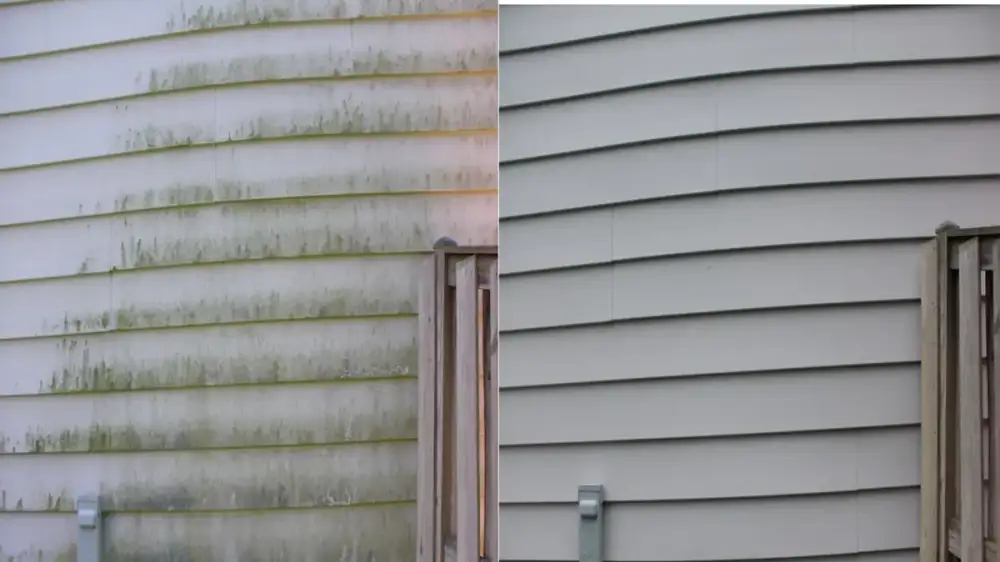
- Siding is engineered to overlap and shed water downward, and pressure works directly against that design — cracking or warping vinyl, eroding the finish on fibre cement, and, worst of all, driving water behind the panels into a wall assembly that cannot dry. The mechanics are covered in whether pressure washing can damage siding, and the green film that usually prompts the job in how to remove algae from exterior walls.
- Stucco is porous and brittle at once. A hard stream chips and pits it, and because it drinks water, forcing moisture into it invites problems behind the finish; existing hairline cracks become entry points. It is a textbook soft-washing surface.
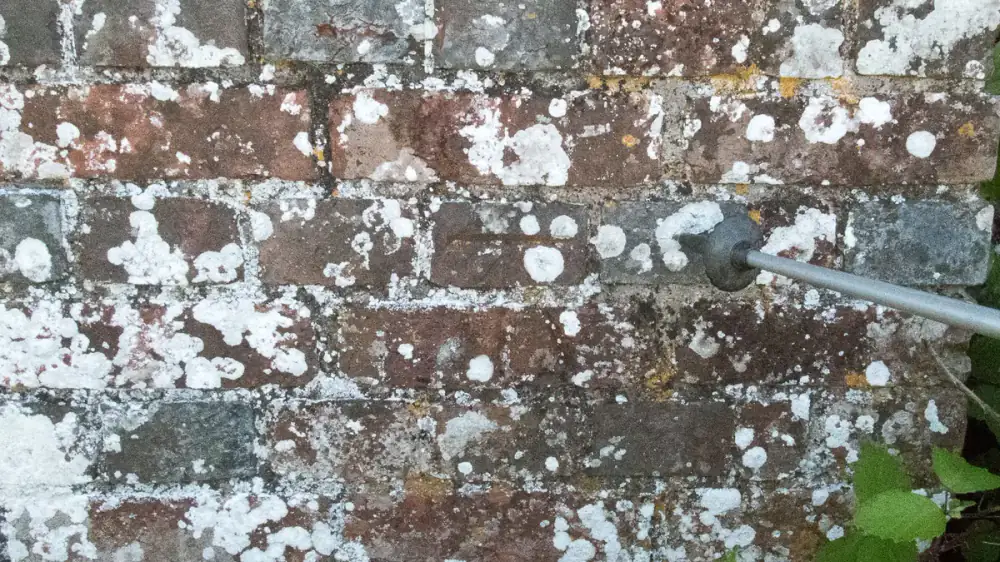
- Aged brick and mortar hide their weakness in the joints. Sound modern brick can sometimes take moderate pressure, but soft, old mortar erodes under a jet — and once those joints open, water pours straight into the wall. Old masonry deserves a gentle touch and a proper look before any cleaning.
- Painted or soft wood loses the very thing protecting it. Paint strips off in streaks and patches, and soft or weathered grain gouges, furs, and splinters, leaving a rougher, more exposed surface that weathers faster than before you started.
Where the danger is water, not the surface
Two entries on the list are not really about marring a surface at all — they are about where pressurized water ends up.
Older windows carry aging glazing and tired seals that were never built to face a jet. Force can crack the glazing and push water past worn seals into the frame and wall, so windows are almost always better hand washed, with any nearby cleaning kept low and aimed away from the seams. Electrical fixtures, vents, and any opening in the wall are open invitations for water to reach wiring or the interior. Wipe these by hand and keep them well clear of direct spray. The simplest rule: never aim a pressure washer at anything with a wire or an opening behind it.
Engineered decking and the manufacturer's word
Composite boards look tough enough to ignore all of this, and that confidence is the trap. High pressure can raise or fuzz the surface fibers and leave marks that do not come out — and many makers specify a cleaning method, with pressure washing potentially voiding the warranty. Check the manufacturer's guidance first and default to low pressure with a suitable cleaner.
One rule that covers the whole list
When you are unsure, use less force. Almost everything on the outside of a house comes clean with a gentle approach, and the surfaces that truly need high pressure — concrete, sound masonry — are the exception rather than the rule. Reaching for force first, then dialing back only after something chips, is exactly backwards; start with a hose, a soft brush, and a suitable cleaner, and escalate only on surfaces built to take it. The full comparison in pressure washing vs soft washing is worth a read before you decide. If a surface is delicate, porous, painted, aging, up high, or has anything electrical behind it, treat that as the signal to reach for a softer method or a professional — not for the trigger.
Questions people also ask
Why shouldn't you pressure wash a roof?
High pressure can dislodge the protective granules on asphalt shingles and lift or crack tiles, shortening the roof's life and creating leak paths. Roof staining is organic growth that responds to low-pressure soft washing far better than to force. Roof work is also height work, which adds its own serious risk.
Can I pressure wash my siding if I use a low setting?
Lower pressure reduces the risk but doesn't eliminate it, and it's easy to creep back up to a damaging setting. Because siding overlaps to shed water, even moderate force aimed upward can get behind the panels. Most siding is better soft washed — see our guide on whether pressure washing can damage siding.
Is it ever safe to pressure wash brick?
Sound, modern brick with intact mortar can sometimes handle pressure, but aged brick and old mortar cannot. High pressure erodes soft mortar joints, and once the joints open up, water gets into the wall. When in doubt, treat brick gently and have older masonry assessed before cleaning.
What's the safer alternative to pressure washing?
For most delicate surfaces, soft washing — cleaning solutions applied at low pressure — does the job without the force that causes damage. For lighter jobs, a garden hose, a soft brush and a suitable cleaner are often enough. The rule of thumb is to use the least force that gets the surface clean.
Can pressure washing damage composite decking?
It can. High pressure can raise or fuzz the surface of composite boards and, in some cases, affect the product warranty. Many manufacturers specify how their decking should be cleaned, so check that guidance first and lean toward low pressure and a gentle cleaner.
When should I call a professional?
Call a pro for anything at height — roofs, upper-story siding, tall walls — and for delicate or aging surfaces like old brick, stucco and soft wood. A professional can choose the right method, often soft washing, and reach difficult areas safely instead of risking damage or a fall.
Related guides

Pressure Washing vs Soft Washing
One relies on force, the other on cleaning solution at low pressure. Matching the method to the surface is what protects siding, roofs and trim.
How to Remove Algae from Exterior Walls
That green film is a moisture problem, not just dirt. Here's why gentle cleaning beats blasting, how to protect plants and windows, and how to stop it coming back.
Can Pressure Washing Damage Siding?
The same force that strips dirt can crack panels, peel paint and push water into the wall. Here's how siding gets damaged — and the safer way to clean it.