Can Pressure Washing Damage Siding?
Pressure washing looks like a fast way to clean siding, but the same force that strips dirt can crack panels and drive water into the wall. Here's when it's a risk.
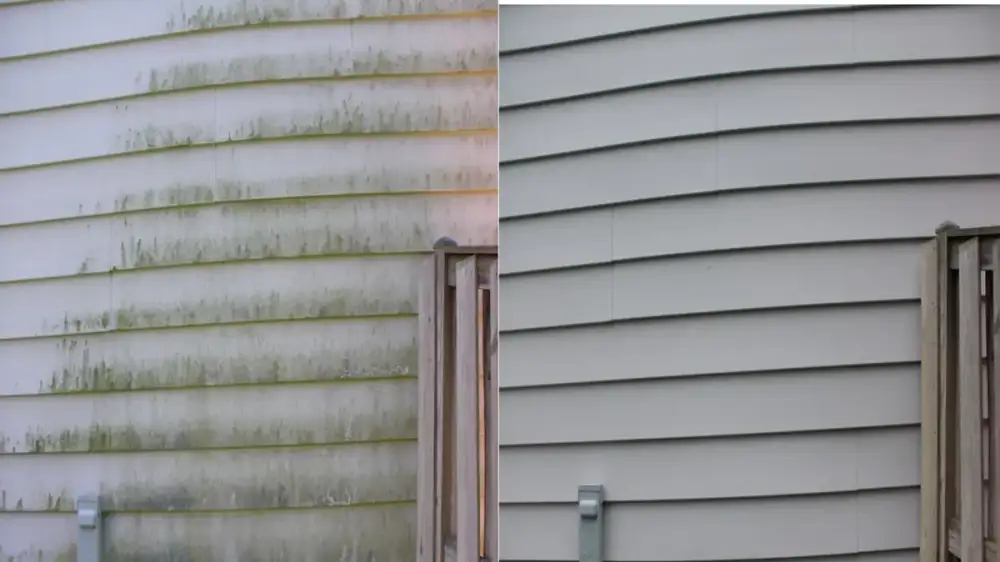
Yes. The force that clears grime can also crack and dent panels, strip paint, and push water behind the siding into the wall — the damage that costs the most and shows up the latest. Whether a wash is safe or ruinous comes down to pressure, angle, and material, since vinyl, fibre cement, and wood each fail in their own way. For the majority of siding, a low-pressure, solution-based clean is the safer route.
Pressure washing sells itself on speed. A whole season of grime and green film seems to disappear in the time it takes to walk the length of a wall. But siding is not a driveway. It is a thin, layered skin hung over your walls and engineered to shed water in one direction only. Hit it hard enough from the wrong direction and you can defeat the exact feature that keeps the structure behind it dry.
So the interesting question was never whether pressure washing can hurt siding. It plainly can. The useful question is what turns a routine clean into an expensive one — and that answer lives in how the damage actually occurs.
Three ways the force does harm
Damage to siding rarely arrives as a single dramatic event. More often it is three quieter failures, and they tend to travel together.
The most visible is surface breakage. A concentrated jet held close cracks vinyl, chips the painted skin off fibre cement, and gouges soft or aged wood. It shows up as a run of pockmarks or a hazy, worn patch where the finish is suddenly thinner than the wall around it.
The second is coating loss. On painted siding the paint is the first line of defense, and high pressure peels, feathers, or blasts it away in streaks. Strip that finish and the bare material underneath drinks in moisture and weathers faster — so an aggressive "clean" quietly shortens the life of the siding it was meant to preserve.
The third is the one you cannot see until it is a real problem: water driven behind the panels. Siding laps from the top down so runoff sheets over each course and away from the wall. Aim a pressurized stream upward into the underside of those laps, or straight into a seam, and you can force water inward — into sheathing, framing, and any insulation back there. Moisture trapped in a wall assembly has nowhere to dry to, and it turns into rot, mold, and staining long after the surface looked dry to the touch.
Technique beats horsepower
Two people with identical machines can produce opposite results, because the machine is not what decides the outcome. Four handling choices do:
- Angle is the big one. Level or slightly downward respects the way the panels shed water. Upward invites water behind the laps — the single fastest path to hidden damage.
- Distance governs how concentrated the force lands. Crowd the surface and all the energy hits one spot; back off and it spreads harmlessly.
- Tip selection ranges from a wide, forgiving fan to a zero-degree pinpoint that packs everything into a dot. On siding, the narrow tip is almost always the wrong call.
- Pressure setting tempts people toward "more," but on siding more force is only more risk. House grime gives way to far less than most people expect.
The through-line: it is never the raw power of the machine that matters, only whether the force is matched to what it is touching.
Material by material
Knowing what your siding is made of tells you how much caution the job deserves.
| Siding type | How it reacts to high pressure | Safer approach |
|---|---|---|
| Vinyl | Can crack, warp or chip; brittle in cold; water easily forced behind panels | Soft washing at low pressure |
| Fibre cement | Tougher, but the finish can erode and joints can open up | Gentle cleaning; protect caulked seams |
| Wood (painted or aged) | Paint strips easily; soft or weathered wood gouges and splinters | Low pressure or hand cleaning |
| Engineered / composite | Coatings and seams can be compromised; check what the maker allows | Low pressure or soft washing |
The pattern holds across all of them: the more porous, coated, or brittle the material, the more a gentle method earns its place.
Why the gentle method usually wins
A low-pressure, solution-based wash inverts the whole premise. Rather than lean on force, it lets cleaning solutions break down algae, mildew, and grime, then rinses the loosened mess away at a pressure closer to a strong garden hose. With no high-force stream in play, there is far less chance of cracking a panel, stripping paint, or driving water inward.
It also fits what is actually on most siding. Green film and dark streaks are organic growth — a chemistry problem wearing the disguise of a dirt problem. Blast them and you mostly scatter them and leave the roots, so they return within weeks; our guide to removing algae from exterior walls explains why. For the full side-by-side, pressure washing vs soft washing lays out where each belongs.
Reading the aftermath
Whether the work was yours or a contractor's, a walk-around afterward is worth the ten minutes. Look for new cracks, chips, or dents in panels that were sound before; paint that has been stripped, feathered, or faded in streaks that trace the path of the spray; and panels that have lifted or warped so they no longer sit flush. Then go inside: damp patches, discoloration, or a musty smell on the interior side of an exterior wall can mean water got behind the siding.
Because those interior clues can take days or weeks to surface, give the wall a second look after the next heavy rain. Water pushed into the assembly does not always stay put — the same intrusion can reappear lower down as fascia rot or soffit moisture damage where the wall meets the roof edge.
One judgment call outweighs all the technique: upper-story siding worked from a ladder with a pressure wand is a genuine fall risk, and the recoil and reach make it worse than it looks. That reach, the heavy or stubborn growth, the siding whose tolerance you cannot guess, and any suspicion that water is already behind the panels are all cues to hand the job to someone who can match method to material and reach height safely — before a cleaning turns into a repair.
Your questions, answered
Can pressure washing really damage vinyl siding?
Yes. Vinyl panels can crack, warp or chip under high pressure, especially in cold weather when the material is more brittle. The bigger risk is aiming the stream upward or into the seams, which can force water behind the panels and into the wall. Vinyl is one of the surfaces most commonly soft washed instead.
Is fibre cement siding safe to pressure wash?
Fibre cement is tougher than vinyl, but it isn't immune. High pressure can chip edges, erode the painted finish and open up caulked joints. Because the coating and the joints are what keep water out, most people clean fibre cement gently rather than with full force.
What angle should water hit siding at?
Siding sheds water from the top down, so the safest approach keeps the stream roughly level or angled slightly downward, never upward into the underside of the laps. Spraying upward defeats the way the panels are designed to overlap and is the fastest way to get water behind them.
How do I know if pressure washing has already damaged my siding?
Look for new cracks, chips or dents, sections of stripped or faded paint, and lifted or loosened panels. After the siding dries, watch for interior signs too — damp spots, staining or a musty smell can mean water got behind the panels. If you see any of these, have the wall assessed before it's painted over.
Is soft washing better than pressure washing for siding?
For most siding, yes. Soft washing uses cleaning solutions at low pressure to break down algae, mildew and grime, so it cleans without the force that cracks panels or drives water inward. You can read more in our comparison of pressure washing vs soft washing.
When should I call a professional instead of doing it myself?
Call a pro when the siding is high up, when you'd need a ladder to reach it, when there's heavy or stubborn organic growth, or when you're unsure what your siding can tolerate. A professional can match the method to the material and reach upper stories safely.
You might also like

Pressure Washing vs Soft Washing
One relies on force, the other on cleaning solution at low pressure. Matching the method to the surface is what protects siding, roofs and trim.
How to Remove Algae from Exterior Walls
That green film is a moisture problem, not just dirt. Here's why gentle cleaning beats blasting, how to protect plants and windows, and how to stop it coming back.

How to Remove Black Streaks and Mildew from Exterior Walls
Black streaks and mildew are living growth, not dirt — which is why they resist a hose and return. Soft washing treats them; managing moisture keeps them away.