Pressure Washing vs Soft Washing
Both clean the outside of a house, but they work in opposite ways. Choosing the wrong one is how homeowners end up with damaged siding and water where it shouldn't be.

Pressure washing cleans by force and belongs on hard, durable surfaces like concrete. Soft washing cleans with low-pressure solutions and belongs on the delicate majority — most siding, roofs, stucco, painted wood — and on living growth like algae and mildew. The rule that saves the most regret: match the method to the surface, and when you are unsure, choose less pressure.
The two mainstream ways to clean the outside of a house share a name-shaped resemblance and almost nothing else. They are built on opposite premises. One removes dirt by hitting it hard enough to knock it loose; the other dissolves the bond holding dirt and growth in place and then rinses it away. Get the premise right for the surface in front of you and both are excellent tools. Get it wrong — point force at something that needed chemistry — and you crack panels, strip paint, and push water into walls that were supposed to stay dry. So this is less a rivalry than a matching exercise.
Force versus chemistry
Pressure washing drives a high-force stream of water at a surface, stripping off dirt, grime, and loose material by sheer mechanical energy. It is fast, and on hard, non-porous surfaces that can absorb the impact, it is hard to beat. Soft washing works the other way around. It applies specialized cleaning solutions at low pressure — think a strong garden-hose stream rather than a jet — and gives the chemistry time to break down algae, mildew, and organic staining before everything is rinsed off. The water in soft washing is a delivery and rinse system; the cleaning is done by the solution.
That single distinction drives every recommendation that follows. Force suits materials that can take a beating. Chemistry suits materials that cannot, and it suits anything that is alive.
Reading the surface
Most of the decision comes down to what a given material can physically tolerate. The pattern is consistent enough to lay out directly.
| Surface | Usually suits | Why |
|---|---|---|
| Concrete driveways, patios | Pressure washing | Hard and durable enough to take the force |
| Brick and masonry | Depends on condition | Sound brick handles pressure; aged mortar does not |
| Vinyl siding | Soft washing | Force cracks panels or drives water behind them |
| Fibre cement siding | Soft washing | Coatings and joints do better treated gently |
| Stucco | Soft washing | Porous and easily gouged by high pressure |
| Painted or aged wood | Soft washing | Pressure strips paint and gouges soft wood |
| Asphalt shingle roofs | Soft washing | High pressure dislodges the protective granules |
| Composite decking | Low pressure or soft washing | High pressure raises the surface or voids warranties |
What force does to the wrong surface
The appeal of pressure washing is its speed, but the same energy that makes it fast is what causes trouble aimed at the wrong place. Directed at siding — especially upward or into a seam — pressurized water can slip behind panels and reach the wall assembly, where it does its damage out of sight. It strips and gouges: paint, soft wood, aged mortar, and stucco all etch or crack under it. On a shingle roof it displaces the granule layer that shields the roof from the sun, quietly trading a clean afternoon for a shortened roof life. And it reaches things it was never meant to — windows, doors, vents, light fixtures, and any electrical component in the work zone all have to be accounted for before a wand goes anywhere near them.
A decision you can make in one look
You rarely need to agonize. Ask two questions: what is the surface, and what is growing on it? A hard, durable, non-porous surface like concrete can usually take pressure. Anything delicate, porous, painted, or high off the ground — siding, stucco, roofs, trim — points to soft washing as the safer default. And if the real problem is organic growth, that settles it on its own, because growth is a chemistry problem no matter what it is sitting on.
Growth is alive, and force leaves the roots
Green algae, dark streaks, and mildew are not dirt; they are living colonies. Force can knock the visible layer off a wall and leave it looking clean, but it leaves the roots and spores behind, and the staining marches back — often within a single season. That is precisely why green growth keeps returning on siding after a quick blast: the surface looked treated but nothing living was actually killed. Handling it as chemistry, with low-pressure methods suited to algae, addresses what is truly there rather than the top layer of it.
The materials to spare from force by default
Some surfaces get damaged reliably enough that they are worth naming outright. Beyond the table, treat these as low-pressure or soft-wash candidates from the start: painted or aged wood, stucco, older mortar, roof shingles, window seals and screens, and any siding you cannot confirm is structurally sound. The full rundown in exterior surfaces that should not be pressure washed is worth a read before pointing a wand at the house. Even genuinely hard surfaces are not exempt — concrete can be etched by a stream held too close — so "durable" never means "immune." It only widens the margin for error.
What a job actually costs
Prices swing with region, the size and height of the area, and how much growth has built up, so any figure is a planning number rather than a quote. The factors that move it most are area and height, since more square footage and second-story work take longer and demand more setup; method and materials, as soft washing carries the cost of cleaning solutions while pressure work is largely labor and water; surface condition, because heavy algae, thick grime, or delicate materials all add careful time; the prep of masking windows and fixtures and covering plants; and access, since tight spaces, steep ground, and rooflines all slow the work.
Where it stops being a DIY afternoon
Some of these jobs are worth handing off. Consider it when the surface is delicate, painted, or well off the ground; when a roof or upper story is in play, where both the height and the risk of forcing water behind materials climb together; when the work calls for cleaning solutions that have to be applied and contained responsibly; or when you simply cannot tell whether a surface will take pressure — because the cost of guessing wrong on siding or a roof dwarfs the price of the cleaning. When in doubt, the cheapest mistake is always the gentler one.
Common questions
What is the difference between pressure washing and soft washing?
Pressure washing cleans with high-force water. Soft washing cleans with specialized solutions applied at low pressure, letting the chemistry do the work rather than force. Pressure removes surface grime quickly; soft washing treats organic growth like algae and mildew more gently.
Which surfaces should not be pressure washed?
Delicate or porous surfaces are the main concern: many types of siding, roof shingles, stucco, painted or aged wood, and older mortar. High pressure can crack, gouge, strip coatings, or drive water underneath these materials. Soft washing is usually the safer choice for them.
Can pressure washing damage siding?
Yes. Too much pressure, or the wrong angle, can crack or dent siding, strip paint and force water behind panels, where it can reach the wall and sheathing. Vinyl and fibre cement in particular are commonly soft washed rather than pressure washed for this reason.
Is soft washing better for roofs?
For asphalt shingles and most roofing, yes. High pressure can dislodge granules and shorten a roof's life, so the organic staining common on roofs is generally treated with low-pressure soft washing rather than force.
Is one method more environmentally sensitive than the other?
Both raise considerations. Soft washing uses cleaning solutions that need to be applied and contained responsibly, while pressure washing uses more water and can dislodge material into the surrounding area. Following product guidance and protecting plants and drains matters with either.
Keep reading
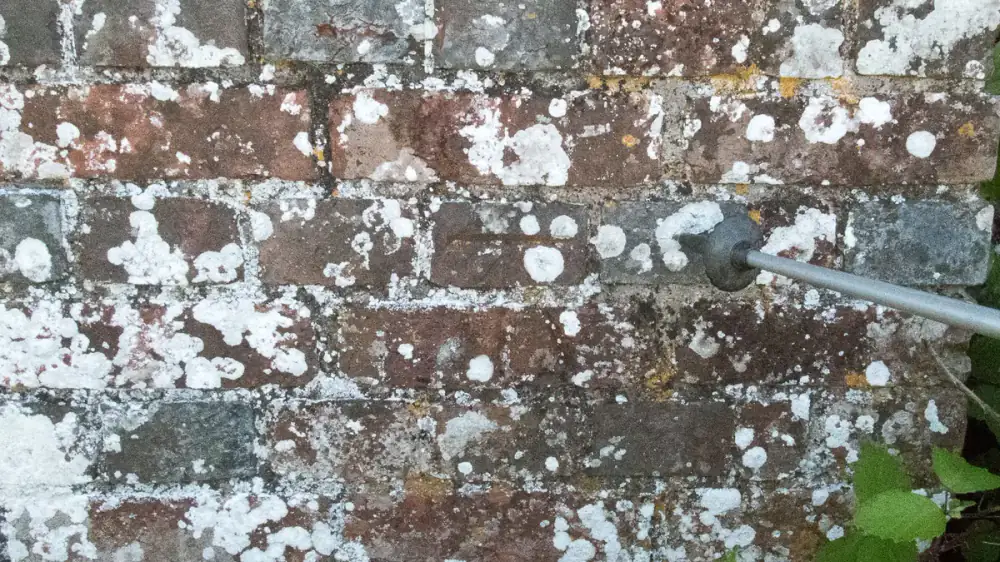
How to Remove Algae from Exterior Walls
That green film is a moisture problem, not just dirt. Here's why gentle cleaning beats blasting, how to protect plants and windows, and how to stop it coming back.
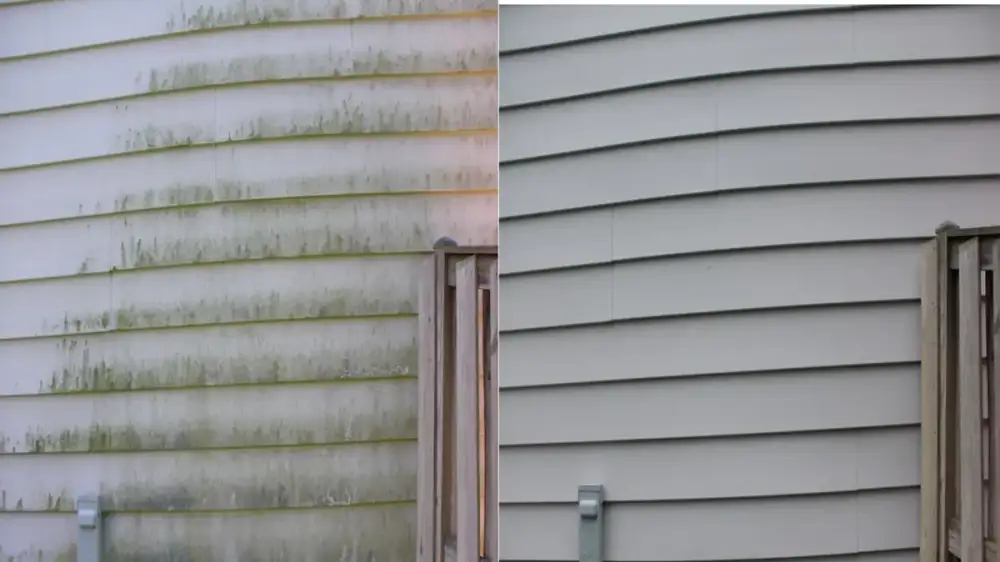
Can Pressure Washing Damage Siding?
The same force that strips dirt can crack panels, peel paint and push water into the wall. Here's how siding gets damaged — and the safer way to clean it.

How to Remove Black Streaks and Mildew from Exterior Walls
Black streaks and mildew are living growth, not dirt — which is why they resist a hose and return. Soft washing treats them; managing moisture keeps them away.