How to Clean Concrete Without Damaging It
Concrete is one of the few surfaces that welcomes a pressure washer — but even concrete can be etched, striped and scarred by too much force in the wrong hands.
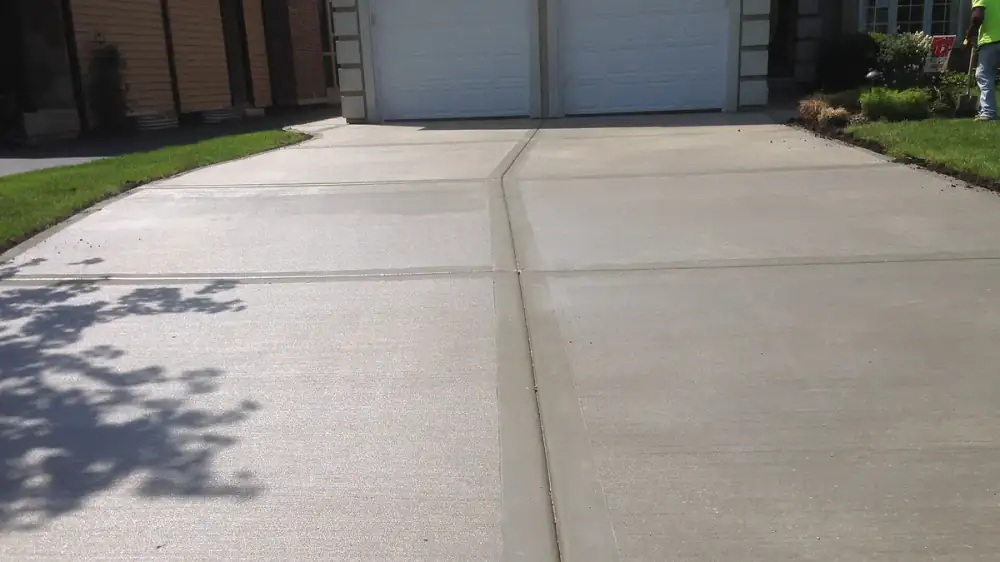
Concrete takes a pressure washer better than almost any surface, but it is not indestructible: too much force, or a narrow tip held too close, will etch, pit and stripe it permanently. The trick is uniformity — even pressure, a wide tip, a steady distance and overlapping passes — plus pre-wetting and a stain-specific cleaner instead of leaning on force. Consistent technique, not raw power, is what leaves a smooth, unstriped slab.
Concrete is one of the rare exterior surfaces that genuinely welcomes a pressure washer. It's hard, it's dense enough to take the hit, and it will shrug off a stream that would shred siding or a roof in seconds. And that reputation is exactly the trap. Because people believe concrete can take anything, they get careless with it — and a rushed job leaves a permanent, striped, etched record of every impatient pass across the slab. The counterintuitive truth is that cleaning concrete well has almost nothing to do with how much force you can bring to bear. It has to do with applying force evenly, and recognizing the jobs where chemistry does what pressure can't.
Durable, not indestructible
The top of a slab is smoother and more finished than the coarse material underneath it. Push past that finish and you wear down into the rough aggregate below, and you cannot put it back. Two habits cause most of the damage. The first is simply too much pressure: a stream stronger than the dirt requires erodes the surface layer, leaving it rough, pitted and, ironically, more prone to staining afterward. The second is a narrow tip held too close — a zero-degree tip funnels all the machine's force into a pinpoint, and held near the slab and allowed to linger, it carves visible lines and gouges.
Watch the surface as you work, because concrete shows the damage in real time. A rougher, pitted texture where you've cleaned, lines that trace the path of the tip, the pebbly aggregate starting to show through, or patchy stripped spots on a sealed slab all mean you're being too aggressive. There's no repair for an etched driveway, which is why the entire approach is organized around not etching it in the first place.
Even beats hard, every time
Most concrete cleaning goes wrong on technique, not equipment. Get a few fundamentals right and the surface comes clean without a mark.
Use the least force that works
More pressure is not a faster clean; it's a rougher slab. Use the gentlest setting that actually lifts the dirt and let a cleaner deal with anything that force alone won't move. A wide-angle tip spreads the energy across a larger area and is far safer for general cleaning than a narrow one.
Hold your distance and pace
The single biggest factor in an even result is keeping the tip a steady distance from the surface and moving at a steady speed. Linger and you etch; race and you leave dirt behind. A smooth, unhurried, consistent stroke is the whole goal.
Overlap, and pre-wet
Clean in straight passes that each overlap the last, so no untouched strips survive between cleaned bands, and work in one direction across the slab for a uniform result. Before any of that, wet the concrete down: pre-wetting loosens surface grime, helps a cleaner spread evenly instead of soaking into dry, thirsty patches, and reduces the chance of a cleaner drying and streaking.
Those same habits are what prevent zebra striping — the alternating light and dark bands that are the signature of an uneven job. Striping comes from inconsistent overlap, a wandering distance, or stopping and starting mid-stroke, so some areas simply get cleaned more than others. Cleaning the whole slab in a single session, at one distance and one pace, keeps the surface uniform and lets it dry evenly. If striping does appear, resist the urge to spot-clean the dark bands; that usually deepens the contrast. Clean the entire area again, evenly, instead.
Let the cleaner do what pressure can't
Here is the mental split worth carrying: force removes dirt, chemistry removes stains. Anything that has soaked into the concrete needs the right product more than it needs more pounds of pressure.
- Oil and grease sit deep in the pores, so blasting rarely lifts them. A degreaser or oil-specific cleaner, applied per its instructions and given time to work, breaks the oil down so it can be rinsed away. Fresh spills come up far more easily than old, set-in ones, which may take more than one treatment.
- Organic stains — algae, moss, and leaf or tannin marks — are living or organic and respond to an appropriate cleaning solution rather than pure force. Apply it, let the chemistry work, then rinse. Our guide on how to remove algae from exterior walls explains why blasting organic growth tends to spread it rather than clear it.
- General grime often rinses away with even pressure and a pre-wet, no special product needed.
Whatever you reach for, follow its dilution, dwell-time and safety instructions, protect nearby plants by wetting and rinsing them, and never let a cleaner dry on the surface. Runoff matters too — degreasers and solutions shouldn't be left to pour into planting beds and storm drains.
Whether the slab is sealed changes the calculus as well. Sealed concrete carries a protective top layer that resists stains and rinses clean easily, so it wants gentler handling — too much force strips the sealer and leaves uneven patches. Unsealed concrete is more porous, absorbs oil and organic matter readily, and lets stains set deeper, so cleaners carry more of the load; resealing it after a thorough clean makes the next round noticeably easier. Not sure which you have? Flick a little water on the surface: beading suggests a sealer, while water that soaks straight in points to bare concrete. And when the job is a large driveway, a set-in stain that won't quit, or any decorative, stamped or stained concrete where a mistake is expensive, hiring a pro who cleans evenly and knows how to treat sealed surfaces is often the cheaper path once you weigh what an etched slab costs to live with.
Your questions, answered
Can you actually damage concrete with a pressure washer?
Yes. Concrete is durable, but too much pressure — or a narrow, zero-degree tip held too close — can etch the surface, expose the aggregate and leave permanent marks. The damage often shows up as uneven lines or a pitted, roughened texture. Using even pressure, a wider tip and a consistent distance prevents it.
What is zebra striping and how do I avoid it?
Zebra striping is the pattern of light and dark bands left when the cleaning is uneven — from overlapping passes inconsistently, holding the tip closer in some spots, or stopping and starting mid-stroke. Avoid it by keeping a steady distance and speed, overlapping each pass evenly, and cleaning the whole slab in one continuous session.
Do I need to seal concrete after cleaning it?
Sealing is optional but helpful. A sealed surface resists stains and is easier to clean next time, while unsealed concrete is more porous and absorbs oil and organic matter more readily. If your concrete is sealed, use gentler methods to avoid stripping the sealer; if it's unsealed, resealing after a thorough cleaning can make future maintenance easier.
How do I remove oil stains from a driveway?
Oil sits in the pores of the concrete, so blasting alone rarely lifts it. A degreaser or cleaner made for oil, applied per its instructions and given time to work, breaks the oil down so it can be rinsed away. Fresh spills are far easier than old, set-in stains, which may need more than one treatment.
What about organic stains like algae or leaf marks?
Green algae, moss and dark leaf or tannin stains are organic, so they respond to an appropriate cleaning solution rather than pure force. Apply a suitable cleaner, let the chemistry work, then rinse. Blasting organic growth without a cleaner often just spreads it and leaves it to return.
When should I call a professional?
Call a pro for large areas, stubborn or set-in stains, delicate decorative or stamped concrete, or when you don't own suitable equipment. A professional can clean evenly, choose the right cleaners, and avoid the etching and striping that are easy to cause with an unfamiliar machine.
Keep reading

Pressure Washing vs Soft Washing
One relies on force, the other on cleaning solution at low pressure. Matching the method to the surface is what protects siding, roofs and trim.
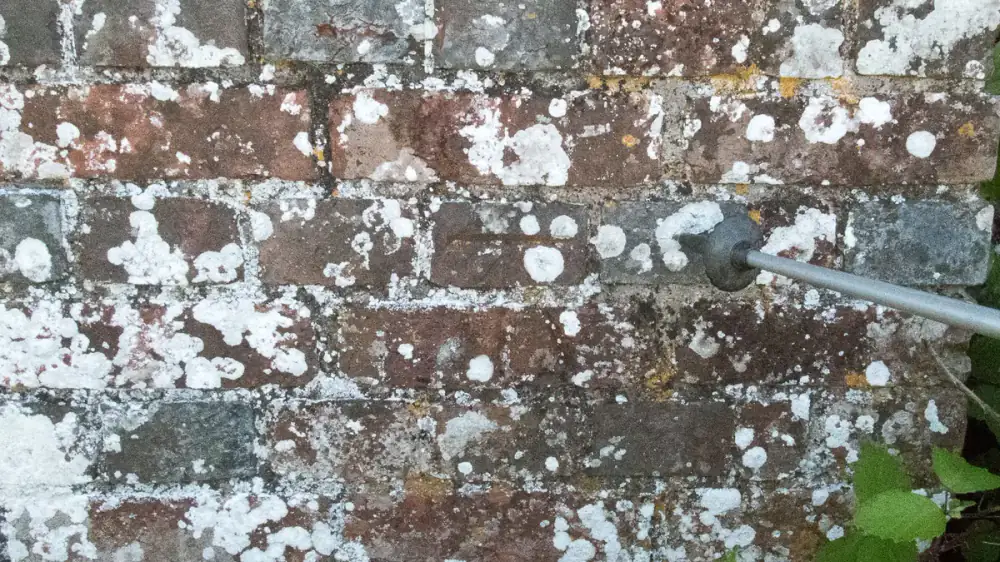
How to Remove Algae from Exterior Walls
That green film is a moisture problem, not just dirt. Here's why gentle cleaning beats blasting, how to protect plants and windows, and how to stop it coming back.
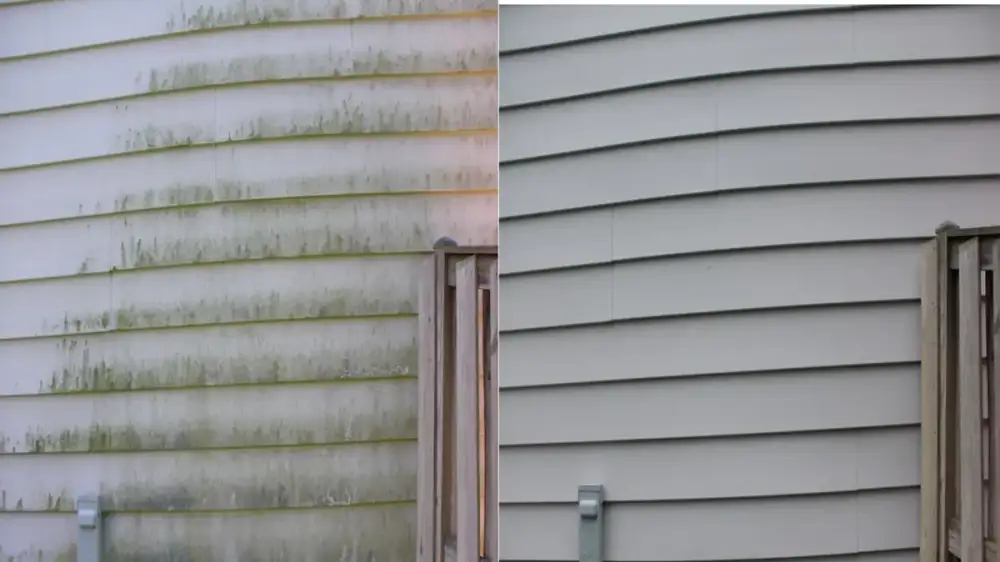
Can Pressure Washing Damage Siding?
The same force that strips dirt can crack panels, peel paint and push water into the wall. Here's how siding gets damaged — and the safer way to clean it.