Keeping Water Away From Your Foundation
The gutters, downspouts, extensions, and grading that decide whether rain runs safely away from your house — or pools against the part you least want it near.

Keeping water off your foundation is a chain, not a single fix: clean gutters catch the roof runoff, downspouts carry it down, extensions release it well clear of the wall, and the ground slopes away from the house to send it onward. Any weak link lets water pool where it does the most damage. Most of the chain can be checked and improved from the ground.
Among all the ways a house can suffer, water against the foundation is unusual for being both one of the most damaging and one of the most preventable. The foundation carries the entire structure, and the soil wrapped around it reacts to moisture in ways that quietly compromise that job — swelling, saturating, and letting water track toward the basement or crawl space. The good news buried in that is the word preventable. Protecting the foundation asks for no specialized skill. It asks only that you understand how rainwater is meant to travel away from the house, and that you pay attention to the few spots where that travel tends to break down. This guide follows a raindrop from the roof to the yard and shows you how to keep it on course.
Trace one raindrop
Start by picturing a storm and following a single drop. It lands on the roof, runs to the edge, and drops into the gutter. It travels the gutter to a downspout, comes down the wall, and is released at the bottom. From that release point it does one of two things: it soaks into ground that carries it safely away, or it pools against the foundation. Every piece of foundation protection is really about keeping that path continuous and aimed outward. If you want the reasons each link matters, how water damages a home's exterior supplies them, and the exterior home maintenance glossary defines any term that trips you.
Four links, one chain
The path is a chain of four parts, and — this is the point most homeowners miss — the chain is only as good as its weakest link. Immaculate gutters accomplish nothing if the downspout empties at the base of the wall, and the best extension money can buy cannot rescue ground that tilts back toward the house.
| Link | Its job | How it fails | Where to learn more |
|---|---|---|---|
| Gutters | Catch roof runoff and route it to downspouts | Clogs and sagging cause overflow at the wall | A homeowner's guide to gutters |
| Downspouts | Carry water down and away from the roof edge | Blockages back water up into the gutter | A homeowner's guide to the roof edge |
| Extensions | Release water well clear of the foundation | Missing or too short, dumping at the wall | Downspout extensions |
| Grading | Slope soil so water flows away from the house | Settled soil tilts water back toward the wall | Water pools near the foundation |
The top of the chain
Because they sit at the top, gutters and downspouts earn the most frequent attention on any calendar, and rightly so. Clogged or sagging gutters overflow, and overflow lands precisely where you least want it — against the foundation. Keeping them clear is the single foundation-protection task you will repeat most. It is worth saying plainly that gutter guards can cut how often you clear them but never eliminate cleaning, and they do nothing at all about where water goes once it leaves the system.
Downspouts are the handoff. Confirm that each one is actually connected, unblocked, and carrying water down rather than spilling from a split joint. During a real rain, look at the base of each downspout for water marks or eroded soil — a plain signal that water is being released far too close to the house.
Extensions do the most for the least
The gap between where a downspout ends and where the ground can safely absorb water is where a great many homes quietly lose the battle. A downspout that stops at the wall does nothing but deliver concentrated roof runoff straight to the foundation. Adding or lengthening downspout extensions so they carry that water several feet out onto ground that slopes away is often the most effective ground-level improvement available to a homeowner. It costs little, involves no ladder, and strikes directly at the most common cause of water at the foundation. If you fix nothing else, fix this.
The link that undoes the rest
Even a flawless gutter-and-extension setup can be quietly defeated by the ground itself. Soil settles over the years, and the grade that once shed water can slump back toward the house — funneling water inward and cancelling everything upstream of it. The remedy is to keep the soil falling away from the foundation for the first several feet. You can usually catch a problem just by watching where puddles gather in rain, or by noticing soil that has pulled away from the wall. Serious regrading is larger work, but recognizing the need for it is squarely a ground-level observation, and a good one to fold into your whole-house exterior audit.
Prove it in the rain, and know where your reach ends
Here is the discipline that ties all four links together: judge your drainage only when it is working. A dry day tells you nothing. A steady rain tells you everything — so stand under cover and follow the water from roof to soak-in, watching for pooling at the base of the walls, water tracking back toward the house, or a gutter overflowing despite a clear-looking trough. Checking on dry days, treating clean gutters as the whole answer, letting downspouts end at the wall, and ignoring the slope of the soil are the ways this chain typically fails, and every one of them is visible during a storm.
Most of the chain genuinely stays within reach from the ground — clearing downspouts, adding extensions, watching water move. A handful of situations do not. Persistent pooling that will not resolve, water already reaching a basement or crawl space, significant regrading, and any inspection that needs roof or ladder access all call for a professional. If you have followed the water honestly and still find it collecting against the house, or you see signs it is getting inside, that is the moment to bring one in. To keep these checks on a rhythm, work them into the year-round exterior maintenance schedule; and when money is tight, prioritizing exterior maintenance on a budget explains why foundation drainage almost always earns a place near the top of the list.
Your questions, answered
Why is water near the foundation such a big deal?
The foundation carries the whole house, and the soil around it is far more sensitive to moisture than most people expect. Water that repeatedly pools against the base can saturate that soil, work into small cracks, and find its way toward the basement or crawl space. It is one of the most common paths to serious, expensive damage — and one of the most preventable from the ground.
How far from the house should downspouts discharge water?
Farther than most downspouts do on their own. The goal is to release the water well clear of the foundation and onto ground that slopes away, rather than at the base of the wall. Extensions are the usual way to achieve that; the exact distance depends on your grade and soil, so watch where the water actually goes during a real rain.
What is grading and why does it matter?
Grading is the slope of the soil around your house. Ideally the ground falls away from the foundation for the first several feet, so gravity carries water outward. When soil settles over time and tilts back toward the house, it funnels water exactly where you do not want it, undoing everything the gutters accomplish.
My gutters are clean but water still pools by the house — why?
Clean gutters are only the first link in the chain. If the downspouts dump right at the wall, or the ground slopes back toward the house, water will still collect there. The whole path — gutter, downspout, extension, grade — has to work together, so check each part rather than assuming clean gutters solve it.
Is this something I can handle myself?
Much of it is ground-level work well within reach: adding or repositioning downspout extensions, clearing discharge points, and observing how water moves during rain. Regrading soil or addressing an existing water intrusion problem is bigger work, and anything that requires roof or ladder access should go to a professional.
How do I tell whether my drainage is actually working?
Watch during a steady rain. Follow the water from the roof to where it finally soaks in, and look for pooling at the base of the walls, water tracking back toward the house, or overflowing gutters. A dry day tells you nothing; a rainy one tells you everything.
Do gutter guards mean I can stop thinking about drainage?
No. Guards can reduce how often gutters need clearing, but they do not eliminate cleaning, and they do nothing about where the water goes once it leaves the downspout. Extensions and grading still matter just as much with guards as without them.
Keep reading

Prioritizing Exterior Maintenance on a Budget
When funds are limited, spend where they prevent the most damage. Here is how to rank exterior tasks so a small budget does the most good.

Reading Exterior Warning Signs
Most exterior problems announce themselves early. Here is how to read the signs across the whole house and where each one points.
Exterior Maintenance for Coastal Homes
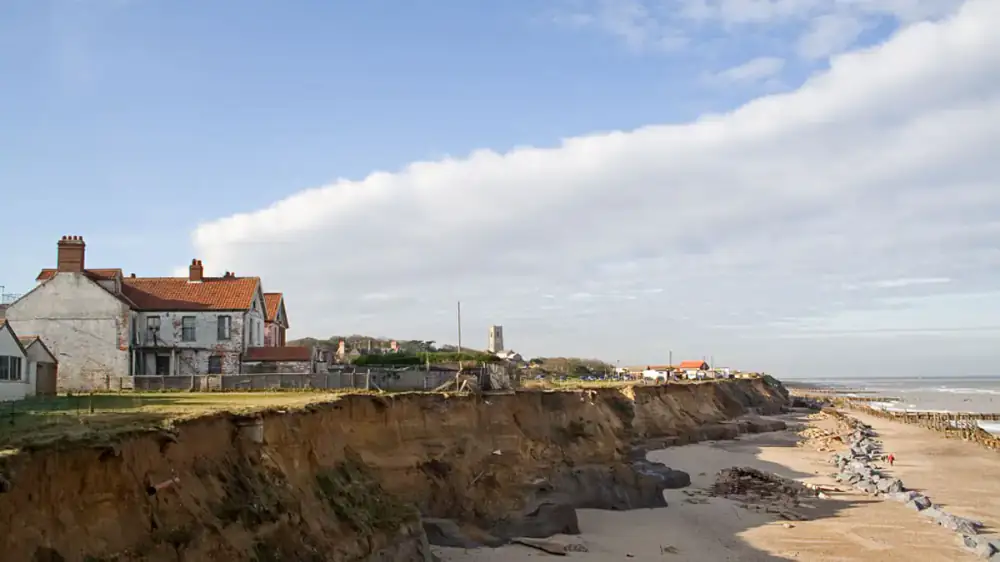
Salt air, corrosion and wind-driven rain make coastal homes their own category. Here is how to rinse, choose materials and check more often.