The Payoff of Consistent Exterior Care
Why the boring, repeated version of maintenance beats the heroic occasional push — in money saved, damage avoided, and the quiet confidence of a house you trust.
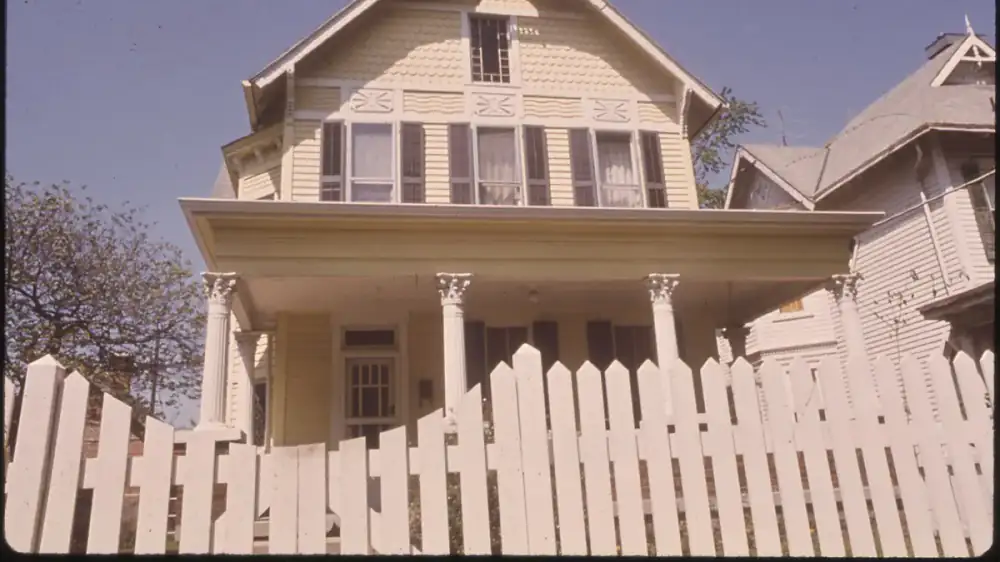
The payoff of consistent exterior care comes in three forms: avoided damage, preserved value, and peace of mind. Because exterior problems compound, steady small attention intercepts them while they are cheap, sparing you the far larger cost of the repairs they would have become. Consistency matters more than intensity — a modest routine kept up year after year beats an occasional heroic push, because damage does not wait for your free weekend. The return is slow and mostly invisible, which is exactly why it is so easy to undervalue and so worth committing to.
Consistent exterior maintenance is a hard thing to stay motivated about, because its rewards are invisible by design. You never see the rotted fascia you prevented or the foundation repair that never happened. The house just keeps being fine, which feels like nothing happening at all. That invisibility is the central problem with valuing maintenance, and it is worth confronting head-on, because the payoff is real and large even when it refuses to show itself. This is an essay about that payoff — what you actually get for the boring, repeated effort, and why the steady version beats the heroic one every time.
Why the payoff is invisible — and real
The reward of good maintenance is a repair that does not happen. That is a genuinely strange thing to be paid in, because absence has no receipt. When you clear a gutter and, as a result, the fascia behind it never rots, nothing announces the save. The success looks identical to a house that got lucky. This is why maintenance is chronically undervalued: our attention is drawn to problems, and prevention's whole job is to make sure there is no problem to notice.
But the mechanism behind the payoff is concrete, not sentimental. Exterior damage compounds. How water damages a home's exterior traces the way a small failure cascades — a clog to an overflow, an overflow to rot, rot to a sagging run, a sag to foundation water. Every link in that chain is more expensive than the one before. Consistent care works by interrupting the chain at the first, cheapest link. The repair you never pay for is the several downstream repairs that first small intervention prevented. The saving is invisible precisely because it worked.
The first payoff: avoided damage
The most measurable return is money not spent. The economics of the exterior overwhelmingly favor prevention, because the cheap upstream tasks stand between you and the expensive downstream repairs. This is the same logic that governs spending when funds are tight — prioritizing exterior maintenance on a budget shows how the cheapest tasks are the ones that prevent the costliest failures — but it holds regardless of budget. Consistency simply makes it continuous. You are not making one clever prevention; you are making the cheap intervention over and over, each time closing a chain before it can start.
There is a discipline behind this that goes by the unglamorous name of not deferring. A problem put off does not stay the same size; it grows, and the repair grows with it. Consistent care is, in one sense, just the practice of never letting the deferral gap open. The money you keep is the difference between the small timely fix and the large late one, collected quietly, season after season.
The second payoff: preserved value
Beyond avoided repair bills, consistent care protects the condition of the house itself — the underlying soundness of the structure, kept intact over the years you own it. A house whose water is always managed, whose small problems are always caught, simply stays in better shape than one that lurches from crisis to crisis. That preserved condition is a form of value, whether or not you ever intend to sell.
It is worth being clear about what is really being preserved. It is not primarily appearance, though appearance follows. The deep value is structural: consistent care keeps water out of the house, and keeping water out protects the parts that are most expensive to repair and most central to the building's integrity. A good-looking exterior is usually a sign that the protective work underneath is being done — the look is a symptom of the care, not its point. Preserve the structure and the appearance tends to come along for free.
The third payoff: peace of mind
The payoff that is hardest to quantify is the one many homeowners end up valuing most. A house you maintain consistently is a house you are not worried about. You know its condition because you look at it regularly; you catch changes early because you have a baseline to compare against; you sleep through storms a little better because you know the exterior is sound. That confidence is a real return, and unlike the financial one, some of it arrives immediately.
This peace of mind is built, not bought. It comes from the accumulated knowledge of your own house that consistency produces. The homeowner who runs regular checks and keeps a record can answer questions others can only guess at — is that stain new, is that gutter drifting, has this always been here. Learning to read the house well, as in reading exterior warning signs, turns each look into information, and information is what dissolves the low background worry of not knowing. A house you understand is a house you can stop fretting about.
Why consistency beats intensity
All three payoffs depend on one word: consistent. Not thorough, not occasionally heroic — consistent. The reason traces back to compounding. Because the exterior degrades continuously, it needs continuous attention. A steady rhythm of small, timely tasks meets damage at the cheap stage, over and over. A once-a-year blitz, however diligent, leaves long stretches during which a small problem has room to grow into a large one before the next push finds it. When damage compounds, timing beats intensity, and consistency is just good timing repeated.
This is why the whole discipline is really about building a rhythm you can sustain rather than a burst you cannot. A modest routine kept up for years outperforms an ambitious one abandoned after a season. The way to secure consistency is to make the routine nearly automatic: creating an exterior maintenance plan turns your house's needs into a repeating set of tasks, and the year-round exterior maintenance schedule gives that rhythm its seasonal shape. The point of both is to remove the need for willpower — a system that runs on its own is a system that stays consistent when your enthusiasm inevitably dips.
The return on a boring habit
Consistent exterior care is, frankly, a boring habit. It has no dramatic before-and-after, no satisfying reveal, no moment where the effort visibly pays off. What it has instead is a house that quietly stays sound, a budget that quietly avoids the big repairs, and a mind that quietly stops worrying. Those returns are slow and invisible, and they are also, over the life of a house, enormous. The homeowner who commits to the boring version — steady, timely, unglamorous — ends up with more money, a better house, and less worry than the one who waits for problems to demand attention. For the specific tasks that make up the habit, the full guides hub is there whenever you need the detail behind any one of them.
Your questions, answered
Is consistent maintenance really cheaper than fixing things as they break?
Almost always, and the gap is large. Exterior damage compounds — a small unaddressed problem becomes a big one, and the big one is far more expensive than the prevention would have been. Consistent care intercepts problems while they are cheap. Reactive repair pays full price for damage that steady attention would have stopped early.
What exactly am I getting for the effort?
Three things: avoided damage, which is money not spent on repairs; preserved condition, which protects what the house is worth; and peace of mind, which is the quiet confidence of a house you are not worried about. The first is the easiest to measure, but many homeowners come to value the third most.
Why does consistency matter more than effort?
Because the exterior degrades continuously, so it needs continuous attention, not occasional bursts. A steady rhythm of small, timely tasks intercepts problems at the cheap stage. A heroic once-a-year push, however thorough, leaves long gaps where small problems grow into large ones. Timing beats intensity when damage compounds over time.
How long before consistent care pays off?
Some of the payoff is immediate — the peace of mind of knowing your house is sound arrives the first season. The financial payoff builds over years, as the repairs you quietly prevented never arrive. It is a slow, invisible return, which is part of why it is so easy to undervalue and so worth committing to.
Isn't a well-maintained exterior mostly about appearance?
Appearance is the visible part, but the real payoff is structural. Consistent care keeps water out of the house, and keeping water out protects the parts that are most expensive to repair. A good-looking exterior is often a sign that the protective work underneath is being done — the appearance is a symptom of the care, not its purpose.
More from this section

Prioritizing Exterior Maintenance on a Budget
When funds are limited, spend where they prevent the most damage. Here is how to rank exterior tasks so a small budget does the most good.
Reading Exterior Warning Signs
Most exterior problems announce themselves early. Here is how to read the signs across the whole house and where each one points.

Exterior Maintenance for Coastal Homes
Salt air, corrosion and wind-driven rain make coastal homes their own category. Here is how to rinse, choose materials and check more often.