A Downspout That Froze and Split
A downspout doesn't split because it got cold. It splits because water was sitting inside it when the freeze came — and that standing water is the real problem to solve.

A downspout splits in a freeze because water was standing inside it when it turned to ice, and expanding ice bursts a pipe that can't drain. The split is a symptom — the real problem is why water was trapped: a clog, a backed-up buried drain, too little fall, or melt feeding a downspout that refroze. Clear the path so it drains freely before you replace the damaged section, or it'll split again next winter.
Walk the perimeter of the house after the first hard thaw and you may find one downspout that has burst — a metal one peeled open along its seam, or a vinyl one cracked from top to bottom. The instinct is to blame the cold, as if the pipe simply couldn't take another winter. But cold, on its own, is remarkably gentle on a downspout. An empty one shrugs off the harshest freeze. What actually tears a downspout apart is ice, and ice only exists where water was sitting still long enough to freeze. So the burst pipe is less a failure than a confession. It is telling you that water was trapped inside where it never should have been.
Cold is the setting, not the culprit
Freezing water expands by roughly a tenth of its volume, and it does so with astonishing force. Inside a rigid tube that cannot stretch, that expansion has nowhere to go, so it presses outward until the weakest point surrenders. On a metal downspout the weak point is usually the crimped seam, which unzips or bulges. On vinyl it tends to be a clean crack, and the cold makes matters worse by stiffening the plastic until it is brittle. In both cases the pipe is merely the thing that broke. The ice is what broke it, and standing water is what became the ice.
Hold onto that chain of cause, because it decides whether your repair lasts. Replace only the pipe and you have swapped out the evidence while leaving the crime scene intact. The question that actually matters is not why the downspout broke. It is why there was water inside to freeze at all.
Following the water back upstream
Water sitting in a vertical pipe is not normal. Gravity should empty it within minutes of the rain stopping. When water lingers instead, something is holding it there, and there are only a handful of usual reasons.
A clog partway down
Debris that rinses out of the gutter above tends to settle in the downspout, and it collects most stubbornly at the elbows where the pipe changes direction. Once a plug forms, everything above it becomes a standing column of water with nowhere to drain. That trapped column is precisely what freezes solid and splits the seam. This is the single most common cause, and it points straight back to the gutters: keep them clear and far less debris migrates down to lodge in the first place.
A buried drain that backed up
Plenty of downspouts feed an underground drain line rather than spilling onto a splash block. That arrangement works beautifully right up until the buried line clogs, freezes, or simply can't keep pace with a downpour. Then water backs up the pipe and stands there. If a deep freeze arrives while that column is sitting in place, it turns to ice and bursts the downspout from the inside. Any downspout tied into a below-grade drain deserves early suspicion.
Too little fall to empty
A downspout has to actually run dry, and that depends on fall. If the lower run is too flat, or an extension lies dead level along the ground, water lingers rather than clearing out. A pipe that never fully empties carries a little standing water into every single freeze. This is the same underlying failure behind a downspout that dumps water against the house instead of carrying it off — in both cases the water simply is not moving the way it should.
Melt that refreezes in layers
Freeze-thaw weather sets a slower trap. Daytime sun sends a thin trickle of meltwater into the downspout, and the overnight cold freezes it in place. Repeat that for a week and the pipe fills with ice one layer at a time until it is packed solid. This pattern usually travels alongside ice building up along the roof edge and gutters, where the same slow melt and refreeze cycle is already at work.
What material changes, and what it doesn't
The kind of downspout you own governs how the failure looks, never whether it happens. Metal tends to split along a seam or balloon outward at the point of greatest ice pressure. Vinyl tends to crack, and it does so more readily in cold because the material grows rigid. Neither can out-muscle expanding ice, so neither is safe. The repair differs by material — a soldered or crimped seam is a different animal from a snapped length of plastic — but the prevention is identical for both: never let water stand inside.
What the crack itself is telling you
Almost everything you need to diagnose this is visible from the ground, no ladder required. Start by reading the break.
- A split low on the run usually means water pooled above a clog near the bottom, or a backed-up drain at the base.
- A split higher up more often means ice built through the whole length of the pipe, the signature of layered refreeze.
- Where the downspout discharges matters: one feeding a buried drain is a candidate for backing up, while one ending on a splash block is not.
- A flat lower run or a level extension gives water a place to linger instead of clearing out.
- The gutters above are worth a glance too, since clogged troughs feed the debris that plugs downspouts.
If you can catch it during a thaw, watch how the water behaves. Runoff leaking from the split, or gurgling and backing up rather than pouring cleanly from the bottom, confirms that drainage was blocked before the freeze ever arrived.
Drain it first, replace it second
Order is everything here. Before you touch the damaged pipe, clear the path so the downspout can actually empty: pull any clog, confirm a buried drain isn't backing up, and check that the run has enough fall to run dry. Keeping the gutters clear so debris stops washing down protects the fix going forward. A proper downspout extension that carries water well clear of the wall — and that itself drains rather than lying level and holding water — keeps runoff moving and stops it pooling and refreezing at the base.
Only once the water has a clear exit should you replace the split section. A brand-new downspout installed over the same trapped-water problem is simply next winter's split waiting to happen — the exact mechanism behind so many cases of a repair that doesn't hold. Two cautions worth stating plainly: don't try to thaw a frozen pipe with an open flame or brute force, which risks the pipe, the wall, and you; and don't clear or repair gutters and high runs from a ladder in icy conditions. Cold, height, and slick footing make a genuinely dangerous combination, and when a buried drain is involved or the problem keeps recurring, tracing where water is being trapped is work a professional is better equipped to do safely.
A split downspout looks like a casualty of a cold snap. It is really a report on drainage that failed before the freeze ever arrived. Solve the standing water — the clog, the backed-up drain, the missing fall — and the cold has nothing left to break. For how this fits with the other ways winter finds the weak points around a house, the full list of common exterior problems is worth a browse.
Common questions
Why did my downspout split when it froze?
Because water was sitting inside it when the temperature dropped. Water expands as it turns to ice, and if that ice forms inside a downspout that can't flex, the pressure has to go somewhere — so it splits the seam or bursts the pipe. An empty, freely draining downspout doesn't have standing water to freeze, so it rarely splits. The split is really evidence that water was trapped inside, which is the underlying problem worth fixing.
Why was water sitting in the downspout in the first place?
Usually because it couldn't drain. A clog partway down traps water above it, a downspout that discharges into a buried drain can back up when that drain freezes or blocks, and a downspout with too little fall lets water linger instead of running out. Ice dams and slow melt can also feed a steady trickle into a downspout that then refreezes. In every case, the water had a reason to stand there rather than drain away.
Does the downspout material matter?
It affects how it fails, not whether ice forms. Metal downspouts tend to split along a seam or bulge when ice expands, while vinyl can crack, especially in cold when the material is more brittle. Neither material is immune, because the real issue is the ice, not the pipe. The takeaway is the same regardless of material: preventing water from standing inside is what protects the downspout.
Can I just replace the split section and be done?
You can replace it, but if water keeps standing inside for the same reason, the new section is at the same risk next winter. Replacing the pipe fixes the visible damage without addressing why the water was trapped — the clog, the backed-up drain, or the lack of fall. Lasting prevention means clearing the path so the downspout actually drains, then replacing the damaged section.
How do I keep it from happening again next winter?
Before cold weather, make sure the downspout drains freely: clear any clogs, confirm it isn't backing up from a buried or blocked drain, and check that it has enough fall to empty rather than hold water. Keeping the gutters clear so debris doesn't wash down and lodge in the downspout helps too. The goal is simple — a downspout with no standing water inside has nothing to freeze and burst.
Is a split downspout urgent to fix?
It's worth fixing before the next significant rain or thaw, because a split downspout no longer carries water where it's supposed to go. Instead of channeling runoff away, it leaks at the split — often right against the wall or foundation — which can lead to pooling and the moisture problems that come with it. It's not a middle-of-the-night emergency, but it does undo the downspout's whole purpose until it's repaired.
Related guides

Why Green Growth Keeps Returning on Siding
Algae and mold return because cleaning removes the growth but not the shade and moisture that feed it. Fixing those conditions is what makes it stop.
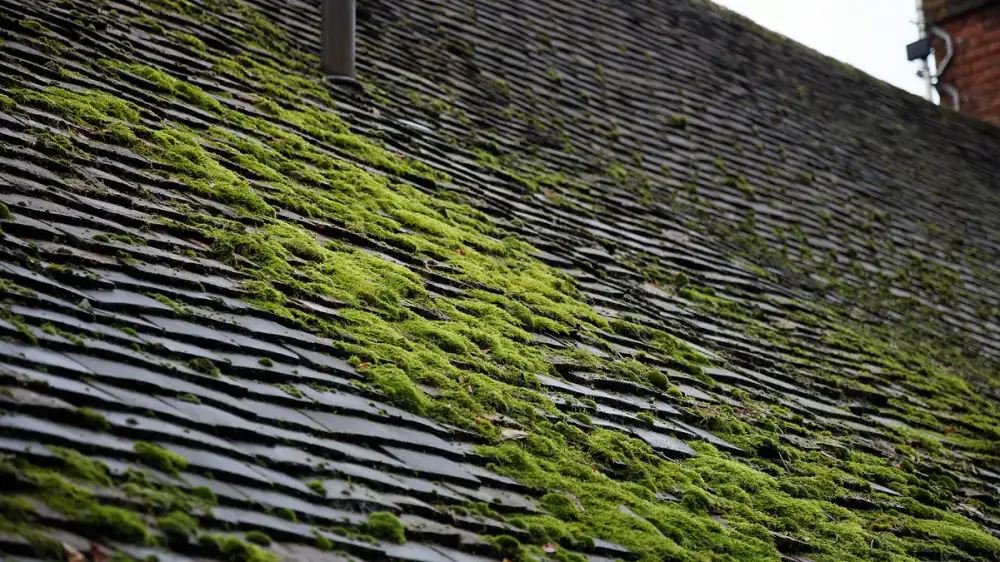
Moss Growing on the Roof: What to Do
Moss takes hold on shaded, damp roof sections and holds moisture against the shingles — but removing it from the roof is risky work for a professional.

Efflorescence: The White Residue on Brick
The white powder on brick is efflorescence — mineral salts drawn to the surface by moisture moving through the masonry and left behind as water evaporates.