What Causes Gutters to Overflow (and How to Fix It)
Overflowing gutters almost always trace back to a handful of causes you can spot from the ground. Here's how to tell which one you're dealing with — and what to do about it.
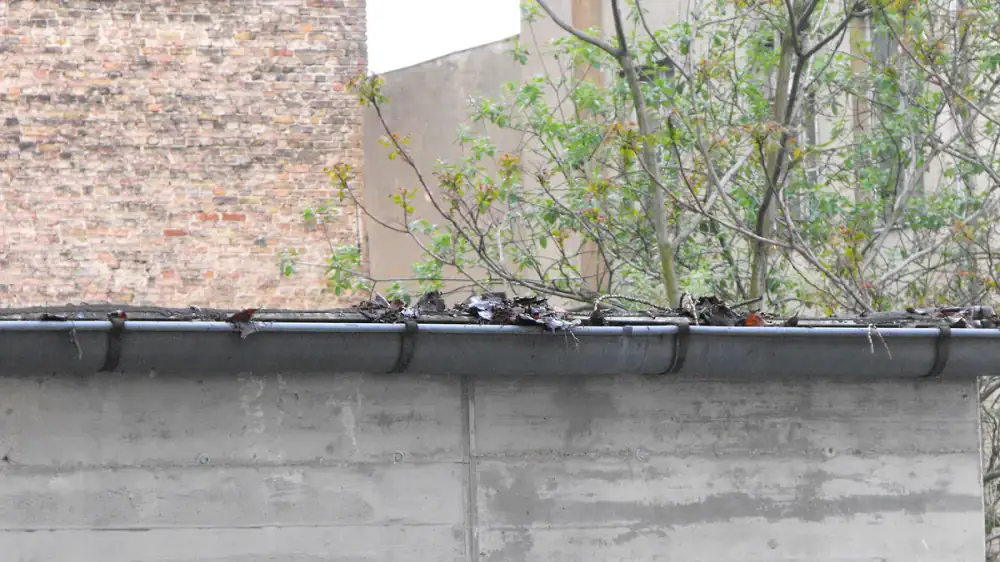
Gutters overflow when water can't reach the downspout fast enough. The most common reason is a clog somewhere in the trough or downspout, but the same spilling shows up with wrong pitch, a sagging run, undersized gutters, or a blocked outlet. The trick is to watch where the water breaks free during rain — the escape point usually names the cause for you.
Water pouring over the front of a gutter tells you something is wrong, but not what. Overflow is the visible end of the problem, never the problem itself: it means the trough is taking on water faster than it can pass it along, and there are only a few reasons that happens. The reassuring part is that you can narrow most of them down while standing safely in the yard, umbrella in hand, watching a storm do the diagnostic work for you.
Overflow is a symptom, so read it like one
Before reaching for a ladder, treat a spilling gutter as evidence to be read rather than a mess to be cleaned. Two questions sort most cases quickly. Does it spill in one spot or all along the run? And does it happen in every rain or only in a real downpour? A single spilling spot points to a local blockage or low point; spillage along an entire run in heavy rain points toward capacity. Once you know which pattern you have, the list of possible causes shrinks fast.
The handful of things that actually cause it
A clogged trough
This is the overwhelming favorite. Leaves, seed pods, shingle grit, and windblown debris pile up until the channel is packed, water hits the dam, pools, and pours over the lip. A clog usually shows itself locally — one stretch spilling while the rest of the run stays dry. Clearing it is the fix, and the cheapest insurance you can buy. If your gutters pack quickly, it is worth revisiting the pace of your cleaning schedule and looking at how the trees around the house keep feeding them.
A plugged downspout outlet
A trough can be spotless end to end and still overflow if the outlet is blocked. Debris tends to gather right where the gutter necks down into the downspout, and packed leaves there back water up the entire run. From the ground the tell is clear: water spilling near the downspout while little or nothing comes out the bottom. Stubborn blockages here are the subject of why downspouts keep clogging.
Flat pitch or a sag
Gutters are hung with a gentle tilt so water always drifts toward the downspout. Let the slope go flat, backward, or dip in the middle, and water collects instead of draining, then tops the edge in heavy rain. A sag does the same thing by a different route — weight pulls a section down and the low point becomes a puddle that overflows. The giveaway is water sitting in the trough during dry weather, which we cover in standing water and why pitch matters.
A system that is simply too small
Some houses never had enough gutter or downspout for their roof. A large or steep roof funnels a great deal of water into the trough very quickly, and an undersized system cannot move it fast enough when the sky opens. This kind of overflow appears only in heavy rain, on clean gutters, and typically along the longest runs served by a single downspout.
Water sneaking behind the gutter
Sometimes what reads as overflow is water slipping between the trough and the fascia, streaking down the wood rather than topping the front lip. That usually means there is no drip edge steering runoff into the gutter, or debris has packed at the back. Because the mechanism differs, so does the fix — see why water runs behind gutters.
Letting the rain tell you which one it is
The best diagnostic tool is a steady rain and a few patient minutes. Stand back from the house, out of the runoff, and watch. Where the water escapes narrows the cause to a local clog or the whole run's capacity. Whether the downspout is throwing a strong stream or a weak trickle tells you if the blockage sits at or below the outlet. Front lip versus behind the gutter sorts overflow from a drip-edge problem. And light rain versus downpour separates a solid clog from a sizing or partial-restriction issue.
Between storms you can fill in the picture from ground level — a visible dip in the run, plants sprouting in the trough, staining on the fascia beneath the spill point. None of it requires a ladder, and all of it saves you from guessing.
Match the fix to what you found
Once the cause is clear, the remedy tends to follow on its own. A clog in the trough or downspout wants clearing and a flush to confirm flow — always the first thing to rule out. A blocked outlet needs the neck cleared and the downspout checked all the way down. A sag or low spot calls for the run to be re-hung and re-pitched, which is where loose or failed hangers usually enter the story. Wrong pitch is a repair, not a cleaning; the affected section has to be adjusted or re-hung. An undersized system may need larger gutters, a bigger downspout, or an added one — a judgment worth making with a professional. And water behind the gutter is solved by a drip edge or flashing that steers runoff back into the trough.
A couple of missteps waste the most effort here. Flushing a packed gutter with a hose only adds to the flood; clear the bulk by hand first, then flush to test. And treating every overflow as a clog means you keep cleaning a gutter whose real problem is pitch or sizing. Diagnose first, then act.
Why chasing it early is worth the trouble
Overflow is easy to shrug off because the water lands outside the house — but what it lands on is exactly what gutters exist to protect. Left running, it announces itself soon enough: streaks down the fascia and siding, pooling against the foundation, peeling paint and soft, discolored wood pointing to fascia rot, eroded soil and washed-out mulch, even dampness in the basement below a chronic spill. Persistent overflow is one of the clearest signs your gutters need repair rather than another cleaning, and it grows costly the longer it runs; over a winter the trapped water freezes, expands, and turns a nuisance into structural damage, a path traced in how snow and ice damage gutters.
Most of this diagnosis happens from the ground, and it should — chasing an overflow from an unsteady ladder is how a five-minute fix becomes an injury. When the cause turns out to be pitch, sizing, a sagging run, or soft fascia, or when the work means real height, that is the moment to hand it to someone equipped for it. Finding the cause early is what keeps a small correction from becoming a fascia or foundation repair.
Questions homeowners ask
Why do my gutters overflow only in heavy rain?
If gutters handle light rain but spill during downpours, the trough or downspout is usually partly restricted, or the system is undersized for your roof area. A partial clog leaves just enough room for a trickle but not for a heavy load. Watch where the water escapes during the next storm — the escape point tells you where the restriction is.
Can gutters overflow even when they're clean?
Yes. Clean gutters still overflow if the pitch is wrong, if a run sags and holds standing water, if the downspout outlet is blocked lower down, or if the gutters and downspouts are simply too small for the volume of runoff. A clog is the most common cause, but it is not the only one.
Is water running behind the gutter the same as overflowing?
Not quite. Overflow spills over the front lip; water running behind the gutter escapes at the back, between the gutter and the fascia, often because of a missing drip edge or debris packed at the rear. Both send water onto the fascia and siding, but the fixes differ. See our guide on why water runs behind gutters.
Does adding more downspouts help with overflow?
Often, yes. If the gutters are correctly sized but water still backs up in heavy rain, adding a downspout gives the trough a second exit and shortens the distance water has to travel. It is a common fix for long runs served by a single downspout, but it is best assessed by a professional who can confirm the system is otherwise sound.
Will gutter guards stop my gutters from overflowing?
Guards reduce how much debris enters the trough, but they do not eliminate overflow. In very heavy rain some guard styles can shed water over the front instead of letting it into the gutter, and fine grit still collects. Guards are a maintenance aid, not a cure for undersized or poorly pitched gutters.
When should I call a professional about overflowing gutters?
Call a professional when clearing the gutters and downspouts doesn't stop the overflow, when the pitch or sizing looks wrong, when a run sags or pulls away from the house, or when the work requires a ladder or roof access you can't manage safely from the ground.
Related guides

How Trees Affect Gutter Maintenance
Leaves, pine needles, seed pods and shade each create a different gutter problem. Here's how tree cover reshapes your maintenance schedule.

Why Water Runs Behind Gutters
A missing drip edge, a gutter hung too low, or an overflowing clog — these three causes explain most water that ends up behind the gutter.
Signs Gutters Need Repair Instead of Cleaning
Sagging runs, leaking seams, loose hangers and standing water are repair problems, not cleaning problems. Here's how to tell them apart.