How the Roof Edge Works Together
Roofing, drip edge, gutters, fascia, soffits and ventilation aren't separate parts — they're one system. Understand the handoffs and a failure in one stops surprising you.
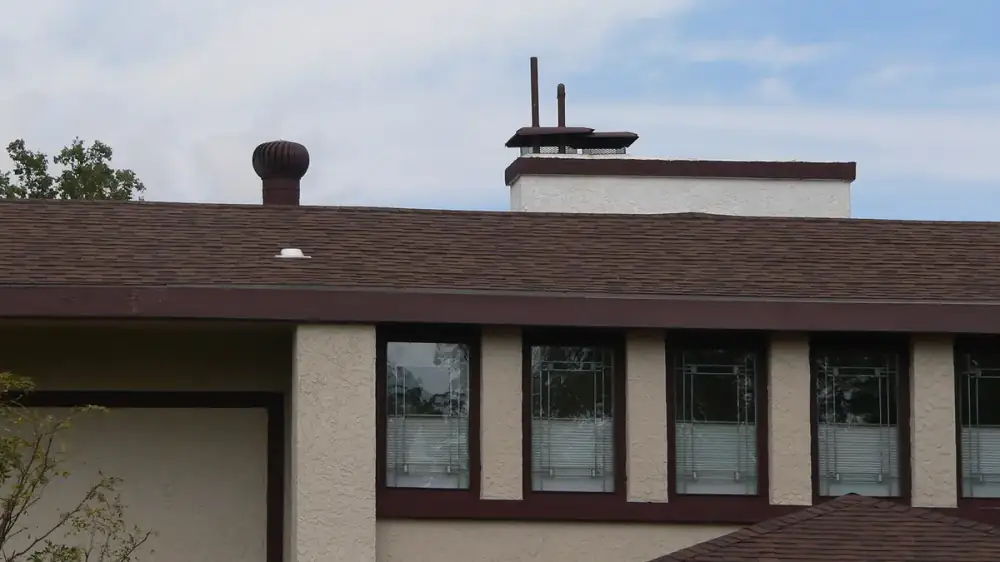
The roof edge is one connected system, not a set of separate parts. Roofing sheds water to the drip edge, which steers it into the gutter, which carries it away from the fascia; the fascia holds the gutter and caps the edge, the soffit closes the underside, and ventilation moves air through it all. Because each part hands off to the next, a failure in one shows up in another — a clogged gutter rots the fascia, a missing drip edge wets it, a blocked vent decays it from behind.
Most roof-edge trouble gets diagnosed one symptom at a time. The fascia is rotting, so the fascia gets replaced. The paint is peeling, so it gets repainted. There's mold on the soffit, so someone scrubs it off. The flaw in that approach is that the roof edge doesn't operate one part at a time. It's a chain of components passing water and air from each to the next, and treating a symptom without understanding which handoff actually failed all but guarantees the problem resurfaces a step away.
What follows lays the roof edge out as the single system it really is — a diagram rendered in words — and shows how a break anywhere along the chain travels to the parts on either side of it.
Six parts, one job
Six components do the work at the edge of your roof. The easiest way to hold them in mind is to picture them from the top down, following a single drop of water on its way to the ground:
- Roofing and shingles — the surface that sheds rain and sends it running toward the eave.
- Drip edge — the metal flashing at the very lip that carries runoff off the roof and past the fascia.
- Gutters — the trough that catches the water and routes it, through the downspouts, away from the house.
- Fascia — the board that caps the roof edge, closes it against weather, and holds the gutters.
- Soffit — the panel that closes the underside of the overhang between the fascia and the wall.
- Ventilation — the airflow that enters through vented soffits and moves up into the attic.
Not one of them stands alone. Each depends on the part just above it doing its job before the water — or the air — ever reaches it.
Following a raindrop down
The system is clearest when you trace a single rainfall from roof to ground and mark each point where one part hands the water off to the next.
- Roof to drip edge. Rain runs down the shingles toward the eave. When the roofing is sound, the water arrives at the edge; when it isn't, the water gets under the shingles before it ever reaches the drip edge at all.
- Drip edge to gutter. The drip edge hands the water a clean lip to fall from, tipping it into the gutter rather than letting it curl back onto the fascia. Miss this handoff and water runs behind the gutter.
- Gutter to downspout. The gutter catches the runoff and walks it to the downspout, clear of the fascia and the foundation. A clogged trough breaks this handoff and spills over.
- Fascia carries the load. The fascia holds the gutter and closes the edge. When any of the earlier handoffs fail, the fascia is the part that ends up soaked.
- Soffit and ventilation underneath. The soffit seals the underside, and its vents let air move through the roof edge and up into the attic, drying the assembly and holding humidity in check.
Every one of those arrows is a place where water can escape the system if the part on either side of it gives way.
When a break travels
Because these components share both water and air, damage almost never stays where it started. The table below traces how a break in each part carries into its neighbors.
| If this part fails | The immediate effect | Where it shows up next |
|---|---|---|
| Roofing / shingles | Water gets under the edge | Wet sheathing, then fascia and soffit |
| Drip edge missing or short | Runoff wicks back onto the wood | Stained, peeling, rotting fascia |
| Gutter clogged or overflowing | Water sheets down and behind the gutter | Soaked fascia and soffit, mould below |
| Fascia rotted | Loses grip on the gutter | Sagging gutters, spread to soffit and sheathing |
| Soffit damaged | Opens the underside | Pest entry, trapped moisture, more rot |
| Ventilation blocked | Humid air stagnates | Condensation, mould, decay from within |
Read down any single column and you can see why chasing one visible symptom so reliably disappoints: the damage you notice is usually one step downstream from the part that actually broke.
Diagnosing in reverse
Because damage flows along the chain in a predictable direction, you can often run the logic backward — start from the symptom and trace it upstream to the handoff that failed.
- Rotted fascia? Look upstream at the gutter (overflowing?) and the drip edge (missing?), and behind it at the ventilation (trapping humidity?). Our guide to what causes fascia rot walks through each source in turn.
- Peeling paint at the eave? Suspect water sheeting down the fascia, or humidity pushing outward from behind a blocked vent.
- Mold on the soffit? Trace it to gutter overflow, water slipping behind the gutter, or stagnant air from poor ventilation.
- Sagging gutter? Either the fascia holding it has softened, or the trough itself is packed heavy with debris.
The symptom tells you where the water ended its journey; the chain tells you where it got in.
The link that fails first
Of all six parts, the gutter occupies the middle of the chain — and it's also the part homeowners neglect most, which is what makes it the system's most common weak link. When it clogs, the failure radiates in both directions at once: water backs up toward the shingles and roof edge above, and it overflows onto the fascia and soffit below. Keeping the gutters clear is therefore one of the highest-leverage things you can do for the entire assembly. A schedule matched to your actual conditions beats a fixed date on the calendar — see how often gutters should be cleaned.
Keeping the handoffs intact
Since the parts fail through their connections, the tell that something has gone wrong is damage crossing from one part into another: stained fascia sitting above a damp or discolored soffit, water sheeting behind the gutter during rain, peeling paint paired with a musty smell at the eave, sagging gutters and loosened hangers, mold blooming where poor ventilation and overflow overlap, and gaps opening where the parts should meet tightly. Any of those means a handoff has already failed and the damage has begun to move.
The mistakes that let it move are mostly mistakes of treating the parts as separate. Replacing rotted fascia without clearing the gutter or adding drip edge just resets the clock. A spotless gutter still fails the whole edge if the drip edge is sending water behind it. Ventilation gets forgotten because it moves air rather than water, yet a blocked vent rots the edge from within all the same. Gutters get filed under optional upkeep, when as the central link they take down the parts on both sides once neglected. And one clean part is no proof of a healthy system — the edge is only ever as sound as its weakest handoff.
That systems view is also what a good professional brings to the roof edge: the ability to trace water back to the failed handoff rather than chase whichever symptom you happened to spot. Call one when damage has plainly spread across parts — rotted fascia with a stained soffit, water behind the gutter with peeling paint, mold paired with poor ventilation — or when the source simply isn't obvious from the ground. Fixing the cause and the affected parts together is the only way to stop the problem from reappearing one component over. To build the habit of catching these breaks before they spread, see how to inspect the roof edge from the ground.
Questions homeowners ask
What parts make up the roof edge?
Six main parts working together: the roofing and shingles that shed water, the drip edge that steers runoff off the roof, the gutters that catch and carry it away, the fascia that caps the roof edge and holds the gutters, the soffit that closes the underside of the overhang, and the ventilation that runs through the soffit into the attic. Each hands off to the next, so they function as one system rather than separate pieces.
Why should I think of the roof edge as one system?
Because a problem in one part almost always shows up in another. A clogged gutter rots the fascia; a missing drip edge sends water behind the gutter; a blocked soffit vent traps moisture that decays the roof edge from within. If you fix only the visible symptom without understanding the handoff that failed, the problem usually returns somewhere nearby.
How does a failure in one part affect the others?
Water follows the path of least resistance, so a break anywhere in the chain sends moisture into the next component. Overflowing gutters soak the fascia and soffit; a failed drip edge wets the fascia; poor ventilation dampens the whole roof edge from behind. The parts share water and air, so damage spreads along the connections between them.
What's the most common weak link at the roof edge?
Gutters are the part most often neglected, and because they sit in the middle of the chain, their failure spreads in both directions — water backs up onto the roof edge and overflows onto the fascia and soffit below. Missing or short drip edge is another frequent weak link, since it quietly lets water bypass the gutter entirely.
How do I keep the whole roof-edge system healthy?
Maintain the handoffs. Keep gutters clear so water actually leaves the roof edge, confirm the drip edge is steering runoff into the gutter, keep soffit vents open so air moves through, and watch the fascia for the early staining and peeling that signal moisture. Regular ground-level inspection catches a broken handoff before it damages the next part in the chain.
When should I call a professional about the roof edge?
Call a pro when you see signs that damage has spread across parts — rotted fascia with a stained soffit, water behind the gutter with peeling paint, mould with poor ventilation — or when the source isn't obvious. Because the parts are connected, a professional can trace the water back to the failed handoff and fix the cause rather than chasing symptoms.
More from this section
How Gutters Damage Fascia When They Overflow
Overflow sends water onto and behind the fascia, rotting the board and loosening hangers — then the gutter sags and overflows more. Here's the cascade and how to stop it.
Signs Soffits Have Moisture Damage
Staining, sagging, peeling paint, pests and mold under the eaves all signal soffit moisture damage. Here's what causes it and when to call a pro.
Water Stains Below the Roof Edge
Stains under the eave are a map of misdirected water — overflow, water behind the gutter, drip edge trouble, ice dams or condensation. Here's how to read them.