Getting Ahead of Fall Leaf Drop
Leaves don't fall on your schedule, and they don't all fall at once. The homeowners who stay ahead of autumn treat leaf drop as a season with waves, not a single cleanup day.

Leaves don't fall all at once, so one late cleanup is the wrong plan. Most homes with mature trees need at least two clearings — one partway through the drop and one after the last leaves are down but before the first hard freeze. Read your own trees rather than the calendar; the last species to go bare tells you when you're clear. Do ground-level observation freely, keep ladder work to firm ground and a stable setup, and hand off second-story or steep-roof work to a professional.
The most common autumn plan is also the worst one: wait until the trees are bare, spend one long Saturday clearing everything at once, and call fall handled. It feels efficient. It's the maintenance equivalent of doing the dishes once a month — technically it happens, but everything in between suffers, and the final job is enormous. Leaf drop isn't an event you can wait out. It's a season with its own internal timing, and getting ahead of it means matching your work to how the leaves actually fall rather than to when it's convenient to deal with them.
The reason the single-cleanup plan fails is simple: your gutters have to work during the drop, not just after it. Autumn is one of the wettest stretches of the year in much of the country, and a gutter packed with three weeks of accumulated leaves is a gutter that overflows behind the fascia every time it rains. By the time you get around to the grand finale, the damage has already been quietly happening for a month. Staying ahead means clearing more than once, on a schedule your trees set.
Leaves fall in waves, not a curtain
Picture leaf drop as a single curtain coming down and you'll always be late. It's closer to a series of waves, and the waves are staggered by species, by weather, and by where a given tree sits.
Different trees have completely different schedules. Some species let go early and fast, dumping most of their leaves in a week after the first real cold snap. Others are unhurried, shedding gradually over a month or more. And a few are notoriously stubborn — certain oaks in particular hang onto brown leaves deep into fall and sometimes rattle them all the way through winter. A single storm with wind and rain can also compress a wave that would otherwise have taken two weeks into a single overnight dump. The practical upshot is that the leaves landing in your gutters in early October and the ones landing in mid-November may come from entirely different trees, which is exactly why one cleanup can't catch them all.
Read your own trees, not the calendar
Because the timing is set by species and local weather, no national date will tell you when to act. Your yard will. The habit worth building is to actually watch the trees around your house — and, just as importantly, the ones upwind of it, since a neighbor's maple two lots over can fill your gutters as thoroughly as your own.
Two moments are worth marking. The first is when the earliest and heaviest droppers have let go most of their load — usually a good point for an initial clearing, because a lot of debris is already down but plenty more is coming. The second is when the last holdouts finish. In many regions the oaks are the reliable signal here: when they've finally gone bare, you can be reasonably confident the drop is over and it's safe to do the final, thorough cleanup. Tracking that in whatever exterior maintenance plan you keep, even as a couple of scribbled notes, turns leaf drop from something that ambushes you into something you can see coming.
The two-clearing rhythm
For most homes with mature trees nearby, the sweet spot is two clearings, sometimes three in a heavily wooded lot.
- A mid-drop clearing, once the early and heavy droppers have mostly finished, to keep the gutters actually functioning through the peak of autumn rain.
- A final clearing, after the last holdouts are down but before the first hard freeze, to send the system into winter clean.
That's the rhythm, and the second clearing has a hard deadline attached that the first one doesn't. This isn't only about leaves, either — the same gutters that overflow with debris are the ones you want to check for sagging runs, loose hangers, and blocked downspouts, so it's efficient to fold the whole fall gutter and downspout checklist into your final pass. If you're unsure whether your particular tree situation warrants one clearing or three, the general guidance on how often gutters should be cleaned is a useful starting point, though your own trees always have the final say.
A note on guards, since they come up constantly: gutter guards can genuinely reduce how much debris reaches the trough and stretch out the interval between clearings, but they do not make cleaning unnecessary. Fine debris and shingle grit still get through, and leaves can mat on top of the guard and block flow just as effectively as they'd fill an open gutter. Treat guards as a way to change the frequency of the work, never to eliminate it.
Why the last clearing races the freeze
The final clearing's deadline is the first hard freeze, and it's worth understanding exactly why, because it's the difference between an easy chore and a genuine winter problem.
Wet leaves left in a gutter don't just sit there. They hold water against the fascia and the roof edge, and when the temperature drops below freezing, that soaked mass turns to ice. A frozen, debris-choked gutter can't drain at all, so meltwater from every subsequent thaw backs up at the roof edge instead of running away. You've essentially built a dam out of last month's leaves. Clearing before the freeze removes the material before it can lock in place; clearing after means chipping at frozen debris on a slick, cold roof edge, which is both harder and considerably more dangerous. That first-freeze deadline is the same one that governs a whole category of autumn tasks, laid out in the first-freeze checklist — leaf work is simply the piece of it with the longest lead time.
Keeping it safe and keeping it up
Most of getting ahead of leaf drop is observation, and observation is safe: overflowing or sagging gutters, blocked downspouts, and debris piling in roof valleys are all visible from the ground, better with binoculars. The clearing itself often means a ladder, and this is the season to be most careful with one — wet leaves make both ladders and roofs treacherous. Keep ladder work to a stable setup on firm ground, resist the urge to lean out or step onto a slick roof, and hand off anything on a second story or a steep pitch to a professional. The debris in a gutter is never worth a fall.
The larger habit is simply to stop thinking of fall cleanup as a single date on the calendar and start thinking of it as a short season you manage in a couple of passes. Watch the trees, clear at the two natural break points, and beat the freeze on the last one. A quick standing routine of monthly exterior checks will keep the drop on your radar as it happens, so the waves never catch you flat-footed. The leaves are going to come down on their own schedule regardless. Getting ahead just means working on theirs instead of waiting for yours.
Answers to common questions
When is the best time to clean gutters in fall?
There isn't a single best day — that's the core mistake. Most homes with mature trees need at least two clearings: one partway through the drop, and one after the last leaves are down but before the first hard freeze. Waiting for every leaf to fall means your gutters run clogged through weeks of autumn rain, and rushing too early means doing it again anyway.
How do I know when the leaves are done falling?
Watch your own trees rather than the calendar. Different species drop at very different times — some let go early in a single rush, others hang on stubbornly into late fall or even winter. The oaks are usually the tell: in many areas they're among the last to finish, so when they're bare, you're generally clear to do the final cleanup before freezing weather.
Do gutter guards mean I can skip fall cleaning?
No. Guards can reduce how much debris gets into the trough and how often you need to clear it, but they don't make cleaning unnecessary — fine debris, seed matter and shingle grit still accumulate, and leaves can mat on top of the guard itself and block flow. Treat guards as something that changes the frequency of the work, not something that eliminates it.
What happens if I leave leaves in the gutters over winter?
Packed wet leaves hold water against the fascia and roof edge, and once the first freeze hits, that soggy mass turns to ice and stops draining entirely. Meltwater then backs up at the roof edge instead of running off. Clearing the gutters before the freeze is the whole point of finishing fall work on time — after the freeze, the debris is locked in and much harder to remove.
Can I do fall leaf work from the ground?
A lot of the observation, yes — you can see overflowing or sagging gutters, blocked downspouts and debris piling at the roof edge from the ground, better with binoculars. The clearing itself often needs a ladder, and that's where caution matters: wet leaves make ladders and roofs slick, so keep the work to a stable ladder on firm ground, and hand off anything on a second story or steep pitch to a professional.
Is it worth clearing leaves off the roof too, not just the gutters?
Piles of wet leaves sitting on the roof — especially in valleys and behind chimneys — trap moisture against the shingles and feed debris back into the gutters, so it's worth addressing. But roof access is a fall risk, so this is a look-from-the-ground task for most homeowners and a call to a professional if there's significant buildup that needs removing from up high.

Winter Exterior Home Maintenance Checklist
A grouped, printable winter checklist for snow, ice, frozen gutters and storm damage — built entirely around safe, ground-level observation and knowing when to call a pro.
Autumn Exterior Home Maintenance Checklist
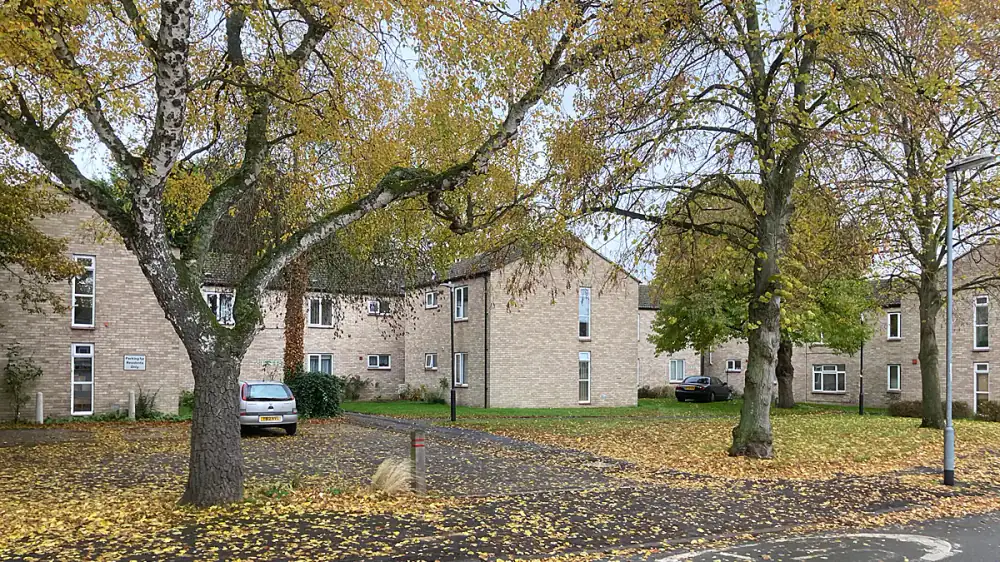
A grouped, printable fall checklist for leaves, pine needles, gutter guards, downspouts, roof edge and freeze prep — with an emphasis on safe, ground-level work.
Post-Storm Exterior Inspection Checklist
A grouped, printable checklist for post-storm home exteriors, focused on safe ground-level observation and knowing when to call a roofing professional.