Preparing Outdoor Spaces for Winter
Decks, furniture, faucets and drainage all need attention before the first hard freeze. A short fall routine keeps winter from turning small oversights into spring repairs.

Preparing outdoor spaces for winter is a pre-freeze routine at ground level: clear and cover decks, store or protect furniture, and disconnect and drain outdoor faucets so nothing bursts. Clear leaves from drains and confirm water runs away from the foundation before it can freeze. Keep your own work on solid footing and leave any roof or tall-ladder tasks to a professional.
The first hard freeze is the only deadline that matters here, and it does not move. Water left in a hose bib expands as it freezes and splits the pipe behind the wall. A wooden chair left in the open soaks up months of freezing and thawing until its finish crazes and its joints loosen. A clogged drain turns each thaw into a puddle and each night into a sheet of ice. None of it looks urgent on a mild afternoon in October, which is precisely why it slips down the list, and why it reappears as a repair in spring.
The whole point of a fall routine is to spend an hour or two now instead of a weekend and a plumber's invoice later. Work the tasks below in roughly the order given, from the freeze-sensitive plumbing that can fail overnight to the slower wear on decks and furniture, and keep an eye on the forecast so the mild-weather jobs get done while it is still mild. Every task here is a ground-level one; the moment a job leans toward the roof, hand it off.
Start with the plumbing, because it fails fastest
Nothing on this list ruins a winter faster than a burst pipe, and nothing is easier to prevent. Begin by disconnecting every hose, draining it, and coiling it away out of the weather, because a hose left attached traps water in the faucet and the pipe behind it. Then, wherever an interior shutoff serves an outdoor faucet, close it and open the faucet to let the line drain. Take off and store any splitters, timers, or filters left on the spigots, since those trap water too. Insulated covers on exposed hose bibs add a useful layer against a deep cold snap. And test for drips now, while a leak is an easy fall repair rather than a frozen emergency behind a wall.
This one step protects more value than anything else you will do outdoors this season. For the full procedure, see winterizing outdoor faucets and hose bibs.
Give the deck a clean exit into winter
A deck comes through winter best when it heads in clear, clean, and, if it is due, freshly sealed. Start by clearing off anything that traps moisture against the boards over the cold months, planters, mats, and the like, then sweep the leaves and grit from between the boards and along the edges where damp lingers. Give the whole surface a thorough cleaning while the weather still lets the wood dry afterward.
Sealing is where timing bites. A finish that sheds water instead of letting it soak in and freeze is worth having, but sealers need dry wood and mild temperatures to cure, so this is a job for a dry fall stretch, never the week before a freeze. If the deck isn't due for a coat, a proper clean and clear still earns its keep. While you are down there, note any loose boards, popped fasteners, or soft spots and deal with them before winter works them looser. A careful, wood-friendly approach is laid out in how to clean a wood deck.
Get the furniture and the fragile things out of the weather
Furniture left exposed pays for it by spring in cracked finishes, rust, and rot, and the fix is mostly just moving things. Store what you can indoors, in a garage, shed, or basement, and for pieces that must stay out, use covers and raise them off wet ground so water cannot wick up from below. Clean and dry the cushions and fabrics before stashing them somewhere dry.
Then think about everything that holds water, because water is what does the damage when it freezes and expands. Empty, dry, and store ceramic and clay pots, which crack when trapped water freezes inside them, and bring in or protect birdbaths, fountains, and anything similar. A cover, incidentally, only helps if what's underneath is dry when you put it on; sealing damp furniture under a cover just lets it freeze and thaw in place all winter.
Send the water away before it can freeze
Standing water is only a puddle until the temperature drops; then it becomes ice, and ice gets in. So the last pass is about drainage. Clear leaves and debris from yard drains, area drains, and downspout outlets so water has somewhere to go, and confirm that roof runoff discharges several feet from the foundation rather than beside it. Remove anything ponding on the deck or patio and check those surfaces still slope to drain. Walk the grade around the house to be sure it carries water away from the walls, not toward them, and address the low spots that pool now before they turn into sheets of ice at the first thaw.
Because roof drainage feeds all of this, the pre-winter roof and gutter prep is a natural companion to this routine, with the same rule: keep any height work with a professional.
Knowing where your part ends
Most of winter prep is squarely a homeowner's job, done on solid footing, and that is how it should stay. Bring in a professional when the work would put you on the roof or a tall ladder, when an outdoor faucet leaks or has no shutoff to drain it, or when drainage keeps pooling against the foundation despite a thorough cleaning. Those are the jobs where a little expert help heads off a burst pipe or a wet basement. What such help costs depends on the particulars, the number of faucets, the size and condition of the deck, and how much drainage correction the yard actually needs. To keep the rest of the house on schedule through the cold months, the winter exterior maintenance checklist and the seasonal care hub fill in around this routine.
Answers to common questions
When should I winterize my outdoor spaces?
Finish before the first hard freeze, while the weather is still mild enough to work comfortably and hoses and faucets can drain fully. In most regions that means mid to late fall, but the freeze is the real deadline. Getting ahead of it protects faucets from bursting and lets sealers and covers do their job before the cold sets in.
Why is it so important to disconnect outdoor hoses before winter?
A hose left connected traps water in the faucet and the pipe behind it. When that water freezes it expands, and it can crack the faucet or the pipe inside the wall — a leak you may not discover until spring. Disconnecting and draining hoses, then shutting off and draining the supply where possible, is one of the most valuable freeze precautions.
Do I need to cover or store outdoor furniture?
It helps considerably. Storing furniture indoors or under cover keeps moisture, freeze-thaw cycles and UV from wearing it down over the winter. If storage is limited, covers and raising pieces off wet ground go a long way. The goal is to keep water from sitting in, on and under your furniture through months of freezing and thawing.
Should I seal my deck before winter?
A deck that is due for sealing is better protected going into winter, because a good finish helps shed water rather than letting it soak in and freeze. Timing matters: sealers need dry wood and mild temperatures to cure, so this is a job for a dry fall stretch, not the week before a freeze. If the deck is not due, a thorough cleaning and clearing is still worthwhile.
How does drainage factor into winter prep?
Standing water that freezes is a problem everywhere it collects — on flat surfaces, in low spots and against the foundation. Before the freeze, clear leaves and debris from drains and downspout outlets, confirm water runs away from the house, and remove anything ponding on decks and patios. Good drainage in fall means less ice and less water damage all winter.
How much winter prep can I do myself from the ground?
Most of it. Storing furniture, disconnecting hoses, clearing drains and observing drainage are all ground-level tasks. Anything that involves roof access, a tall ladder or gutter work at height is better handed to a professional. Keep your own work on solid footing and defer the elevated tasks.
You might also like
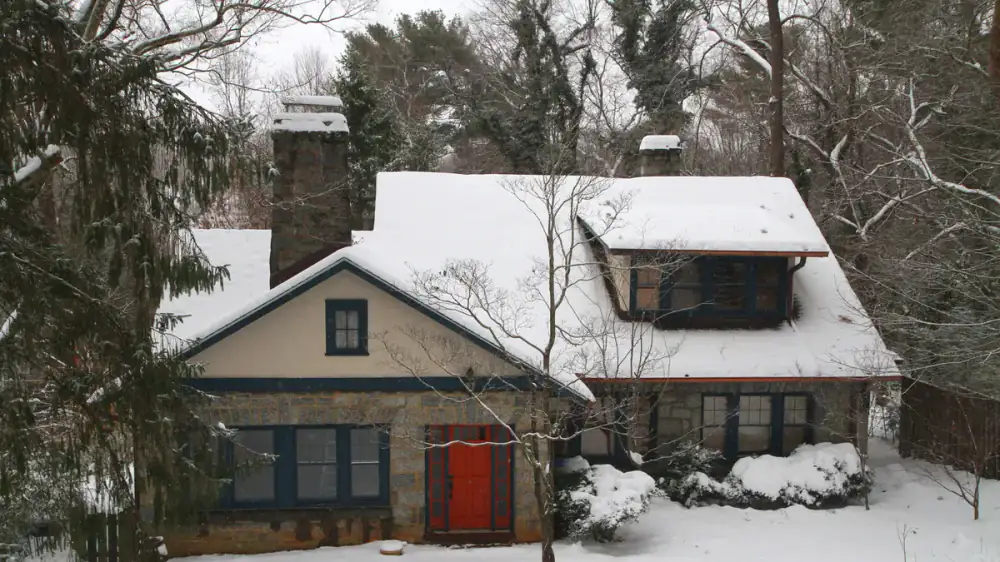
Winter Exterior Home Maintenance Checklist
A grouped, printable winter checklist for snow, ice, frozen gutters and storm damage — built entirely around safe, ground-level observation and knowing when to call a pro.

Autumn Exterior Home Maintenance Checklist
A grouped, printable fall checklist for leaves, pine needles, gutter guards, downspouts, roof edge and freeze prep — with an emphasis on safe, ground-level work.
Post-Storm Exterior Inspection Checklist
A grouped, printable checklist for post-storm home exteriors, focused on safe ground-level observation and knowing when to call a roofing professional.