Winter Ice and Snow Safety Around the Home
Icicles fall, snow builds up, and the ground below gets slick. Here is how to stay safe and watch for trouble without putting yourself under a loaded roof edge.
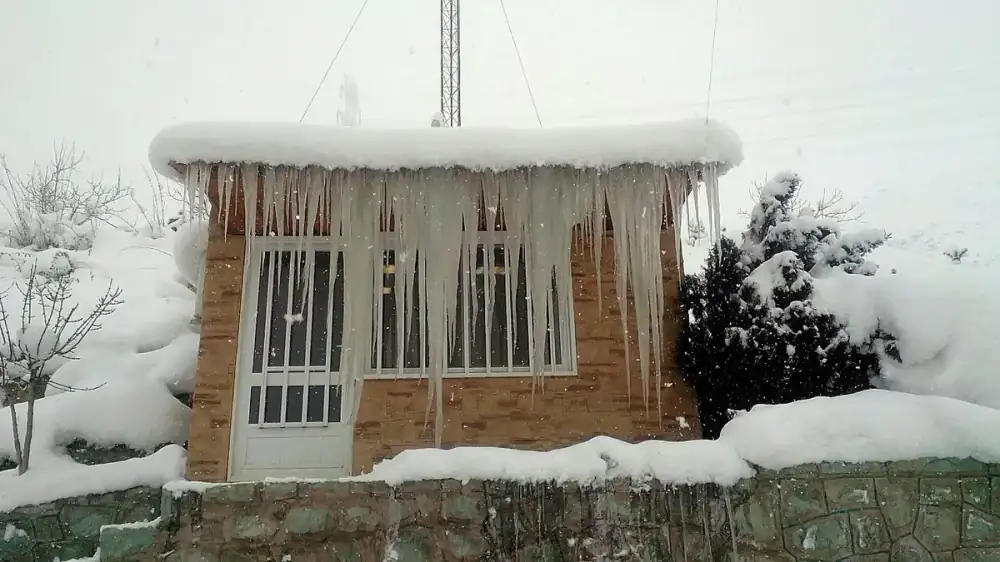
Winter ice and snow safety comes down to keeping your distance and reading trouble from the ground: stay out from beneath loaded eaves and large icicles, scan the roof for sagging or heavy snow load without climbing, and keep walkways cleared and treated. Never knock icicles down from below or step onto a snow-covered roof — observe from a safe spot and hand height work and repairs to a professional.
For a few months each year, the exterior of a house becomes something to monitor rather than manage. The eaves grow ice, the roof carries a load you can't easily judge, and yesterday's meltwater turns into this morning's invisible sheet on the front step. None of it invites the ladder-and-tool response that works the rest of the year. Winter rewards patience and good footing far more than it rewards initiative.
That is the frame worth carrying through the whole season: almost everything dangerous overhead can be watched safely from below, and almost everything watched from below should stay there until the thaw. What follows is organized around what you can actually observe from the ground and how to keep the observing itself from becoming the accident.
The physics of a falling icicle
An icicle looks decorative and behaves like a projectile. A large one can weigh several pounds, and it doesn't decide to fall on a schedule — it lets go when a warming afternoon melts its grip at the eave, often on the sunniest side of the house first. The cruel part is where they form: directly over doorways, entry steps, and the strip of walkway you cross a dozen times a day.
So the single most useful winter habit is spatial. Learn where the big icicles hang and simply stop passing under them. If a favorite path runs beneath a loaded edge, reroute it or rope it off until the ice comes down on its own. Watch for icicles building over things you approach without thinking — a parked car, a gas meter, the mailbox. And resist the strong temptation to knock one down with a broom or a shovel from below. That move puts your head and shoulders in the exact spot the ice is about to occupy.
Thick, ridged ice running along the eave rather than a single spear usually means an ice dam has formed behind it, backing meltwater up under the shingles. You can note the pattern from the driveway; the fix is not yours to attempt. Chipping at a dam damages shingles and rains ice down on whoever is standing there. For what's happening up there and why it matters, see ice dams forming at the roof edge.
Reading the roofline from your driveway
Snow accumulates quietly and misleads by looking lighter than it is. A foot of dry powder and a foot of wet, settled snow are wildly different loads, and the wet layer builds fast during a warm-then-cold spell. You don't need to measure it to respond sensibly — you need to read the signals the house gives you.
Stand back far enough to see the whole roofline and look for these:
- A ridge or roofline that dips or sags where it used to run straight after a heavy fall.
- Snow that is obviously wet and dense rather than light and fluffy, especially if rain fell on top of it.
- New indoor clues that travel with load: fresh cracks in ceilings or drywall, interior doors that suddenly stick, or unfamiliar creaking.
- Deep drifts piled on one section, since wind stacks snow unevenly and one slope can carry far more than another.
If any of that shows up, the response is the same and it is deliberately unglamorous: keep people and pets out from under the loaded area, and call someone equipped to clear a roof. Do not go up to do it yourself. A snow-covered roof hides both its surface and its edge, which is why it ranks among the most dangerous places a homeowner can stand.
The ice you actually slip on
Here is the statistic-free truth of the season: far more people get hurt at ground level than up high. The roof gets the attention, but the injury usually happens on a walkway. Meltwater dripping off the eaves all day refreezes into a thin, clear glaze overnight — the kind that's nearly invisible in flat winter light and forms most readily in exactly the strip below the roof edge you're tempted to stand in while looking up.
Keep steps and paths cleared and treated so ice never gets a foothold, and treat the ground beneath the eaves as its own problem zone. Wear traction footwear whenever you walk the perimeter, and when you want to scan the roof, plant yourself in one stable, cleared spot to do it. The most avoidable winter fall is the one that happens while someone crosses an icy yard with their eyes on the gutters instead of the ground.
What a pair of binoculars will tell you
Most of what you need to know about the roof and gutters in winter is available from the ground with a cheap pair of binoculars. From a safe, level footing, you can scan the eaves for heavy ice, judge relative snow load across the slopes, and spot the oversized icicles worth steering clear of. Look, too, at the gutters themselves: sections sagging or pulling away from the fascia under the weight of ice are telling you where meltwater is pooling and refreezing instead of draining.
Treat this as reconnaissance, not a to-do list. Note where water is running or refreezing and where the gutters are struggling, and mark those spots to deal with once the weather warms — that's a spring job, not a January one. For the rest of the cold-season walk-around in the same ground-level spirit, the winter exterior maintenance checklist covers the parts of the house this article doesn't.
Where a homeowner's job ends
The honest boundary in winter is low, and that's the point. Heavy snow load, a sagging line, thick ice packing the eaves, gutters torn loose by ice — each of those is an observation to report, not a problem to solve from a ladder. Any task that would put you on the roof, on a tall ladder in the cold, or underneath a loaded edge belongs to someone with the gear and the footing for it. The cost of that work varies with roof size and pitch, how the crew can reach the eaves, and how much ice has built up, but none of those variables change the basic math: a fall in January is never worth what the chore would have saved.
The best winter safety move happens before winter. Clearing the gutters and checking the drainage while it's still mild — the ground the pre-winter roof and gutter prep guide covers — means less standing water to freeze, fewer ice dams, and far less to watch nervously from the driveway once the cold sets in.
Your questions, answered
Are falling icicles actually dangerous?
Yes. Large icicles can weigh several pounds and let go without warning as the day warms, and they tend to hang over the exact places people walk — doorways, steps and eaves. The safe habit is to stay out from directly under a loaded roof edge, rope off or avoid the riskiest spots, and never try to knock icicles down from below.
How much snow on a roof is too much?
There is no universal number, because it depends on the roof, the structure, and whether the snow is light and dry or wet and heavy. Rather than guess, read the warning signs from the ground: a sagging line, new interior cracks, or doors that suddenly stick. If any of those appear, keep people out from underneath and have the roof assessed by a professional.
Should I try to remove snow from my roof myself?
Roof snow removal is a job to approach with real caution and, in most cases, to leave to a professional. Climbing onto a snow-covered roof is a serious fall risk, and dragging snow down carelessly can bring ice and debris onto anyone below. If the load worries you, watch from the ground and call someone equipped for the work.
What are ice dams and why do they matter?
An ice dam is a ridge of ice that forms at the roof edge and traps meltwater behind it, which can then back up under the shingles. From the ground you may notice thick ice along the eaves and oversized icicles. An ice dam is a signal to have the roof looked at, not something to climb up and chip at, since chipping damages shingles and puts you under falling ice.
How do I keep walkways safe in winter?
Keep paths cleared and treated so ice can't build up, and pay extra attention to the ground below the roof edge, where dripping meltwater refreezes overnight. Watch for the thin, clear ice that is hard to see, and route foot traffic away from any spot where icicles or roof snow could come down.
Can I check my roof during winter?
You can observe it from the ground, ideally with binoculars, looking for sagging, heavy snow load, ice buildup at the edges and large icicles. What you should not do is climb onto a snow-covered or icy roof, which is one of the most dangerous things a homeowner can attempt. Leave any close inspection or actual work to a professional.
Keep reading
Winter Exterior Home Maintenance Checklist
A grouped, printable winter checklist for snow, ice, frozen gutters and storm damage — built entirely around safe, ground-level observation and knowing when to call a pro.
Autumn Exterior Home Maintenance Checklist
A grouped, printable fall checklist for leaves, pine needles, gutter guards, downspouts, roof edge and freeze prep — with an emphasis on safe, ground-level work.
Post-Storm Exterior Inspection Checklist
A grouped, printable checklist for post-storm home exteriors, focused on safe ground-level observation and knowing when to call a roofing professional.