How to Remove Black Streaks and Mildew from Exterior Walls
Those black streaks and dark patches aren't dirt — they're living growth feeding on moisture and shade. That's why they resist a hose and keep coming back.

Black streaks and mildew are living organic growth — algae and mildew feeding on moisture and shade — not ordinary dirt. That's why a hose won't shift them and force only spreads them. The reliable way to remove them is soft washing: a cleaning solution at low pressure that treats the growth itself. And because they return wherever it stays damp and shaded, lasting results come from managing moisture, drainage and light, not just cleaning more often.
Nearly everyone has stood in the driveway looking up at them: dark vertical streaks bleeding down from the roofline, or a gray-black haze creeping across a shaded stretch of siding. The natural next move is to grab the hose and blast — and the natural next feeling, a minute later, is confusion, because the stains barely move, or they're back before the season turns. That frustration comes from a single misunderstanding, and clearing it up changes everything about how you approach the wall.
These stains are alive
The dark staining on an exterior wall is organic growth — typically algae, mildew and related microorganisms that colonize the surface. That's the whole key. Unlike dust and road grime, this staining isn't deposited onto the wall by rain; it grows in place, feeding on moisture and on the conditions the wall hands it. Understanding that it's living, not dirty, is what explains both why it resists cleaning and where it chooses to appear.
And it does choose. North-facing and shaded walls stay cooler and damper and get less drying sun, so they collect it first. Areas under overflowing gutters or dripping roof edges stay chronically wet and grow it heavily. Spots near dense vegetation, where airflow is poor and shade constant, are reliable hosts. Low areas with poor drainage, where moisture pools against the wall, round out the map. The common thread through all of them is moisture plus shade — wherever a wall stays damp and out of the sun, this growth finds a foothold, and no amount of scrubbing changes that arithmetic.
Why the hose fails and soft washing works
A plain rinse, and even a high-pressure blast, only removes what's sitting on top. The growth's roots and spores stay embedded in the surface, ready to regrow, so the wall looks better for a week or two and then the staining creeps back — because nothing that was actually alive got treated. On top of that, force brings its own damage: high pressure can crack siding, drive water behind panels, erode mortar and strip finishes, all while leaving the real problem untouched. It's the exact trap behind why green growth keeps returning on siding — the surface looked clean, but the growth was never addressed.
Because this is a chemistry problem, it wants a chemistry answer. Soft washing applies a cleaning solution at low pressure, lets it break the growth down at the source, then rinses it away — treating the organism itself rather than displacing the visible layer, which is why the results last so much longer than a quick blast. It also happens to suit the surfaces where this growth shows up. Black streaks and mildew favor siding, stucco, painted wood and other delicate or porous materials — precisely the surfaces high pressure damages — and soft washing cleans them thoroughly without that risk, which is why it's the go-to for organic staining. The fuller pressure washing versus soft washing comparison lays out why force is the wrong tool here. Whatever solution you use, keep the handling general and safety-first: follow the product's directions, wear appropriate protection, never mix products, protect and rinse nearby plants, and stay mindful of where overspray and rinse water end up.
The conditions are the real target
Here's the piece homeowners most often miss. Cleaning removes the growth but does nothing about the conditions that grew it, so if the wall stays damp and shaded, new growth re-establishes — sometimes inside a single season. Cleaning more frequently just treats the symptom on a loop and never breaks the cycle. Breaking it means going after what feeds the growth in the first place.
| Condition | Why it feeds growth | What helps |
|---|---|---|
| Overflowing gutters | Soak the walls below with runoff | Keep gutters and downspouts clear |
| Poor drainage | Moisture lingers against the wall | Direct water away from the foundation |
| Deep shade | Wall never dries out | Trim back vegetation to let in light |
| Poor airflow | Traps dampness at the surface | Improve air movement around the wall |
| Dripping roof edges | Chronically wet spots | Address the source of the drip |
In practice, the highest-leverage move is usually the gutters. Overflowing gutters are one of the biggest sources of chronically wet walls, so staying on top of how often to clean gutters directly reduces the moisture feeding growth below the roofline — and damp, streaked walls under the eaves can also be a clue to check whether the soffits have moisture damage from the same overflow. From there it's a matter of moving water away from the house instead of letting it pool, trimming vegetation to let in light and air so walls dry faster after rain, and hunting down any chronically damp spot — a persistent drip, a shaded low corner — since those regrow faster than anything else. Folding these into a regular rhythm, like a spring exterior maintenance checklist, keeps the conditions in check before growth ever gets established.
Reading the wall and knowing your limits
The staining itself isn't the only thing worth watching. Growth returning within weeks of cleaning is a clear sign the underlying moisture problem is still unaddressed. Persistent damp patches that never seem to dry, staining concentrated under gutters or roof edges, musty smells or soft spots near affected areas, and peeling paint or stained trim and soffits all point past the surface — often to moisture that has gotten into the wall and to a source shared with the streaks. Reading those signs keeps you from cleaning the same wall forever while a leak works quietly behind it.
It also keeps you honest about a few recurring traps: treating the growth as dirt and trying to rinse or blast it off, reaching for high pressure on delicate siding, cleaning on a loop without ever touching the moisture and shade behind it, ignoring the gutters that feed the dampness, letting cleaning solution dry on the surface, skipping plant protection — and, most dangerous of all, chasing high walls and roof stains yourself. That last one is where the real limit sits. When the affected areas are on an upper story or a roof, where height and slope make the work hazardous; when large areas of heavy growth need cleaning solutions handled and contained responsibly; when the growth keeps returning fast enough to suggest a moisture problem worth having assessed rather than just cleaned; or when finishing the job would mean overreaching from a ladder or stepping onto a roof — that's the point where the risk outweighs the result, and the work belongs to a professional.
Answers to common questions
What are the black streaks on my exterior walls?
They're organic growth — typically algae, mildew and related microorganisms — not ordinary dirt. They take hold where moisture and shade let them thrive, which is why they cluster on north-facing walls, shaded areas, and spots below overflowing gutters. Because they're alive, they resist a plain rinse and keep spreading.
Why won't the streaks come off with a hose?
Because a hose only removes what's on the surface, and the growth's roots and spores stay behind. Black streaks and mildew are living, so treating them takes a cleaning solution that addresses the growth itself. That's what soft washing does, and it's why force alone fails.
Why does mildew keep coming back after I clean it?
Because the conditions that grew it — moisture, shade and poor drainage — are still there. Cleaning removes the growth, but if the wall stays damp and shaded, new growth takes hold again. Lasting prevention means reducing the moisture and increasing light and airflow, not just cleaning more often.
Is soft washing safe for removing mildew from siding?
Yes — it's usually the recommended method. Soft washing uses low pressure and a cleaning solution, so it treats the growth without the force that can damage siding or drive water behind it. It's well suited to the delicate and porous surfaces where black streaks and mildew tend to appear.
How do I stop streaks from returning?
Focus on the conditions. Keep gutters clear so runoff isn't soaking the walls, improve drainage so water doesn't pool nearby, trim back vegetation to let in light and air, and address any spots that stay chronically damp. Reducing moisture and shade is what keeps growth from re-establishing.
When should I hire a professional?
Consider a pro for upper stories and roofs, where height makes the work hazardous, for large areas of heavy growth, and when cleaning solutions need to be handled and contained responsibly. Persistent growth that keeps returning may also point to a moisture problem worth having assessed.
More from this section

Pressure Washing vs Soft Washing
One relies on force, the other on cleaning solution at low pressure. Matching the method to the surface is what protects siding, roofs and trim.
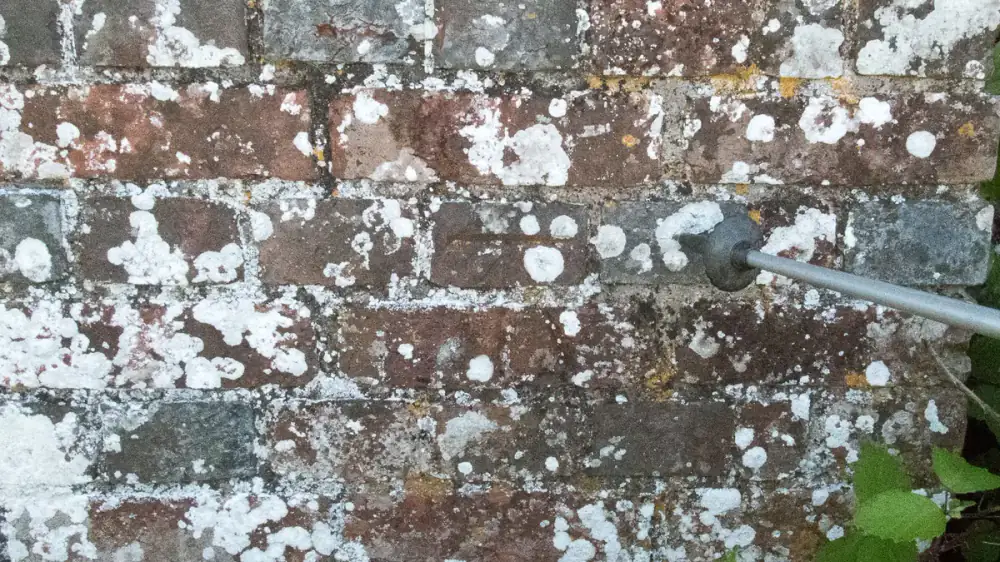
How to Remove Algae from Exterior Walls
That green film is a moisture problem, not just dirt. Here's why gentle cleaning beats blasting, how to protect plants and windows, and how to stop it coming back.
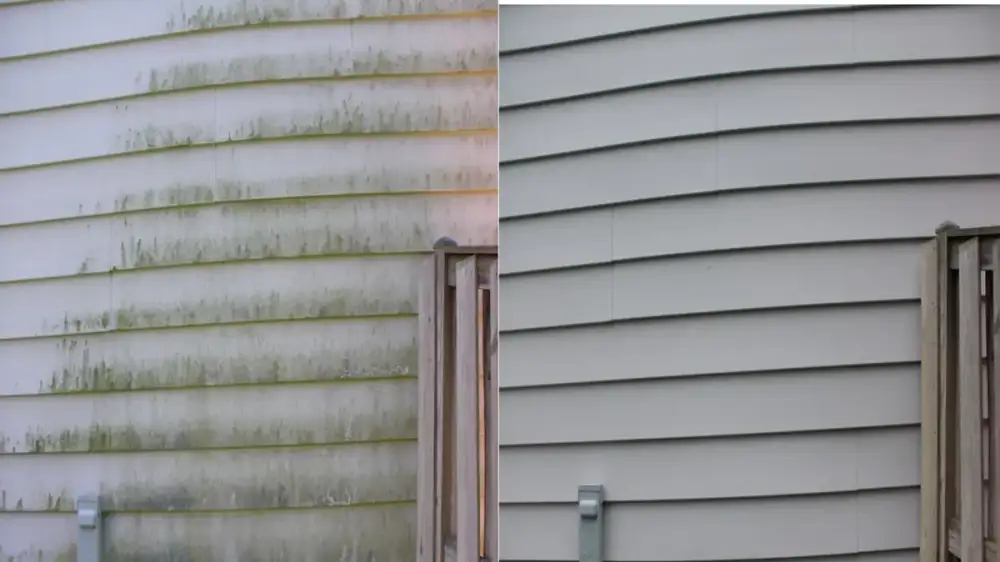
Can Pressure Washing Damage Siding?
The same force that strips dirt can crack panels, peel paint and push water into the wall. Here's how siding gets damaged — and the safer way to clean it.