How Pressure Washing Works
A pressure washer cleans with concentrated force, not soap. Understanding how that force behaves is what separates a clean surface from a damaged one.
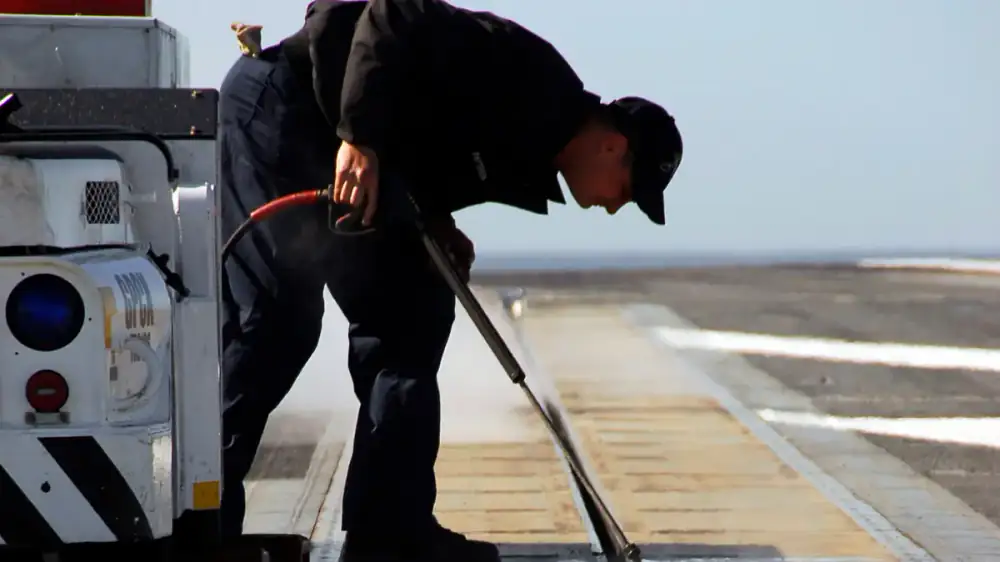
A pressure washer pumps ordinary water up to high pressure and drives it through a narrow nozzle, producing a fast, concentrated stream that knocks dirt loose by force rather than by soap. That force is a gift on hard, durable surfaces like concrete — and a liability on anything delicate or porous, where it can etch, gouge, crack, or push water where it does not belong. Matching the method to the surface matters far more than raw power.
A pressure washer is a deceptively simple machine built around a single trick: it takes plain water and gives it enough force to knock grime off a surface on contact. That force is the entire point — and the entire risk. Pointed at the right material it turns a stained slab spotless in minutes. Pointed at the wrong one, it leaves damage that outlasts the dirt by years. Everything useful about the tool follows from understanding how that force behaves once it leaves the tip.
Inside the machine
For all its power, a pressure washer is only four parts doing one thing in sequence:
- A water source, typically a garden hose feeding in at ordinary household pressure.
- A pump, driven by an electric motor or a gas engine, that sharply raises that pressure.
- A hose and wand that carry the pressurized water out to where you are working.
- A nozzle at the tip that shapes the stream and sets how concentrated the force is.
The pump does the real work. It compresses the low-pressure water coming in so that when it escapes through the small opening at the nozzle, it leaves as a fast, tight stream. Speed plus concentration is what dislodges dirt on contact — and it is worth being clear about the mechanism: nothing is dissolving the grime, it is being physically struck off the surface. That single fact explains almost every strength and every limitation that follows.
The nozzle is the throttle
If the pump supplies the power, the nozzle decides how you spend it. Most machines ship with a set of interchangeable tips, and what separates them is the angle of the spray.
Wide-angle tips fan the same force across a broad area. Spread thin like that, the stream is gentler, which makes these the right default for most surfaces around a house. Narrow-angle tips do the opposite, packing the force into a tight jet that hits hard in a small spot — handy on a stubborn stain on genuinely durable material, and capable of gouging nearly everything else. The tightest, pin-point tips are rarely appropriate around a home at all; they can cut and etch, and they are easy to misjudge in the moment.
Two controls matter as much as the tip you choose. Distance is the first: the closer the nozzle sits to the surface, the more concentrated the force where it lands, so backing off is one of your main ways to soften a stream. Angle is the second: a steady, moderate angle keeps the water working across a surface, while pointing straight in — or worse, upward into seams — drives it into the material instead.
Where the force is welcome
Pressure washing rewards surfaces that are hard, non-porous, and durable enough to take the impact without changing shape or texture.
| Surface | Generally suitable? | Notes |
|---|---|---|
| Concrete driveways and paths | Yes, with care | Durable, but can still be etched if the tip is too close |
| Sound brick and masonry | Often, if in good condition | Aged or crumbling mortar is a different story |
| Unpainted metal and fencing | Usually | Watch for rust and thin coatings |
| Pavers and stone patios | With caution | Force can blast out the sand between joints |
| Vinyl and fibre cement siding | Usually not | Better suited to low-pressure or soft washing |
| Asphalt shingle roofs | No | Force strips the protective granules |
| Painted or aged wood | No | Pressure gouges the wood and strips paint |
| Stucco | No | Porous and easily damaged |
The pattern runs one way: the harder and less porous the material, the more force it tolerates. As you move toward delicate, painted, porous, or high-up surfaces, the case for soft washing instead grows quickly.
When the same force turns destructive
The force that cleans is the force that damages — it simply depends on the surface and the handling. It etches and pits: even concrete can pick up visible lines and rough patches when a tip lingers too close. It gouges and fuzzes wood, tearing soft fibers into a raised, furry texture that is hard to undo. It strips coatings, blasting paint, sealant, or stain off unevenly in a way that often looks worse than the dirt did. It drives water where it should not go — aimed at siding or into a seam, pressurized water reaches behind panels and into the wall assembly, seeding problems that only surface later. And it reaches past its target: windows, light fixtures, vents, screens, and electrical components in the spray path all have to be accounted for before the trigger is pulled.
The tells that you have crossed the line are visible in real time. Watch for lines or streaks appearing where the stream has passed, a raised or furred texture on wood, paint lifting ahead of the stream, fresh pitting on concrete or masonry, water sheeting behind panels or seeping from seams, and chips of mortar washing out of joints. Any of those means back off — more distance, a wider tip, or a gentler method entirely.
When to switch to chemistry
Some jobs are not force problems at all. Green algae, black streaks, and mildew are living growth, and blasting them removes the visible layer while leaving the roots and spores behind — so the staining returns, often within a single season. That is a chemistry problem, and low-pressure soft washing treats what is actually growing rather than just scattering it. The same reasoning covers delicate surfaces generally: when in doubt, less pressure and the right cleaning solution beat more force nearly every time.
A last word on judgment, because pressure washing is one of the tools where restraint is the skill. Reaching for maximum pressure by default, fitting the narrowest tip because it feels powerful, crowding the surface, or skipping a quick test on an inconspicuous spot are the habits that turn a clean into a repair. And two situations are worth handing off entirely: work high off the ground, where the fall risk and the risk of driving water behind materials both climb, and any job whose equipment is more powerful than you are comfortable controlling — a pressurized wand can injure as readily as it cleans. When the surface really calls for cleaning solutions rather than force, that is a signal to reach for the gentler method, or for someone equipped to apply and contain it responsibly.
Common questions
How does a pressure washer actually clean?
It uses a pump to raise the water's pressure well above what a garden hose delivers, then forces it through a narrow nozzle. The result is a fast, concentrated stream that mechanically dislodges dirt, grime and loose material. The cleaning comes from force, not from cleaning solution, which is the key difference from soft washing.
What do the different nozzles do?
Nozzles control how wide the stream fans out. A wide-angle nozzle spreads the force over a large area, making it gentler, while a narrow nozzle concentrates it into a tight, aggressive jet. Wider is safer for most home surfaces; the tightest jets are rarely appropriate for anything around a house.
Which surfaces can be pressure washed safely?
Hard, non-porous, durable surfaces handle it best — concrete driveways and paths, many masonry surfaces in sound condition, and unpainted metal. Delicate, porous or painted surfaces like most siding, roofing, stucco and aged wood are usually better cleaned with lower-pressure methods.
Can pressure washing damage my house?
Yes. Too much force, the wrong nozzle, or holding the wand too close can etch concrete, gouge wood, crack siding, strip paint and drive water behind materials. Damage often shows up as streaks, fuzzing, pitting or water intrusion after the surface dries.
When should I use soft washing instead?
Choose soft washing when the surface is delicate or porous, when it's painted or high off the ground, or when the problem is organic growth like algae and mildew rather than plain dirt. Force can strip those growths from view but leaves the roots behind, so they return.
Should I hire a professional for pressure washing?
Consider it when the work is high off the ground, when you're unsure whether a surface can take the force, or when the equipment is more powerful than you're comfortable controlling. A wand under pressure can injure people and damage property, so matching skill to the job matters.
Related guides
Pressure Washing vs Soft Washing
One relies on force, the other on cleaning solution at low pressure. Matching the method to the surface is what protects siding, roofs and trim.
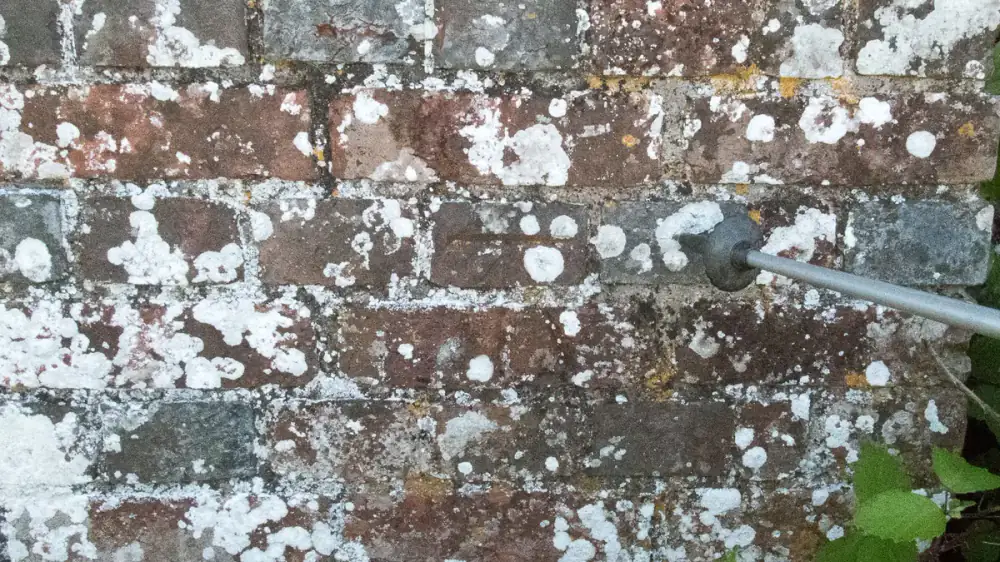
How to Remove Algae from Exterior Walls
That green film is a moisture problem, not just dirt. Here's why gentle cleaning beats blasting, how to protect plants and windows, and how to stop it coming back.
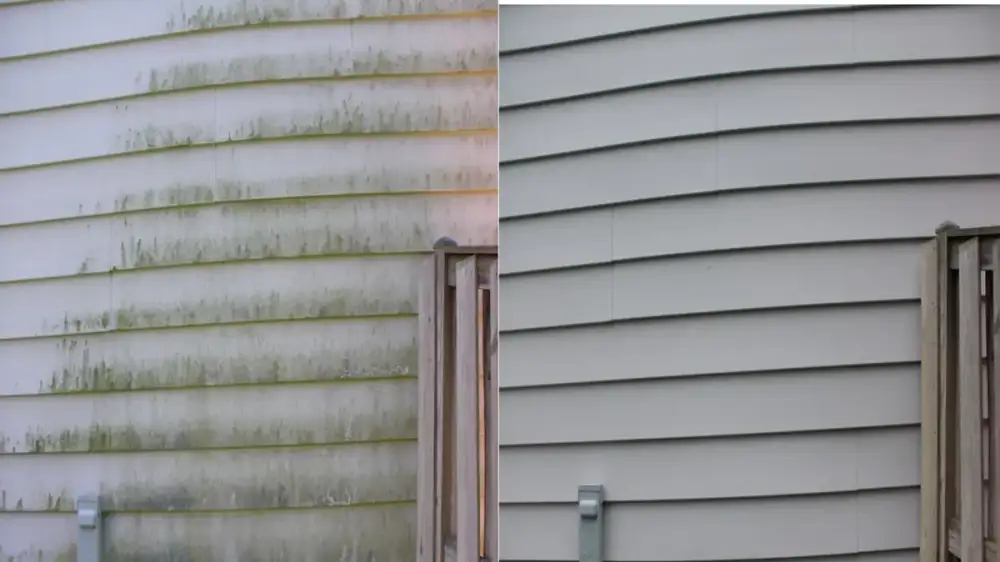
Can Pressure Washing Damage Siding?
The same force that strips dirt can crack panels, peel paint and push water into the wall. Here's how siding gets damaged — and the safer way to clean it.