How to Clean a Composite Deck
Composite decking is low-maintenance, not no-maintenance. Clean it wrong and you can void the warranty; ignore the grooves and mold takes hold. Here's the gentle way.
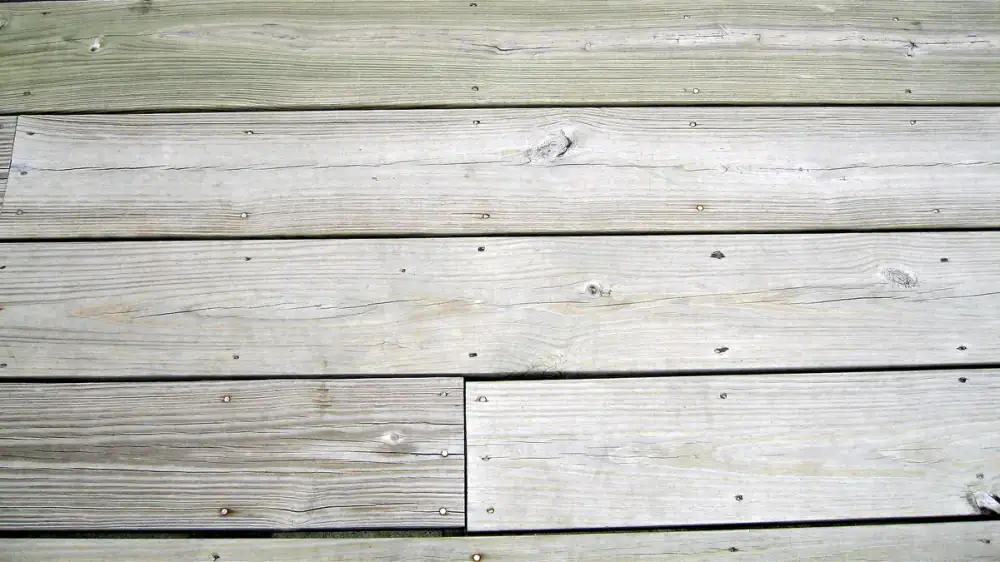
Clean a composite deck gently — soap, water and a soft-bristle brush handle most jobs. Check the manufacturer's care guide first, because harsh chemicals, abrasive tools and excessive pressure can damage composite decking and void the warranty. Pay special attention to mold in the board grooves, where debris and moisture collect, and keep those gaps clear to stop it coming back.
Composite decking earns its reputation. It won't rot, splinter, or need the annual sanding-and-staining ritual that natural wood demands, and for a lot of homeowners that is the whole reason they chose it. But the word that gets left out of the sales pitch is no. Low-maintenance is not no-maintenance, and — more surprisingly — composite is not indestructible. The two ways people damage it are almost opposites: cleaning too hard, and not cleaning the one place that actually matters.
Why composite changes the rules
With a wood deck, the worst a bad cleaning usually does is raise the grain or strip a finish you were going to reapply anyway. Composite carries a different stakes: a manufacturer's warranty, and that warranty is written around a specific set of care instructions. Approved cleaners. Approved tools. Very often, a stated maximum pressure. Step outside those instructions and you are not just risking a scratch — you may be voiding the coverage that made the boards worth their price.
That is why the honest first step in cleaning composite has nothing to do with cleaning. It is reading. Dig out your product's care guide before you buy a cleaner or uncoil a hose, because manufacturers genuinely differ, and yours will tell you three things worth knowing in advance:
- which cleaning products it approves — and which it prohibits;
- whether a pressure washer is allowed at all, and if so, the maximum pressure and the tip distance to hold;
- which tools are safe, and which will leave marks you cannot undo.
If you want to understand why the material behaves the way it does, the background on composite decking as a material is useful context. But for your specific deck, the manufacturer's guide is the only authority that counts.
The routine wash, start to finish
Here is the reassuring part: for ordinary dirt, pollen and the grey film a season leaves behind, you almost never need more than soap, water and a soft brush. The full routine is short.
- Clear everything off. Move the furniture and planters, then sweep — paying attention to the grooves between boards, not just the flat surface.
- Rinse with a garden hose to float off the loose dirt before you scrub.
- Apply your cleaner. Use a manufacturer-approved product or a mild soap solution, and follow the label. Test it on a hidden corner first.
- Let it dwell, then scrub gently with a soft-bristle brush, always working along the length of the boards.
- Rinse thoroughly so nothing is left to dry into a streak.
The single most useful habit here is patience. When a mark resists, a second unhurried pass beats reaching for something stronger nearly every time — and it is stronger measures, not stubborn dirt, that put composite at risk.
The part everyone misses: the grooves
If your "rot-proof" deck has somehow turned green, the grooves are almost certainly why. The narrow gaps between boards are shaded, they hold moisture long after the surface has dried, and they quietly collect the pollen, leaves and dirt that mold and algae feed on. This is the crucial point: composite resists rot, but mold does not grow on the composite so much as on the organic debris sitting on top of it. Starve that debris and the green has nothing to live on.
So treat the grooves as the real job, not an afterthought:
- Clear them first of packed leaves and grit, so your cleaner can actually reach the growth rather than sitting on a plug of debris.
- Apply cleaner and let it dwell, approaching the mold as living growth to be broken down, not dirt to be wiped.
- Work each groove with a soft brush — a narrow one reaches into the gap where a wide deck brush skips over it.
- Rinse the debris out rather than letting it resettle a few inches away.
Between cleanings, the best defense is simply keeping those gaps clear of debris and standing water. Do that and mold rarely gets a foothold in the first place.
The pressure-washer temptation
The honest answer to "can I pressure wash it?" is: often you shouldn't, and never beyond the number in your care guide. Many composite manufacturers restrict or flatly discourage pressure washing because a concentrated stream can mar the surface, and exceeding their limit is a direct route to a voided warranty. The broader trade-off laid out in pressure washing versus soft washing lands squarely on composite: this is a surface where the gentler method is the correct one, not merely the cautious one.
If your manufacturer does permit a washer, stay well inside their limits — low pressure, a wide tip, held well back, kept constantly moving. Never let the stream pause in one spot, and never bump the setting up because a stain is being stubborn. That is precisely the impulse that turns a cleaning day into a warranty claim.
The short list of things that ruin composite
Most damage traces back to a handful of avoidable choices, worth keeping in view as you work:
| Don't | Because |
|---|---|
| Push pressure past the stated limit | It marks the surface and can void coverage in one pass |
| Reach for a metal brush, scraper or abrasive pad | These gouge composite permanently |
| Use harsh solvents that aren't approved | They can mar the finish and cost you the warranty |
| Skip the grooves | That is where the debris and mold you can't see accumulate |
| Leave cleaner to dry on the boards | Residue streaks and attracts fresh dirt |
None of these is exotic. They are the ordinary shortcuts a busy weekend invites, which is exactly why they catch people out.
When cleaning stops being the answer
Sometimes what looks like a cleaning problem is telling you something else. If mold keeps returning within weeks of a thorough wash, the message is usually about moisture and shade — debris collecting or water pooling faster than you can clear it — not about how hard you scrubbed. Standing water on the boards can point to a slope or drainage issue that keeps feeding growth. And if you ever find soft or spongy framing beneath the deck surface, that is a structural matter the composite has been quietly hiding, and it belongs to a repair conversation rather than a bucket of soap.
For most homeowners, though, composite is genuinely easy to keep. A gentle wash once or twice a year, grooves kept clear, and a glance at the care guide before you improvise — that is the whole of it. If you want to see how the same instincts translate to a natural surface, the guidance on cleaning a wood deck makes a useful comparison, and the wider exterior cleaning library covers the rest of the house.
Answers to common questions
Can I pressure wash a composite deck?
Only with caution, and often not at all. Many composite decking manufacturers limit or discourage pressure washing, and exceeding their stated pressure can damage the surface and void the warranty. If you do use one, stay well within the manufacturer's guidance — low pressure, wide tip, held well back, moving constantly. For most cleaning, soap, water and a soft brush are safer and enough.
Will cleaning my composite deck void the warranty?
It can, if you use methods the manufacturer prohibits. Composite warranties often specify approved cleaning methods and pressure limits, and using harsh chemicals, abrasive tools or excessive pressure can void coverage. Always check your specific product's care guide first and follow it, because manufacturers differ and the warranty is written around their instructions.
How do I get mold out of the grooves between composite boards?
Mold thrives in the shaded, damp gaps between boards where debris collects. Clear the grooves of leaves and dirt first, then apply a suitable cleaner, let it dwell, and work the grooves with a soft brush before rinsing. Keeping the gaps clear of debris and standing water is the best way to keep mold from coming back.
What cleaner is safe for composite decking?
Use a cleaner the manufacturer approves, or a mild soap-and-water solution, which handles most routine dirt. Avoid harsh solvents and abrasive products unless the manufacturer's care guide specifically allows them. Test any product on a hidden area first, and rinse thoroughly so no residue is left behind on the surface.
Why does my composite deck have mold if it's low-maintenance?
Low-maintenance doesn't mean maintenance-free. Composite decking resists rot, but mold and algae grow on the organic debris — pollen, leaves, dirt — that settles on any surface, especially in damp, shaded spots and in the board grooves. Regular cleaning removes that food source, which is what keeps the growth from taking hold.
How often should I clean a composite deck?
A thorough cleaning once or twice a year suits most composite decks, plus sweeping off debris regularly so it doesn't accumulate in the grooves. Decks in shaded, damp locations or under trees may need more frequent attention. Let the condition of the deck guide you rather than a strict calendar.
Can I use a metal brush or scraper on composite decking?
No. Metal brushes, scrapers and abrasive pads can scratch and gouge the composite surface, and that damage is permanent and may void the warranty. Use a soft-bristle brush and let the cleaner and dwell time do the work. Gentle tools protect both the finish and your coverage.
More from this section

Pressure Washing vs Soft Washing
One relies on force, the other on cleaning solution at low pressure. Matching the method to the surface is what protects siding, roofs and trim.
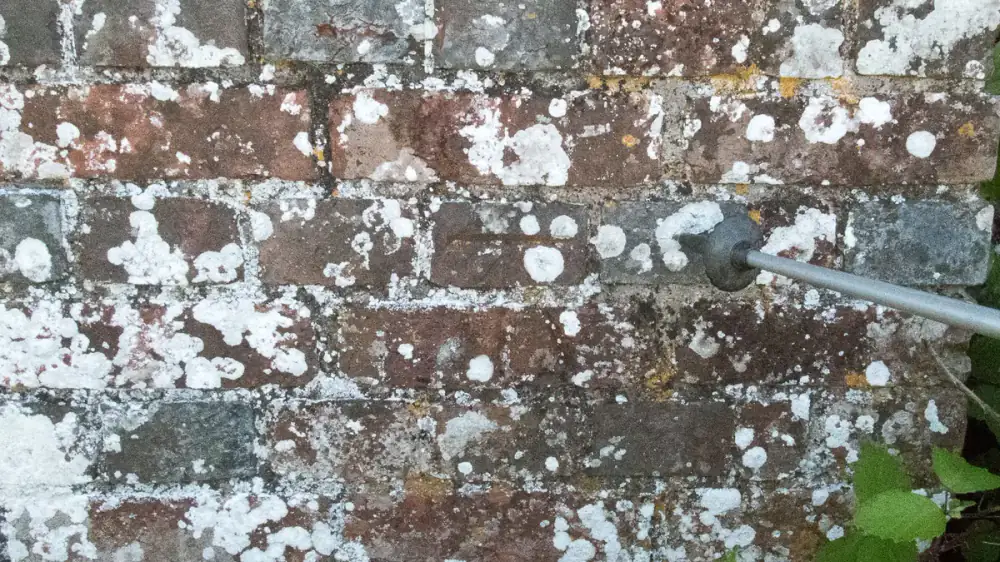
How to Remove Algae from Exterior Walls
That green film is a moisture problem, not just dirt. Here's why gentle cleaning beats blasting, how to protect plants and windows, and how to stop it coming back.
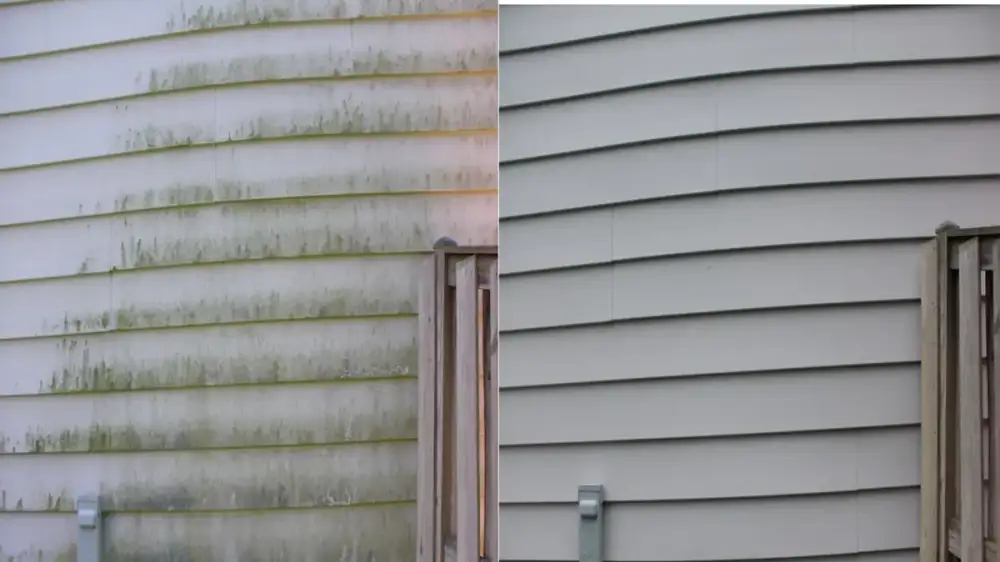
Can Pressure Washing Damage Siding?
The same force that strips dirt can crack panels, peel paint and push water into the wall. Here's how siding gets damaged — and the safer way to clean it.