How to Clean a Driveway Without Damaging It
Concrete and asphalt look similar but clean very differently. Match the technique to the material and you avoid the etching and striping that ruin a driveway's finish.
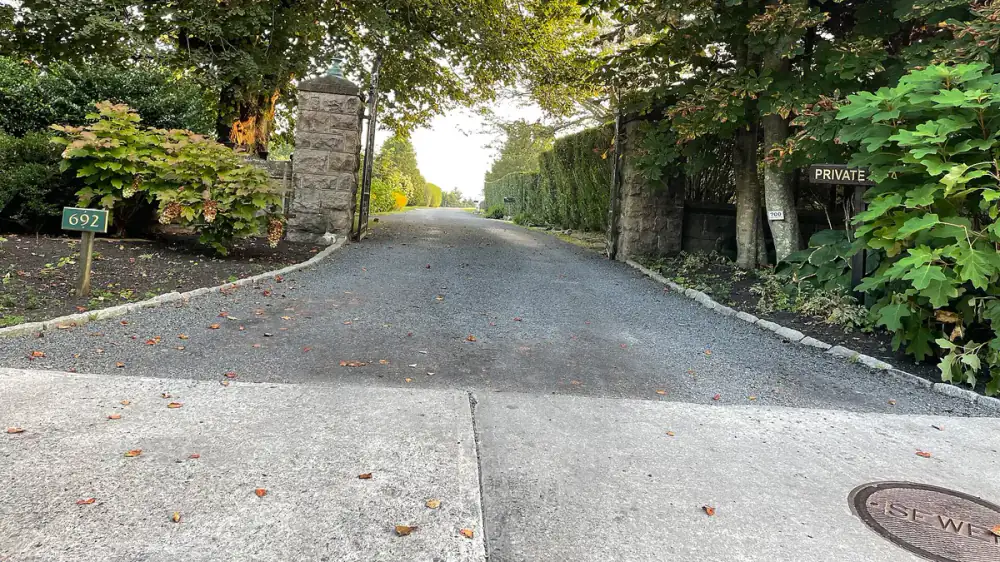
Clean a driveway by matching the technique to the material. Concrete is durable enough for pressure washing but can still be etched or striped if you hold the nozzle too close or clean unevenly. Asphalt is softer and needs lower pressure and gentler cleaners. Treat oil as a grease problem with a degreaser, treat organic stains with an appropriate cleaner, and go easy on any sealed surface so you don't strip the finish.
Few surfaces on a property work harder than the driveway. It catches oil drips and tire marks, road grime tracked off the street, and the slow green creep of algae on its shaded edge — so it is usually the first thing a homeowner itches to clean and, too often, the first thing they damage. The error is almost always the same: treating "the driveway" as a single kind of surface. Concrete and asphalt look broadly alike underfoot, but under a cleaning stream they behave nothing alike, and the method that revives one can wreck the other.
The material decides everything else
Before you think about tips, pressures or cleaners, settle the one question that governs all of them: what is your driveway actually made of?
Concrete is hard and genuinely durable, which is why it tolerates pressure washing better than almost any other exterior surface. That reputation is deserved — but "durable" is not "immune." Held too close, or worked in an uneven pattern, even concrete will etch and stripe.
Asphalt is a softer, more temperamental material. Its surface can be loosened by high pressure and reacts badly to certain chemicals. Clean it the way you would blast concrete and you can dislodge the surface material itself, leaving a worn, pitted look that no amount of rinsing fixes. Asphalt wants lower pressure and gentler cleaners as a rule, not an exception.
| Factor | Concrete | Asphalt |
|---|---|---|
| Hardness | Hard, durable | Softer, more sensitive |
| Pressure tolerance | Higher, but can still etch | Lower — use gentler force |
| Chemical sensitivity | More tolerant | Sensitive to some cleaners and solvents |
| Main cleaning risk | Etching and striping | Loosening and dislodging the surface |
Because concrete is a hard surface that still repays a careful touch, it is worth reading the full rundown on cleaning concrete without damaging it before you start on a concrete drive.
The habits that keep it even
Whatever the material, the damage that ruins driveways — etching and striping — comes down to technique, and technique is mostly a set of habits you can hold onto for the length of the job.
- Keep a consistent distance. The closer the nozzle, the more concentrated the force landing on one spot. Crowding the surface is what etches concrete and tears at asphalt.
- Use a wide-angle tip, never a narrow jet. A wide fan spreads the force and cleans in an even band.
- Move steadily and overlap your passes. Even coverage is the whole secret to avoiding stripes.
- Drop the pressure for asphalt and anything sealed. When you are unsure, less force is always the safer guess.
- Pre-treat stains with the right cleaner rather than trying to blast them away with brute force.
It helps to name the two problems these habits prevent, because you can watch for them as you work. Etching is the surface being eaten into by concentrated force — it shows up as a rougher texture or a visible mark where the nozzle lingered. Striping, sometimes called tiger-striping, is the ladder of light and dark bands you get when some passes cleaned harder than others. Both are cured by the same discipline: even coverage, held at a safe distance, never letting the stream concentrate in one place.
Read the stain before you attack it
Not every mark comes off the same way, and knowing which kind you are looking at saves a great deal of pointless scrubbing.
Oil and grease are the classic driveway stain, and force is close to useless against them. The oil has soaked into the surface, so blasting only cleans around it. What actually works is chemistry with time: a degreaser or a cleaner formulated to break oil down, given a chance to dwell before you rinse. Speed matters here — a fresh spill lifts far more easily than one that has aged and worked its way deep.
Organic stains — the green algae, the dark mildew streaks along the damp or shaded edge — are living growth, not just dirt. They call for an appropriate cleaner that treats the growth itself, because force removes only the visible film and leaves whatever is left to grow straight back. It is the same principle used for algae on exterior walls, and it transfers directly to a driveway's green patches.
If the surface is sealed
A sealed driveway asks for a gentler hand than a bare one. The sealer is a thin protective layer, and aggressive pressure will wear straight through it, leaving the surface patchy and unevenly protected — worse-looking than before you started. If yours is sealed, lean toward lower pressure and appropriate cleaners, keep concentrated force away from the surface entirely, and plan to reseal if the finish wears during cleaning or simply with time. An unsealed surface is more forgiving of the cleaning itself but more exposed to staining afterward, which is exactly why many people seal after a thorough clean. Either way, knowing which you have changes how hard you are allowed to push.
Most of this is squarely a homeowner job — driveways are, after all, at ground level with nothing to climb. It is worth bringing in a professional when the area is large enough to need equipment and time you do not have, when stubborn oil or deep-set stains defeat your best efforts, when you have asphalt and are genuinely unsure how to clean it without loosening the surface, or when a sealed drive needs both careful cleaning and resealing done well. For the surfaces you can handle from the ground, the broader exterior cleaning library covers the rest.
Questions people also ask
Can I pressure wash a concrete driveway?
Concrete is durable enough to take pressure washing, but even concrete can be etched if the nozzle is held too close or a too-narrow tip is used. Keep a consistent distance, use a wide tip, and move steadily to avoid leaving lines and striping. For a gentler alternative, see cleaning concrete without damaging it.
Is cleaning asphalt different from cleaning concrete?
Yes, and it matters. Asphalt is softer and more sensitive to force and to certain chemicals than concrete. High pressure can loosen the surface and dislodge material, so asphalt generally calls for lower pressure and gentler cleaners. What's fine on concrete isn't always fine on asphalt.
How do I remove oil stains from a driveway?
Oil is a grease problem, not a dirt problem, so force alone rarely removes it. A degreaser or appropriate cleaner formulated to break down oil, given time to work, does most of the job before rinsing. Fresh spills are far easier to lift than ones that have soaked in and aged.
What causes striping or lines on a driveway after cleaning?
Striping comes from uneven cleaning — the nozzle held closer in some spots, or an inconsistent pattern that cleans some areas more than others. Keeping a steady distance, overlapping your passes, and using a wide, even spray prevents the tiger-stripe look.
Does it matter if my driveway is sealed?
It does. A sealed surface should be cleaned gently so you don't strip or damage the sealer. Aggressive pressure can wear through the sealant and leave the surface patchy. If the driveway is sealed, lean toward lower pressure and appropriate cleaners, and plan to reseal if the finish wears.
Should I hire a professional to clean my driveway?
Driveways are ground-level, so they're often DIY-friendly. Consider a pro for large areas, for stubborn oil or stains that resist cleaning, for asphalt you're unsure how to treat, or when the surface is sealed and you want to protect the finish.
More from this section

Pressure Washing vs Soft Washing
One relies on force, the other on cleaning solution at low pressure. Matching the method to the surface is what protects siding, roofs and trim.
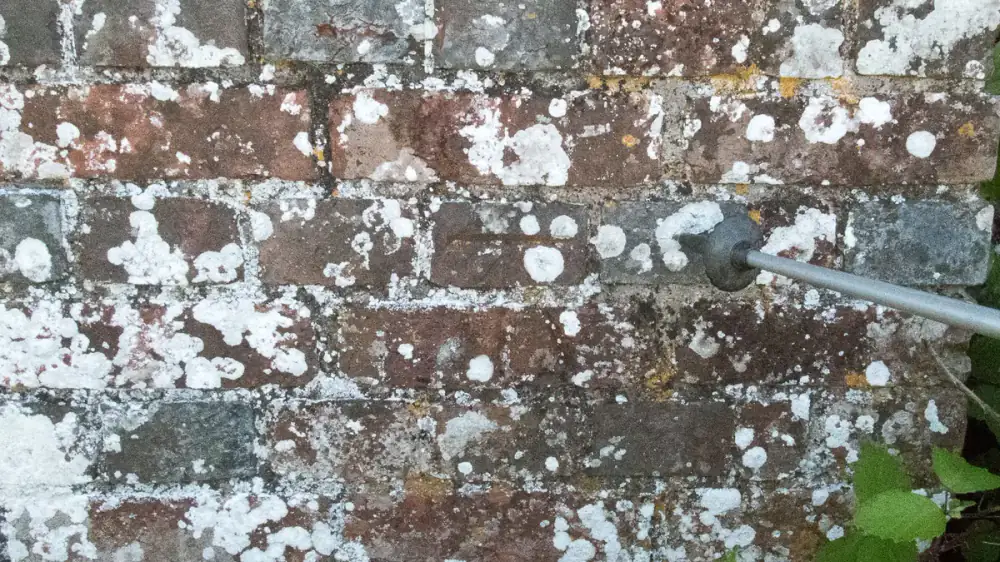
How to Remove Algae from Exterior Walls
That green film is a moisture problem, not just dirt. Here's why gentle cleaning beats blasting, how to protect plants and windows, and how to stop it coming back.
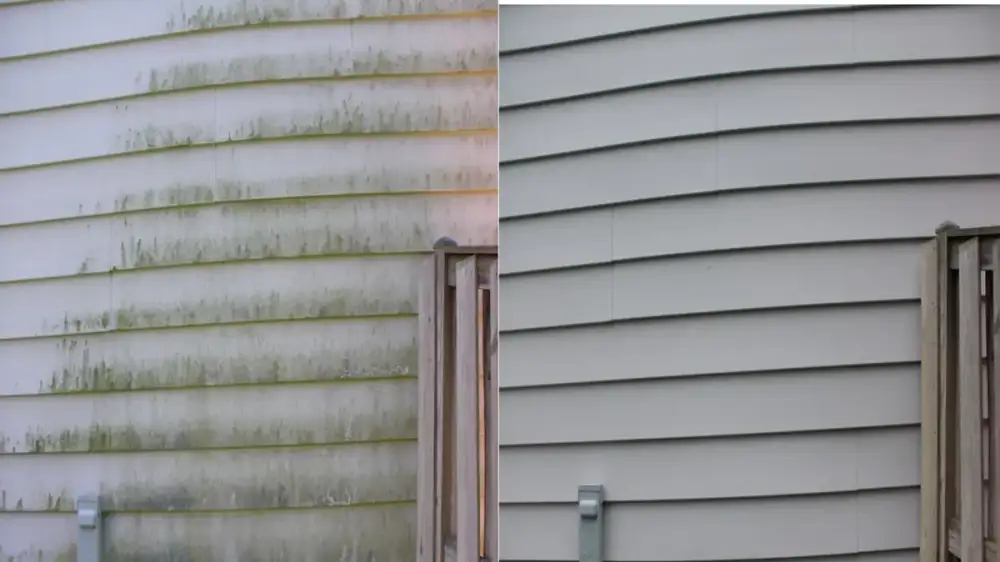
Can Pressure Washing Damage Siding?
The same force that strips dirt can crack panels, peel paint and push water into the wall. Here's how siding gets damaged — and the safer way to clean it.