How to Clean Your House Without Harming the Plants
The cleaning solution that lifts algae off your siding doesn't stop being potent when it drips onto the hostas below. The landscaping is the collateral nobody plans for.
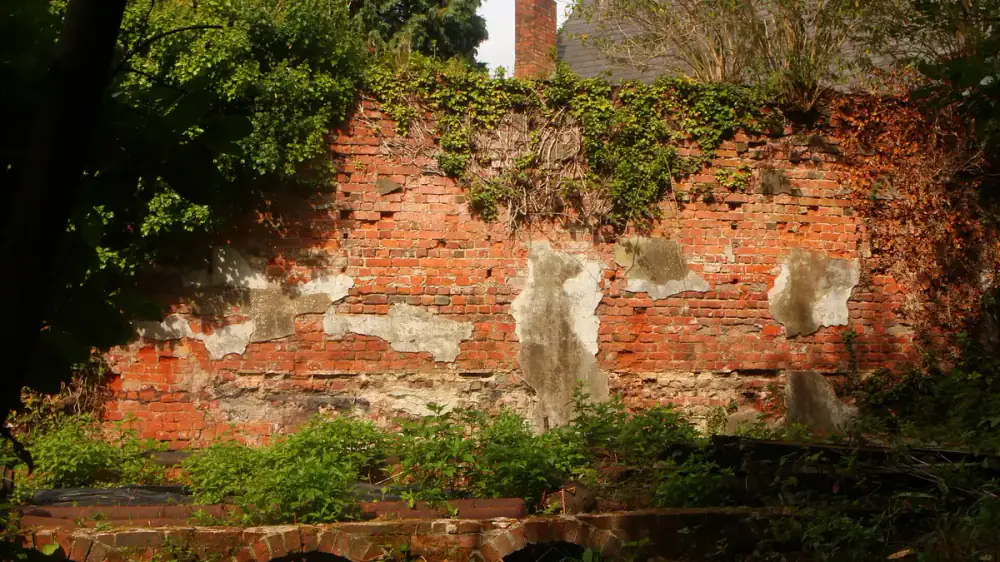
Protect landscaping in three steps: pre-wet every plant and the ground around your work so foliage absorbs less solution, shield or move anything delicate directly beneath the wall, and rinse thoroughly the moment you're done — plants and paving both. Work on a cool, overcast, windless stretch, follow the product label for dilution and dwell time, and steer runoff toward drains, never into the beds. Water is your best plant-protection tool.
Most people plan the cleaning and forget the garden. They think about the siding, the streaks, the method — and not about the fact that everything running off that wall has to land somewhere, and that somewhere is usually a bed of shrubs that took three years to fill in. The plants are the part of the job that has no undo button. A stripped finish can be repainted; a scorched azalea just dies on its own schedule.
The good news is that protecting landscaping isn't complicated or expensive. It's mostly about water, timing and paying attention to where gravity sends things. Get those right and you can clean a house without leaving a brown halo in the beds.
Why cleaning solutions and plants don't mix
The solutions that break down algae and mildew on a wall are doing chemistry, and that chemistry doesn't switch off when the liquid runs downhill. A leaf is far more permeable than vinyl or brick. When concentrated solution lands on foliage and sits there, it can draw moisture out of the tissue and burn it, or get absorbed and do damage from the inside. Roots sitting in soil where runoff has pooled get a dose too.
Two things make this worse than it needs to be. The first is heat: on a hot, sunny day, water evaporates off a leaf quickly, leaving the dissolved cleaner behind in a more concentrated form than what left the wall. The second is a thirsty plant. A shrub that's dry and stressed pulls in whatever moisture it can reach, including the wrong kind. Both of those are things you control.
Pre-wet everything before you start
The most effective single move is also the least intuitive: soak the plants before any solution touches the house. A plant whose leaves and roots are already full of clean water has far less capacity to absorb anything that lands on it afterward, the way a saturated sponge sheds more than it takes in. Wet foliage also gives drips something to slide off rather than cling to.
Give the beds beneath and beside your work a genuine soaking — not a mist, a drink — and wet the ground around them so runoff arrives diluted instead of neat. Redo it if the job runs long and things start drying out in the sun. This one habit prevents more plant damage than any cover or barrier.
Cover, move, or accept the risk
Pre-wetting handles the general case. For the specific case — a prized specimen, a delicate fern, a plant sitting directly under the wall where drips will be heaviest — add a physical barrier. A breathable drop cloth or light tarp draped over foliage catches the worst of it. The word breathable matters: plastic sheeting left over a plant in the sun turns into an oven, so if you use it, keep it brief and get it off the moment the rinse is done.
Anything in a pot near the work is easiest to simply carry out of the splash zone for the afternoon. And be honest about the plants you can't protect well — if something is going to sit in the direct path of runoff no matter what you do, that's a reason to reconsider the method or the product before you start, not after.
Timing does half the work
When you clean matters as much as how. An overcast, still, cooler part of the day is ideal: no baking sun to concentrate solution on the leaves, no wind to carry overspray into a neighbor's garden, and slower evaporation that keeps everything more dilute for longer. This overlaps neatly with the broader question of how weather affects cleaning results — the conditions that are kindest to plants also tend to give the cleaning solution time to work instead of flashing off the wall.
Avoid the two extremes. Blazing midday sun stresses both the plants and the finish. A day with gusty wind turns careful application into scattershot, sending fine droplets somewhere you never aimed.
Choose the gentlest method the job allows
Part of protecting the garden happens before you pick up a hose, in the choice of method. The whole logic of how soft washing works — chemistry at low pressure rather than brute force — tends to be gentler on surroundings too, because a low-pressure application drifts and splatters far less than a high-pressure stream tearing growth off a wall. High pressure aerosolizes everything it hits and flings it in a wide arc, which is exactly what you don't want happening over a flower bed.
The tradeoff runs the other way, though: a low-pressure method leans harder on the cleaning solution, and that solution is precisely what you're trying to keep off the plants. So the method choice isn't a free pass. It's one input among several, and it works alongside the pre-wetting and rinsing rather than replacing them. If you're weighing the two approaches, the fuller comparison of pressure washing and soft washing covers where each belongs.
The product label is the real rulebook
Every cleaning product carries dilution ratios, dwell times and rinsing instructions, and those exist partly because the manufacturer knows where the stuff ends up. A solution mixed stronger than the label calls for isn't cleaning better — it's just harsher on everything downstream, plants included. Mixing to the correct dilution is one of the simplest things you can do for the garden.
Bleach-based solutions get singled out here for good reason, and the full picture on bleach for exterior cleaning is worth reading before you reach for it near a planted bed, because it behaves differently around foliage and soil than many people assume.
Rinse like the job depends on it — because it does
The final step is the one people skip when they're tired and the wall already looks clean: a thorough rinse of the plants and the ground the moment the work is done. Don't let solution dwell on foliage a second longer than the label allows. Flood any low spot where runoff collected, dilute anything that pooled, and give the whole bed a generous soak to carry residue down and away from the roots rather than letting it concentrate as things dry.
Think about where the water goes, too. Grade and gravity should be sending rinse water toward paving and drains, not funneling it into the beds. A few minutes redirecting flow with the hose is cheaper than replacing a row of shrubs.
A quick pre-flight for the garden
- Soak all nearby plants and the surrounding soil before you begin.
- Cover or relocate delicate and prized specimens directly under the work.
- Pick a cool, overcast, windless window.
- Mix strictly to the label — stronger is not better.
- Steer runoff toward drains and away from beds.
- Rinse plants, paving and soil thoroughly the instant you finish, and flood anywhere solution pooled.
None of this adds much time, and it fits naturally into any careful order of operations for cleaning the whole house. The house gets clean either way. The difference is whether the garden is still standing when you're done.
Frequently asked questions
Do I really need to cover plants, or is rinsing enough?
Both help, and they do different jobs. Rinsing dilutes whatever lands on foliage; pre-wetting fills the plant's pores with clean water so it absorbs less solution. Covering is worth it for prized or delicate specimens directly under the work, where drips are heaviest and hardest to rinse in time.
Will a cleaning solution kill my lawn if runoff reaches it?
Grass is fairly resilient, but concentrated runoff pooling in one spot can burn a patch yellow. The fix is dilution: wet the area first, direct rinse water toward drains rather than beds, and flood any spot where solution collected. A soaked lawn recovers far better than a dry one.
Is there a plant-safe cleaning solution I can use instead?
Products are formulated for surfaces, not for plants, so treat every one as something to keep off foliage regardless of marketing language. The label is the authority on dilution, dwell time and rinsing. The most reliable plant protection isn't a gentler chemical — it's water, timing and keeping runoff out of the beds.
How long should I wait before letting pets or kids back into the yard?
Follow the product label, which will state any re-entry or drying guidance. Until surfaces and the surrounding ground have dried and been rinsed, keep pets and children clear — they're lower to the ground and more likely to contact residue on foliage or paving.
What's the single most common way people damage plants while cleaning?
Cleaning in hot sun. Heat speeds evaporation, so solution concentrates on the leaf instead of staying dilute, and stressed plants absorb more. Working on an overcast, still, cooler part of the day is the cheapest protection there is.
Related reading

Pressure Washing vs Soft Washing
One relies on force, the other on cleaning solution at low pressure. Matching the method to the surface is what protects siding, roofs and trim.
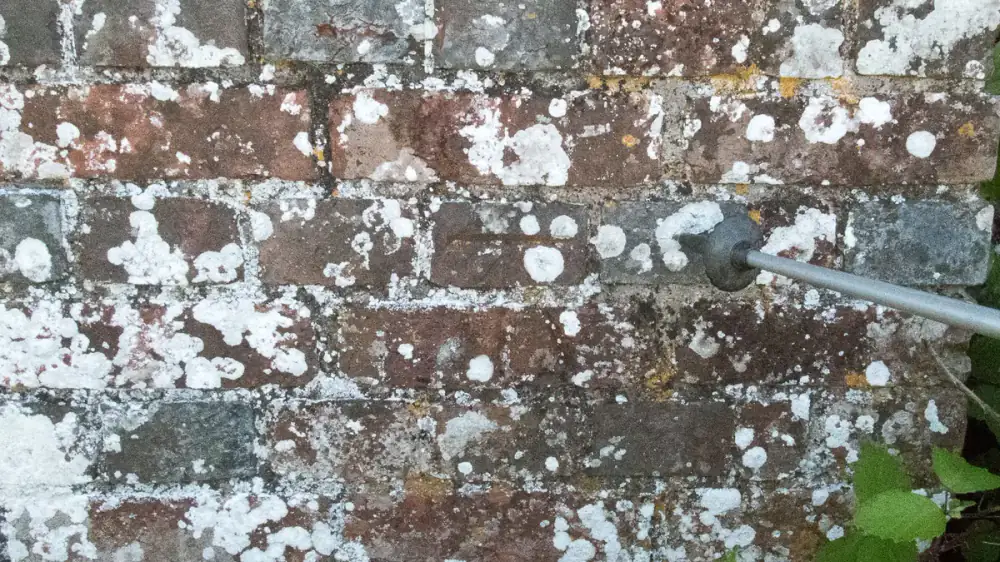
How to Remove Algae from Exterior Walls
That green film is a moisture problem, not just dirt. Here's why gentle cleaning beats blasting, how to protect plants and windows, and how to stop it coming back.
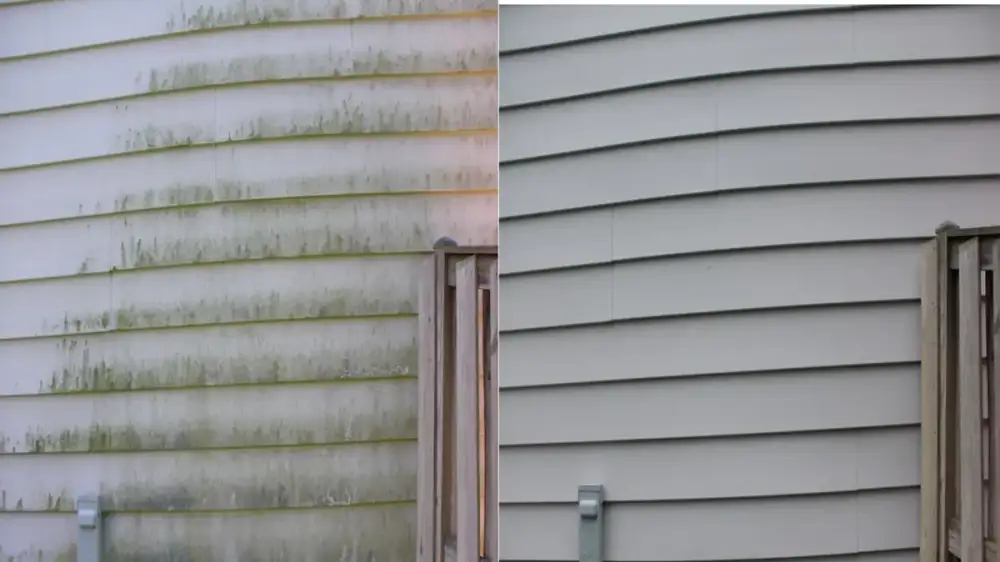
Can Pressure Washing Damage Siding?
The same force that strips dirt can crack panels, peel paint and push water into the wall. Here's how siding gets damaged — and the safer way to clean it.