Why Some Exterior Stains Keep Coming Back
You cleaned it. It looked great. Then it came back. The frustrating truth is that 'a stain' can be three completely different problems wearing the same face.

Stains return because a stain is really three different problems: organic growth (algae, mildew) that regrows from spores and roots if the damp, shaded conditions remain; mineral deposits (efflorescence, rust) fed by an ongoing water path or metal source; and embedded staining that has penetrated a porous surface. Cleaning removes what's on the surface — but if the source is still active, the stain refills from the same supply. Lasting results come from identifying the type and interrupting its cause, not from a stronger cleaner.
Few things in home maintenance are as quietly maddening as the stain that comes back. You spent an afternoon on it, the wall looked terrific, you felt like you'd won — and a few weeks or a season later, there it is again, in the same spot, as if you'd never touched it. The natural conclusion is that you did something wrong, or the product was weak, or you needed to try harder.
Usually none of that is true. The real issue is that "a stain" is a category, not a thing. What looks like one problem is often three distinct problems that happen to present as discoloration on a wall — and each one comes back for its own reason. You can't stop a recurring stain until you know which kind you're actually fighting.
The three kinds of stain
Strip away the appearance and exterior staining sorts into three families, defined not by color but by what they are.
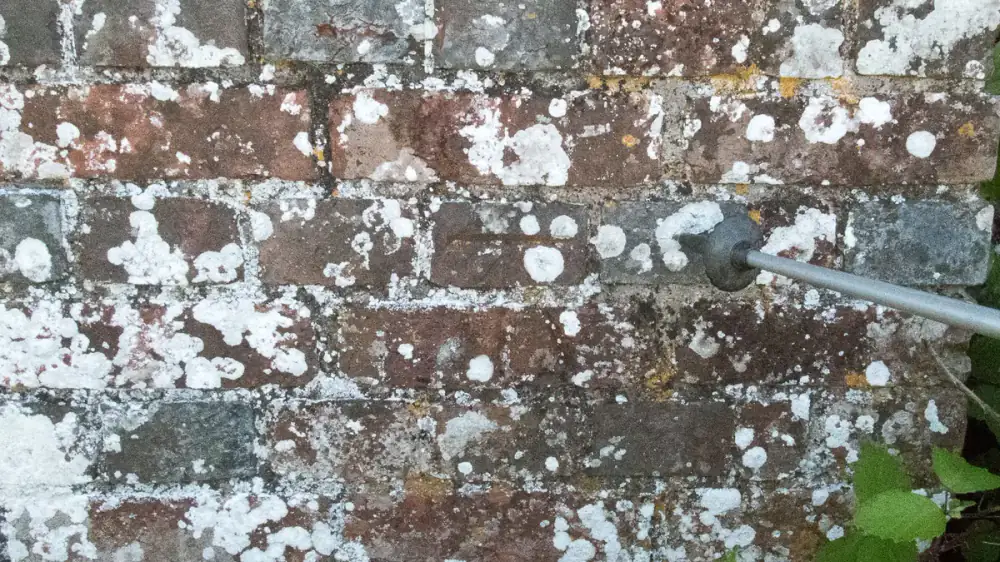
Organic staining is alive, or was. Algae, mildew, lichen, moss and the dark streaks they leave are biological growth. They show up as greens, blacks, fuzzy patches or slimy films, and they thrive in damp, shaded places. The defining trait is that they reproduce — they have spores and roots — so removing the visible layer without addressing the growth just prunes it.
Mineral staining is inorganic, deposited by water. The chalky white bloom of efflorescence on brick and masonry is mineral salts carried to the surface by moisture moving through the material. Rusty orange-brown streaks below a fixture, rail or fastener are metal oxidizing and running down the wall. These aren't growing; they're being delivered, continuously, by a water path or a metal source.
Embedded staining has stopped sitting on the surface and started becoming part of it. Old rust that's penetrated, deep organic staining soaked into porous stucco, tannin bleeding out of wood — these have worked into or bonded with the material. Some can be lightened; some have permanently altered the surface.
Three families, three mechanisms, three reasons for coming back. Treating all of them like "dirt" and hitting them with the same cleaner is why so many stains seem invincible.
Organic stains come back because the conditions do
The most common recurring stain is organic, and it returns for a beautifully simple reason: the thing you cleaned was alive, and its home is unchanged. Kill and rinse away the visible algae on a shaded wall, and unless the shade and moisture that invited it are addressed, the survivors and fresh spores simply start over. The clean is real; it's just temporary, because you removed the population without changing the habitat.
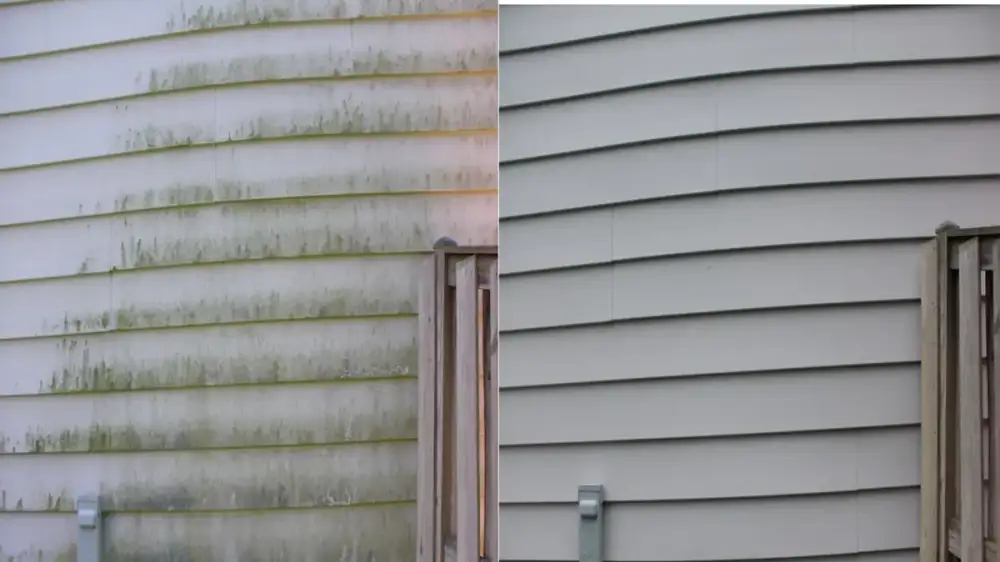
This is the entire story behind why green growth keeps returning on siding, and it's most vivid on the shaded flank of a house, where north-facing walls stay green no matter how often they're washed. The lasting move against organic staining is two-part: treat it properly as growth — the way removing algae from exterior walls lays out, killing the growth rather than just knocking off the top — and then attack the conditions by improving light, airflow and drying. Do only the first and it comes back on the microclimate's schedule.
Mineral stains come back because the source is still running
Mineral staining fools people because it looks like it should behave like dirt and doesn't. You scrub off the white efflorescence and it reblooms; you clean the rust streak and it re-forms below the same bracket. That's not the cleaner failing — it's the source still delivering.
Efflorescence returns as long as moisture keeps traveling through the masonry, carrying salts to the surface to crystallize. The stain is a symptom of a water path, so cleaning it without addressing the moisture is like mopping under a drip. Rust streaks return as long as the metal source — a fastener, a rail, a fixture — keeps oxidizing in the weather. Interrupt the water path or deal with the metal source and the staining stops returning; keep cleaning only the wall and you'll be cleaning it forever.
This is why the reflex to reach for a stronger product misses. A harsher cleaner might strip the current deposit faster, but strength does nothing about an active source. Recurrence is a supply problem, not a potency problem.
Embedded stains sometimes aren't coming back — they never fully left
The third family plays a different trick. An embedded stain can look like it's "coming back" when really it was never fully removed — it lightened, then the untouched portion beneath became more visible again, or the surface simply holds the mark because the staining has penetrated the material.
Porous surfaces are where this lives. Deep organic staining in stucco, old rust worked into concrete, tannin bleed in wood — cleaning can often lighten these, but there's a point where the material itself has been altered and no amount of cleaning restores it. Recognizing that point is valuable, because it redirects effort. Chasing a permanent mark with ever-stronger chemicals damages the surface without removing anything.
When the "stain" isn't a stain at all
There's a fourth possibility worth naming: the mark you keep cleaning may not be a stain. Oxidation, weathering, a finish breaking down, a surface starting to fail — these are changes in the material, and they don't respond to cleaning because there's nothing on the surface to remove. If repeated cleaning makes no difference whatsoever, that's the signal to stop and consider whether you're looking at damage instead of dirt.
Knowing the difference is its own skill, and getting it wrong wastes effort in both directions — scrubbing at damage, or ignoring damage as if it were dirt. Learning to tell dirt from damage is often the step that ends a cycle of futile cleaning, because it reveals that the problem was never the kind cleaning could solve.
How to break the cycle
The escape from the recurring-stain trap isn't a better product. It's a better diagnosis:
- Identify the type first. Living growth, mineral deposit, embedded staining, or actual damage? Each demands a different response.
- For organic: treat it as growth, then change the shade-and-moisture conditions feeding it.
- For mineral: find and interrupt the water path or metal source that keeps delivering it.
- For embedded: judge whether it will lift or has permanently marked the surface, and stop before you damage the material chasing it.
- For damage: recognize it isn't a stain, and address the material, not the surface.
A stain that keeps coming back is trying to tell you something: that its source is still there. The cleaning was never the failure — it did exactly what cleaning does, which is remove what's on the surface. The lasting fix is upstream, in whatever keeps refilling the mark. Find that, and the stain finally stays gone.
Common questions
Why does the same stain keep coming back in the exact same spot?
Because the source is still there. A stain that returns in one place is almost always being fed — by moisture, by a runoff path, by organic growth with roots left behind, or by something upstream leaching down. Cleaning removes the visible stain; if the source is unchanged, the stain simply refills from the same supply.
How do I tell if a stain is organic or mineral?
Organic staining — greens, blacks, fuzzy or slimy patches — is living growth and tends to spread and worsen in damp, shaded areas. Mineral staining — chalky white deposits, or rusty streaks below metal — is inorganic and usually traces to a water path or a metal source. They need different treatment, so identifying which you have comes first.
Will a stronger cleaner stop a stain from returning?
Rarely. A stronger product might remove the current stain more aggressively, but if the cause is still active, it comes back regardless of how hard you hit it. Recurrence is a source problem, not a strength problem. The lasting fix is finding and interrupting what's feeding the stain, not escalating the chemical.
What's an 'embedded' stain, and can I even remove it?
Embedded staining has penetrated into a porous surface or bonded with it, rather than sitting on top — old rust, deep organic staining in stucco, tannin bleed. Some lightens with the right treatment; some has permanently altered the material and won't fully clean out. Distinguishing a stain that will lift from marking that's now part of the surface saves a lot of wasted effort.
Is a recurring stain a sign of damage rather than dirt?
Sometimes, and it's worth checking. A mark that won't clean off may not be a stain at all but a change in the material itself — weathering, oxidation, a failing surface. If cleaning makes no difference, stop scrubbing and consider whether you're looking at damage, which cleaning can't fix.
You might also like

Pressure Washing vs Soft Washing
One relies on force, the other on cleaning solution at low pressure. Matching the method to the surface is what protects siding, roofs and trim.
How to Remove Algae from Exterior Walls
That green film is a moisture problem, not just dirt. Here's why gentle cleaning beats blasting, how to protect plants and windows, and how to stop it coming back.
Can Pressure Washing Damage Siding?
The same force that strips dirt can crack panels, peel paint and push water into the wall. Here's how siding gets damaged — and the safer way to clean it.