Do Gutter Guards Help or Hurt With Ice Dams?
The honest answer is neither, much. Ice dams start in your attic, not your gutter — so the guard is mostly a bystander. Here's the ventilation-first truth behind the question.
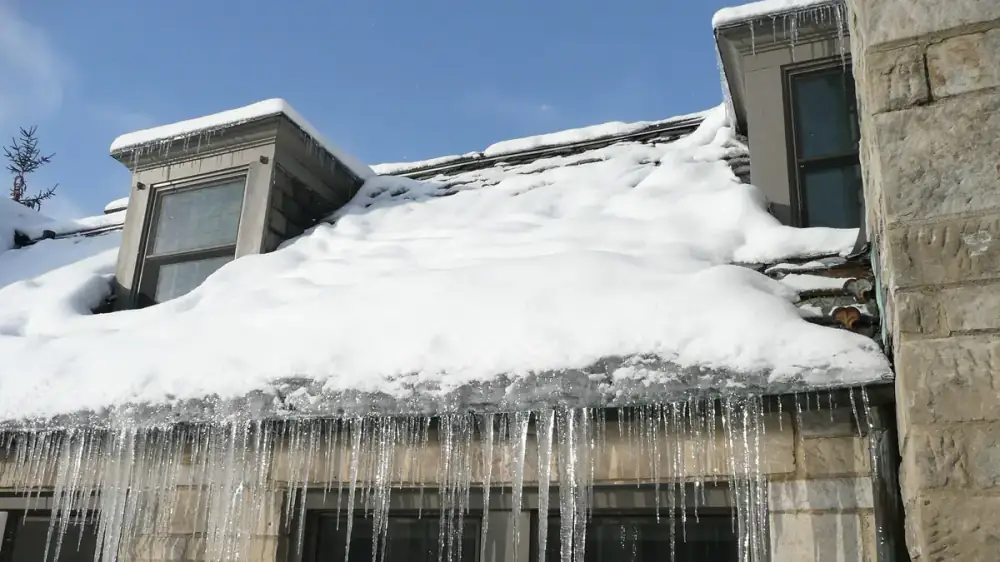
Honestly? Neither, much. Ice dams form when heat escaping through the roof melts snow that refreezes at the cold eave — a cycle driven by attic insulation, air sealing and ventilation, not by the gutter or its guard. A guard can't prevent that, and in most homes it doesn't make dams meaningfully worse either, though a frozen guard can hold a slab of ice at the edge. The guard is largely a bystander. The real fix is keeping the roof deck cold — attic work, not gutter work.
Ask whether gutter guards help or hurt with ice dams and you'll find people ready to argue both sides with total confidence. The salesperson says guards keep water flowing so ice never gets a foothold. The neighbor with a leaky ceiling swears his guards trapped the ice that ruined his winter. Both are telling you something true about their experience and something misleading about the physics. The honest answer, the one that actually helps you, starts by moving your attention away from the gutter entirely.
We don't sell guards, so here's the ventilation-first version, without a product to push.
Ice dams are made on the roof, not at the gutter
Here's the mechanism, because everything else follows from it. Heat escaping from the living space into the attic warms the roof deck. That warmth melts the underside of the snow sitting on the upper roof. The meltwater trickles down the slope until it reaches the eave — the roof edge that overhangs unheated space and stays below freezing — where it refreezes. Do that for a few days and the refrozen water builds into a ridge: an ice dam. Once the ridge is tall enough, meltwater pools behind it and works its way up under the shingles, and that's when it ends up on your ceiling.
Read that again and notice where the gutter is: nowhere. The entire cycle — melt at the top, refreeze at the edge — plays out on the roof above the gutter line. A dam can form on a house with no gutters at all. That single fact is why the honest answer to "help or hurt" is "mostly neither." Our overview of ice dams forming at the roof edge walks through the same process in more detail, and it's worth reading, because the fix lives entirely in that upstream story.
Why guards can't help
If a guard could keep the gutter flowing perfectly all winter, would that stop the dam? No — because the dam forms above the gutter, on the roof itself. Even a spotless, free-flowing trough sits below the cold eave where the ice ridge builds. Keeping the gutter clear is a good thing; it just doesn't touch the part of the roof where dams are actually made. Any product marketed as an ice-dam solution at the gutter line is selling you a fix for the wrong location, and that's the clearest reason to be skeptical of the "guards prevent ice dams" pitch.
Why guards mostly don't hurt either
The other camp — guards make dams worse — is closer to a real effect but still usually overstated. There are edge cases. A guard adds a surface at the eave, and ice can cling to it; a frozen guard can hold a slab of ice in place that's slow to melt off. In a specific, unlucky combination of roof, climate and guard type, that can be a nuisance. But the guard doesn't create the melt-and-refreeze cycle. The ice would form at that cold edge whether the guard was there or not. So in the great majority of homes the guard is a bystander — present at the scene, not the cause.
The practical upshot: if you already have ice dams, removing the guards almost never fixes them, and doing it in freezing weather trades a real fall risk for an imaginary benefit. If a particular guard genuinely seems to be trapping a problem ice slab year after year, that's a conversation for a professional in the off-season, not a ladder trip in January.
The fix that actually works is upstream
Because dams are a heat problem, the real solutions all live in the attic and at the roof, and they work by keeping the roof deck cold so the snowpack stops melting from below. Three measures do the heavy lifting:
- Insulation slows heat from reaching the attic in the first place.
- Air sealing closes the gaps — around lights, chimneys, hatches — where warm air leaks up and creates hot spots on the deck.
- Ventilation lets cold outdoor air flush the underside of the roof so it stays near the outside temperature.
Together, these break the cycle at its source. No single one is a silver bullet, and older or complicated roofs can hide their heat leaks well, which is why an assessment by a professional is usually money better spent than anything you could do at the gutter. This is genuinely the whole ballgame — everything at the gutter line is a footnote by comparison.
Where guards do fit in winter
None of this makes guards pointless once it snows. Their winter job is the same as every other season: keep leaves and debris out of the trough so that, when temperatures rise above freezing, meltwater drains freely instead of pooling behind a plug of frozen muck. A clear gutter handles a thaw better than a clogged one. That's a real benefit — just a modest one, and completely separate from ice dams.
It's also worth separating this from the question of whether guards survive winter physically, which is a different concern entirely. Weight, sliding snow and freeze-thaw put real stress on a guard, and we cover that in detail in our piece on guards under heavy snow loads. Surviving winter and preventing ice dams are two different questions, and only the first has anything to do with the guard.
The honest bottom line
So, help or hurt? For nearly every home, the truthful answer is that a gutter guard does neither in any way that matters to ice dams. It can't prevent them, because it's in the wrong place. It rarely worsens them, though a frozen guard can hold ice at the edge. And it does keep your gutters draining once the thaw comes, which is worth something. If ice dams are damaging your home, put your money and attention where the problem actually starts — the attic and the roof — and judge your guard on what it's genuinely good for. If you're still deciding whether a guard earns its place at all, our balanced look at whether gutter guards are worth it weighs the year-round case, and the full gutter guards library puts winter in perspective with everything else.
Answers to common questions
Do gutter guards help prevent ice dams?
No, not in any meaningful way. Ice dams form when heat escaping through the roof melts snow that then refreezes at the cold eave. That cycle happens on the roof above the gutter, so nothing installed at the gutter line — guard or not — can prevent it. Guards keep debris out of the trough, which is useful year-round, but preventing ice dams is about attic insulation, air sealing and ventilation, full stop.
Do gutter guards make ice dams worse?
Mostly no, though there are edge cases. A guard can give ice an extra surface to cling to, and a frozen guard can hold a slab of ice at the eave that's slow to melt. But it doesn't create the dam — the ice forms at that cold edge whether or not a guard is there. So a guard is best thought of as a bystander: it doesn't cause the melt-and-refreeze cycle, and in most homes it neither meaningfully helps nor hurts.
What actually causes ice dams?
Heat leaking into the attic warms the roof deck and melts the underside of the snowpack. That meltwater runs down to the eave, which stays below freezing because there's no heated space beneath it, and refreezes into a ridge of ice. The ridge grows and backs water up under the shingles. The driver is the temperature difference between a warm upper roof and a cold eave — an attic and roof problem, not a gutter one.
Should I remove my gutter guards to stop ice dams?
Usually not. Since the guards aren't causing the dams, removing them won't stop ice from forming at a cold eave over a warm roof — and pulling guards off in freezing weather is risky ladder work for no real gain. The effective response is to reduce the roof heat loss behind the dam through better insulation, air sealing and ventilation. If one specific guard is repeatedly trapping an ice slab, raise it with a professional rather than yanking it off mid-winter.
Will better attic ventilation really fix ice dams?
Ventilation is one leg of the fix, alongside insulation and air sealing. Together they keep the roof deck cold enough that the snowpack doesn't melt from below, which is what breaks the melt-and-refreeze cycle at its source. No single measure is a silver bullet, and older or complex roofs can be tricky, so it's worth having a professional assess where the heat is escaping. It does far more than anything you can do at the gutter.
Do gutter guards do anything useful in winter?
Yes, the same thing they do all year: keep debris out of the trough so it drains freely once temperatures rise above freezing. A clear gutter handles snowmelt better than one packed with frozen leaves. That's a genuine, if modest, benefit. Just don't confuse it with ice-dam prevention — the two are unrelated, and no guard should be sold on the promise of stopping dams.
Keep reading

Common Gutter Guard Problems
Guards solve some problems and create others. Here are the most common gutter guard issues — overflow, surface debris, ice, poor fit — and how to spot them.

Micro-Mesh vs Screen Gutter Guards
Both block leaves, but only one stops fine grit and pine needles. Here's how micro-mesh and screen guards compare on debris, upkeep and fit.
Do Gutter Guards Eliminate Cleaning?
The honest answer is no. Guards cut how often you clean, not the need entirely. Here's what still gets in and why checks still matter.