Micro-Mesh vs Screen Gutter Guards
Screen and micro-mesh guards both keep leaves out, but they handle fine debris very differently — and that difference decides how often you'll be back on a ladder.
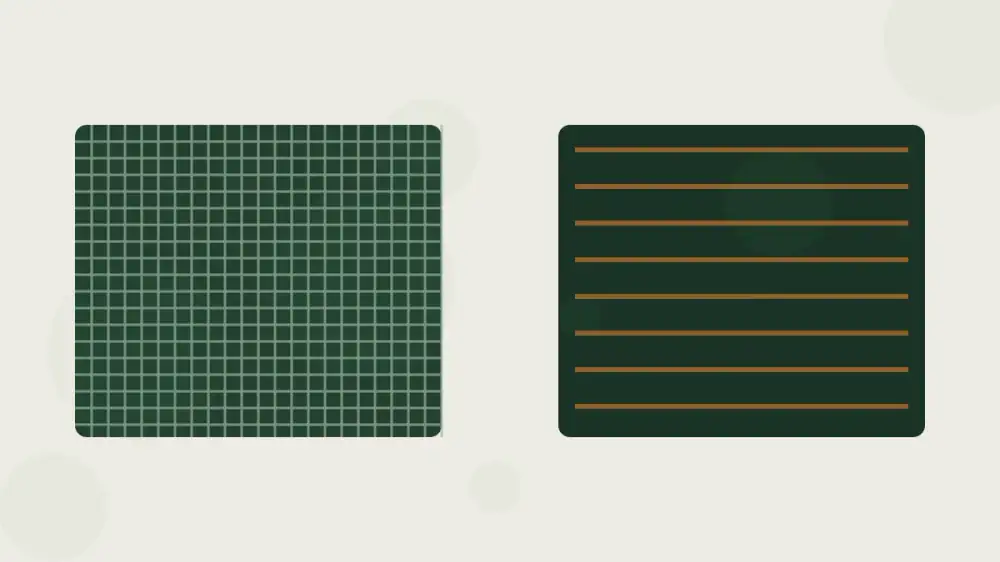
Both keep leaves out, but they differ on fine debris. Screen guards have larger openings that block leaves and twigs while letting grit, granules and small pine needles through into the trough. Micro-mesh guards have far finer openings that block nearly all fine debris, so material collects on top instead of inside. Micro-mesh protects better but needs its surface cleared; screens are simpler but let more through.
Once you've decided you want a gutter guard at all, the market narrows fast to two families that account for most of what actually gets installed on American homes: the open screen and the fine micro-mesh. They look like near relatives — both are a cover laid over the trough — and both handle the headline job of blocking leaves without complaint. The temptation is to treat the choice as a matter of price or looks. It isn't. It's a single engineering trade-off, and everything else follows from it.
It all reduces to one number
That number is the size of the opening the water has to pass through, and it sets the personality of the whole guard.
A screen guard is essentially a perforated or woven sheet with generous holes. Water drops through instantly, even in a cloudburst, because there's plenty of room for it. Leaves and twigs are simply too fat to fit, so they ride on top and are meant to blow or wash off. That's the entire idea, and its charm is its simplicity — many screens drop into a standard gutter with no fasteners, which is why they cost little and go in fast.
Micro-mesh flips the priority. It uses a very fine stainless or metal weave, usually stretched over a rigid frame, with openings measured in fractions of a millimeter. Water still gets through, but now it does so by wetting the mesh and pulling through by surface tension rather than free-falling. The payoff is that almost nothing solid follows the water down — not shingle grit, not a pine needle. The cost is a more substantial product that has to be mounted properly, often clipped to the gutter and tucked under the first shingle course.
So the screen optimizes for effortless drainage and easy fitting; the micro-mesh optimizes for a spotless trough. Neither is "better" in the abstract — they're tuned for different problems.
What ends up in the trough
The clearest way to see the split is to sort debris by size and ask where each type lets it land.
| Debris type | Screen guards | Micro-mesh guards |
|---|---|---|
| Leaves and twigs | Blocked | Blocked |
| Large seed pods | Blocked | Blocked |
| Small pine needles | Often pass through | Blocked |
| Shingle granules | Pass through | Blocked |
| Fine grit and silt | Pass through | Mostly blocked |
| Pollen and blossom dust | Pass through | Mostly blocked (can film on surface) |
Read down the two columns and the story writes itself. The coarse material that causes the dramatic, fast clogs — a trough packed solid with wet leaves — is stopped by both. It's the bottom half of the table where they part ways. A screen waves the fine stuff through, and over a season or two that grit settles and packs around the downspout outlet, quietly narrowing the drain. Micro-mesh catches almost all of it up top, keeping the inside of the gutter genuinely clean.
The upkeep doesn't vanish — it relocates
Here's the point most comparisons bury: choosing between these two isn't choosing between maintenance and no maintenance. It's choosing where the maintenance happens.
Live with a screen and your attention stays inside the gutter. You'll clean less often than you would with an open trough, but you're still periodically scooping out the fine sediment that slipped through, and that usually means lifting sections to reach it. The consolation is that coarse leaves on top mostly clear themselves.
Live with micro-mesh and your attention moves to the surface. The trough stays remarkably clean, but the fine particles the mesh rejects have to go somewhere, and in damp, shaded runs they can knit into a thin film across the weave. Clearing that is a brush or a rinse from above — cleaner and less unpleasant than digging out a trough, but still a ladder trip you should plan for. For most homes either guard turns a several-times-a-year chore into an annual look, but the ladder never fully retires.
When the top layer is the problem
Both types can also fail from above, and it's worth knowing the signature of each. A screen's open face sheds dry leaves well but lets pine needles stab into the holes and mat. Micro-mesh, by design, holds everything on its surface, so a heavy leaf or needle drop can blanket the whole thing. Once that blanket soaks through, water in a downpour can skate straight across it and pour over the front lip while the trough underneath sits bone dry — the counterintuitive way a "clean" gutter still overflows, which we unpack in our look at whether guards eliminate cleaning. The practical takeaway is the same for both: the top surface is what you actually monitor.
Matching the guard to your roofline
The right choice is decided less on the shelf than by what stands over your roof and what the roof itself is shedding.
- Mostly broadleaf trees, little fine grit. A screen is a sensible, economical fit. The debris that troubles you is exactly what a screen stops, and you skip the cost and complexity of a finer system.
- Pines, spruce, or any conifer nearby. Lean micro-mesh. Fine needles treat a screen's openings as an invitation; the mesh is what keeps them out.
- An older asphalt roof shedding granules. Micro-mesh again — that grit is precisely the fine material a screen ignores, and it's abrasive enough to earn keeping out.
- A very steep roof that throws water hard. Either can work, but fit and pitch matter more here; a fine mesh in particular has to be angled well so a heavy storm doesn't overshoot it.
Before either one goes on
Two checks apply no matter which you pick. First, confirm the guard suits your gutter's width and profile — screens forgive minor mismatches, while some micro-mesh systems tuck under the shingles in a way that can touch a roof warranty or call for a professional. Second, and more important, make sure the gutter beneath is sound. A guard is a cover, not a cure; laid over a run that sags, leaks, or shows it needs repair, it only hides a problem that keeps growing and makes the eventual fix harder.
As for cost, the finer and sturdier the system, the more it runs to buy and to fit — but the real figure swings so much with gutter length, roof height, material grade, and whether you do it yourself that any single quoted number deserves a raised eyebrow. Decide on the debris first; let price break a genuine tie, not lead the decision. A screen matched to a leafy lot and micro-mesh matched to a pine-shadowed one will each outperform the pricier guard bought for the wrong yard.
Answers to common questions
What's the main difference between micro-mesh and screen gutter guards?
It comes down to opening size. Screen guards have larger holes that block leaves and twigs but let fine debris — grit, granules, small pine needles and pollen — pass through. Micro-mesh has much finer openings that block nearly all fine material, so more debris collects on top instead of inside the trough.
Which is better for pine needles?
Micro-mesh, in most cases. Fine pine needles thread straight through the larger openings of a coarse screen, while micro-mesh blocks them. Both types still collect needles on the surface, so neither is truly maintenance-free under conifers — but micro-mesh keeps far more out of the trough.
Do micro-mesh guards clog?
They can clog on the surface. Because micro-mesh stops fine particles, pollen, silt and fine debris can build a film across the mesh over time, especially where it stays damp. That's cleared by brushing or rinsing the top rather than digging out the trough, but it does mean periodic attention.
Are screen guards worth it?
Screen guards are worth it where leaves are the main problem and fine debris is minimal. They're generally simpler and easier to install, and they stop the coarse material that causes the worst clogs. Under pines or on an aging roof shedding granules, though, they let too much through to be a long-term fix.
Will either guard fit my existing gutters?
Fit depends on gutter size, profile and roof edge. Many screen guards drop into standard gutters easily, while some micro-mesh systems attach to the gutter and slide under the shingles, which can affect roof warranties or need professional installation. Check compatibility with your specific gutter profile before buying.
Do either of these guards eliminate cleaning?
No. Both reduce how often gutters clog, but neither eliminates maintenance. Fine debris still collects — inside the trough with screens, on the surface with micro-mesh — so both need periodic checks and clearing, just less often than open gutters.
Keep reading

Common Gutter Guard Problems
Guards solve some problems and create others. Here are the most common gutter guard issues — overflow, surface debris, ice, poor fit — and how to spot them.
Do Gutter Guards Eliminate Cleaning?
The honest answer is no. Guards cut how often you clean, not the need entirely. Here's what still gets in and why checks still matter.

Are Gutter Guards Worth It?
Not a scam, not a miracle. Whether guards are worth it depends on your trees, roof and climate — and expecting reduced cleaning, not none. Here's the honest math.