Common Gutter Guard Problems
Gutter guards prevent a lot of trouble, but they bring problems of their own — from overflow in heavy rain to debris matting on top and guards working loose.

Even a good gutter guard runs into a predictable set of problems: overflow in heavy rain, a mat of debris building on top, pine needles and seed pods slipping through, ice and snow at the eaves, poor fit, and fasteners working loose over the years. Trace almost any of them back and you land on the same three roots — surface debris left uncleared, an installation that wasn't quite right, or a guard mismatched to the trees and weather it faces. Learn the signs and you catch these while they're still cheap to fix.
A gutter guard is a genuine upgrade, but it isn't a set-it-and-forget-it one. Once it's up on the roof edge it develops its own catalogue of recurring complaints — some baked into the design, some down to how it was fitted, and some simply the trees and weather the guard has to wrestle with. What makes these problems tricky is timing: a struggling guard usually looks perfectly fine from the driveway, right up until water starts appearing where it shouldn't. This is a tour of the issues that come up most, what drives each one, and how to tell them apart before they turn into damage.
Overflow: the number-one complaint
Water pouring over the edge in a downpour, guards or no guards, is the problem homeowners report most, and it has two usual drivers.
The first is debris on top. When a wet mat of leaves or needles blankets the guard, water can't reach the openings fast enough and sheets straight over the front lip — the trough beneath can be bone dry while water spills onto the ground. The second is sheer volume. Every guard restricts flow to some degree, and in an intense storm rain can simply arrive faster than the openings pass it, so some sheets over even a clean surface. Fine mesh is especially prone to this if it's pitched poorly or the roof throws water at it hard.
Some overflow is closely related but specifically a surface-tension issue on certain cover and mesh designs: water is meant to cling to the guard and curl into the openings, but in a hard, fast rain it overshoots and launches off the front edge entirely. You'll recognize it as a curtain of water jumping the gutter at the peak of a storm while lighter rain drains normally — a fit and positioning problem more than a debris one.
Whatever the flavor, check the surface first. A loaded guard is the likeliest culprit, and it's the same mechanism behind water running over or behind the gutter.
What settles on the surface
Every guard collects something up top — and that isn't a malfunction, it's the guard doing its job of keeping material out of the trough. The trouble starts only when that material is never cleared.
A film of leaves, pollen, or grit builds into a mat, especially in damp, shaded stretches where it stays wet and refuses to blow off. Given time the mat holds moisture, chokes drainage, and on fine mesh forms a skin that water struggles to penetrate. This is precisely why guards reduce cleaning but don't eliminate it: the maintenance simply moves from inside the trough to the top of the guard.
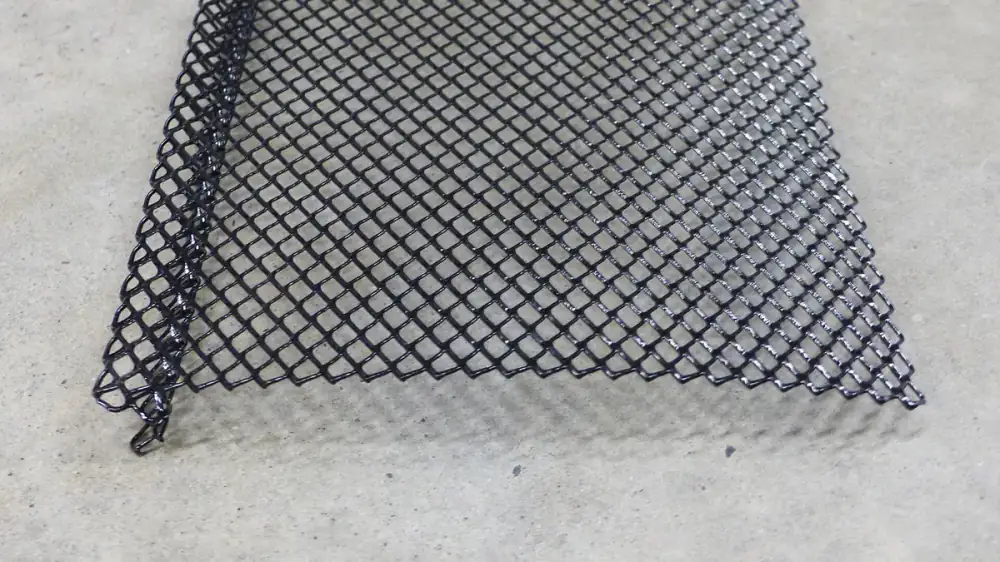
Fine debris is where the surface problem gets specific. Pine needles are thin enough to thread through the larger openings of screen-type guards, and once through they gather in the trough where they're awkward to reach; small seed pods and helicopter seeds wedge into openings, sprout in trapped grit, and hold water. Even guards fine enough to block needles tend to collect them on top, where they mat fast. Homes ringed by conifers see this constantly, which is one reason trees close to the roof drive so much guard upkeep — and why, if needles are your main enemy, the guard type matters enormously.
Winter turns the guard against itself
Cold climates hand guards a distinct set of problems. Snow and ice pile onto the surface, loading the guard and gutter with weight neither was designed to carry. Ice forming in and on the guard can block drainage completely, leaving meltwater nowhere to go. And when ice grips a guard, the expansion of repeated freeze-thaw cycles can loosen fasteners or slowly deform it.
Guards don't create ice dams — those come from heat escaping the roof and refreezing at the cold eaves — but they can trap ice and snow and complicate drainage right where the trouble concentrates. If your winters are hard, understanding how snow and ice damage gutters helps you anticipate where a guard will help and where it simply can't.
When the fit was the real problem
A surprising share of guard trouble traces back to the day it was installed rather than anything since. The usual fit failures are:
- Wrong size or profile for the gutter, leaving gaps where debris and water get in.
- Incorrect pitch, so water pools or overshoots the openings.
- Guards forced under shingles in a way that lifts them or voids a roof warranty.
- Gaps at seams, corners, and end caps where the guard never sealed to the gutter.
A poorly fitted guard can be worse than none at all, because it hands you a false sense of security while quietly letting water and debris travel where they shouldn't. Correcting it usually means adjusting the installation, not replacing the product.
Guards that work loose
Out on the roof edge a guard lives with wind, temperature swings, debris weight, and freeze-thaw movement, and over the years fasteners give. Clip-in guards that were never secured well can lift in a strong gust. A guard that has shifted, lifted, or popped free lets debris straight into the trough and can channel water behind the gutter and down the fascia — the opening move toward fascia rot if nobody notices.
Spotting trouble before it spreads
Most of this can be caught from the ground with an occasional deliberate look, especially during and just after rain. Keep an eye out for water spilling over the front edge or sheeting off the guard mid-storm, a visible mat of leaves or needles that never clears, guards that look lifted, bent, sagging, or out of line, water streaking down the fascia or siding below the gutter, icicles and ice buildup along the eaves in winter, plants sprouting through the surface, or grit and granules washing out of the downspout.
A few habits prevent most of these outright. Don't assume a guarded gutter needs no attention — surface debris is the root of most problems and clears easily if you stay ahead of it. Match the guard to your trees rather than to the lowest price, since a coarse screen under pines lets needles through and mats on top. Treat installation quality as worth paying for, because poor fit and pitch are where overflow and loosening show up fastest. Watch the eaves through winter in cold regions. And never guard a damaged gutter — address existing gutter damage first, or the guard just hides a worsening problem.
Some of it, though, is a job for someone equipped for height and precision. It's worth a professional's visit when guards have loosened or shifted and need reseating, when overflow or water behind the gutter persists after you've cleared the surface, when there's ice at the eaves you can't safely address, when the pitch or fit needs correcting, or simply when the roof is too steep or high to work on safely. None of these problems means the guards were a mistake. They mean a guarded gutter is still a system that rewards the occasional look — and knowing what tends to go wrong is what keeps a minor issue from becoming water damage.
Questions homeowners ask
Why do my gutters overflow even with guards installed?
Usually because debris on top of the guard is blocking water, or the guard can't pass water fast enough in a heavy downpour. When rain arrives faster than the openings can drain — or when a wet mat of leaves covers the surface — water sheets across the guard and pours over the front edge instead of going in.
Can pine needles and seed pods still get through gutter guards?
Yes, depending on the guard. Fine pine needles thread through the larger openings of screen guards, and small seed pods can wedge into openings on many types. Even guards that block them tend to collect needles and pods on the surface, where they mat and need clearing.
Do gutter guards cause ice dams?
Guards don't cause ice dams on their own — those come from heat escaping the roof and melting snow that refreezes at the cold eaves. But guards can trap ice and snow on the surface, add weight, and complicate drainage in freezing weather, which can worsen problems at the roof edge.
Why did my gutter guards come loose?
Loosening usually traces to installation or weather. Guards that clip in without secure fastening can lift in wind, and freeze-thaw cycles, heavy debris loads and expansion over time can work fasteners loose. A guard that has shifted or lifted lets debris in and can channel water behind the gutter.
Is water running behind the gutter a guard problem?
It can be. If a guard is pitched wrong, lifted, or installed so water clings to it and runs backward, rain can travel behind the gutter and down the fascia instead of into the trough. Poor fit at the roof edge is a common cause and often needs adjustment to fix.
When should I call a professional about gutter guard problems?
Call a professional when guards have loosened or lifted, when overflow or water behind the gutter persists after you've cleared the surface, when there's ice buildup at the eaves, or when the roof is too steep or high to work on safely. Reseating guards and correcting pitch is precise work best left to someone equipped for it.
Related guides

Micro-Mesh vs Screen Gutter Guards
Both block leaves, but only one stops fine grit and pine needles. Here's how micro-mesh and screen guards compare on debris, upkeep and fit.
Do Gutter Guards Eliminate Cleaning?
The honest answer is no. Guards cut how often you clean, not the need entirely. Here's what still gets in and why checks still matter.

Are Gutter Guards Worth It?
Not a scam, not a miracle. Whether guards are worth it depends on your trees, roof and climate — and expecting reduced cleaning, not none. Here's the honest math.