Foam vs Brush vs Mesh Guards
The three cheapest guard styles all promise the same thing and behave nothing alike. Here's how brush, foam and mesh really compare once real debris starts falling.

The three budget guard styles work in very different ways. Brush is a bristled cylinder that catches leaves on its bristles while water runs past below. Foam is a porous wedge that fills the trough so water soaks through and debris rests on top. Mesh is a screen over the gutter that filters water through small openings and keeps most debris out entirely. Mesh is generally the most capable and longest-lasting; brush and foam are cheaper and simpler but let more through and need more attention. None of them ends cleaning.
Walk down the guard aisle at any home center and three cheap styles dominate the shelf: black bristled brushes coiled in a box, wedge-shaped foam inserts, and rolls or panels of mesh screen. They cost a fraction of a professionally installed system, and the packaging on all three makes roughly the same promise. Behind that promise, though, they solve the debris problem in three genuinely different ways — and those differences decide which one is a smart buy for your house and which is money quietly wasted.
We don't sell guards, so here's the plain comparison: what each one is, how it behaves once leaves and grit actually start falling, and where each earns its keep.
Brush guards: a bottle brush in the trough
A brush guard is exactly what it looks like — a long cylinder of stiff bristles on a wire spine that you lay down inside the gutter. Leaves and twigs land on the bristle tips and are meant to dry out and blow away, while water flows through the open center and out the downspout. There's nothing to fasten and nothing to cut; you drop lengths in and push them together.
That simplicity is the whole appeal. But a brush is a coarse filter, not a barrier. Big leaves do tend to perch on top, yet anything smaller — seeds, samaras, pine needles, roof grit — sifts down into the bristles and collects around the wire core. When it's time to clear, you can't rinse a brush clean from above; you have to lift each section out, shake or hose it off, and reset it. For a home dropping mostly large, dry leaves it can buy you time. Under conifers or fine seed debris, the bristles turn into a trap.
Foam guards: a sponge wedge in the gutter
Foam takes the opposite approach. Instead of leaving the trough open, a foam guard fills it with a porous, wedge-shaped block. Rain soaks straight down through the open cells to the bottom of the gutter and out, while leaves rest on the sloped top surface to dry and blow off. Like brush, it needs no tools — you wedge it in and you're done.
The trouble is the same porosity that lets water through. Fine grit, pollen and seeds work into the cells and are stubborn to rinse out, so over a couple of seasons the foam clogs and water starts running across the top instead of soaking in. The material also holds moisture, which invites moss, algae and the occasional rogue seedling, and sun and weather break it down until it crumbles. Foam's real niche is the short-term, reversible fix — a rental, an odd gutter profile, a season you just need to get through — rather than a lasting install.
Mesh guards: the one that actually filters
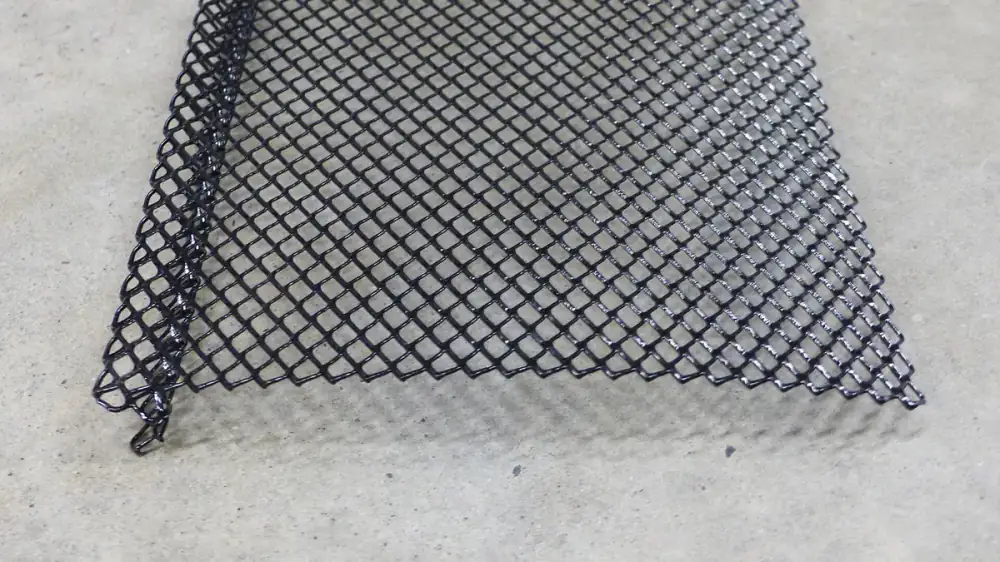
Mesh is the style that behaves most like a true filter. A screen — from coarse metal mesh up to fine micro-mesh — sits over the top of the gutter so water passes through the openings while debris stays outside the trough entirely. Unlike brush and foam, which collect debris inside the gutter, a good mesh guard keeps it out in the first place, which is why it usually stays effective the longest of the three.
The catch is that fineness cuts both ways. Coarse mesh sheds leaves well but can pass small seeds and needles; the finer micro-mesh that stops grit and needles can also let a mat of pollen or fine dust sit on the surface and slow drainage until it's rinsed. That trade-off is the whole subject of our comparison of micro-mesh vs screen gutter guards, and it's worth reading before you choose. Mesh also asks a little more of installation than a drop-in insert, though simple snap-in panels stay firmly in DIY territory.
How they stack up on real debris
The right way to judge these three isn't the box copy — it's what falls on your roof. Big dry leaves are the easy case; all three handle them to some degree. The story changes fast with fine material.
| Brush | Foam | Mesh | |
|---|---|---|---|
| Large leaves | Catches on bristles | Rests on top | Kept out |
| Seeds and fine grit | Sifts into bristles | Clogs the cells | Coarse passes, fine blocks |
| Pine needles | Lodges in bristles | Works into foam | Fine mesh keeps out |
| How you clear it | Lift out and shake | Rinse, replace when spent | Rinse the surface |
| Typical lifespan | Moderate | Shortest | Longest |
If your yard drops needles or seed clusters, that middle rows matter more than anything on the box. A home under conifers, in particular, will defeat both brush and foam quickly — the reasons are laid out in our piece on gutter guards and pine needles.
Lifespan and upkeep, honestly
None of these three is maintenance-free, and it's worth saying so plainly because all three are marketed as if they were. Brush needs periodic lifting and shaking. Foam needs rinsing and eventual replacement as it breaks down. Mesh needs the surface cleared of any mat that forms on top. What differs is how often, and how long the product itself survives. Foam generally has the shortest working life; mesh, kept clear, the longest; brush sits in between and depends heavily on your debris. Whichever you pick, our guide to how to clean gutters with guards covers the upkeep each one still needs.
Which one fits which home
There's no universal winner, only a right match.
- Choose brush if you want the cheapest, simplest option, your debris is mostly large leaves, and you don't mind lifting sections out to clean them. It's a stopgap that buys time, not a permanent solution.
- Choose foam only for the short term or an awkward gutter a rigid guard won't seat in. Go in expecting to replace it and to rinse fine debris out often.
- Choose mesh if you want the budget style most likely to last and to keep the trough genuinely clean — and choose finer micro-mesh if your yard drops needles, seeds or grit.
Above all, match the guard to your trees, not to the price tag. A cheap guard that's wrong for what falls on your roof is more expensive in the long run than the right one, because it wastes both the money and the effort. If you're weighing whether any of these is worth it at all, our balanced look at whether gutter guards are worth it is the place to start, and browsing the full gutter guards library will help you compare these budget styles against the pricier systems before you commit.
Answers to common questions
Which is best: foam, brush or mesh gutter guards?
For most homes, mesh is the most capable of the three — it actually filters debris out rather than just resting it on top or holding it back. Brush and foam are simpler, cheaper and easier to drop in, but they let more fine material through and need more frequent attention. The honest ranking is mesh for filtering, brush for coarse leaves in a pinch, and foam for a quick reversible fix. None of them ends cleaning.
Do brush gutter guards actually work?
They work in a limited way. A brush guard is a long bristled cylinder that sits in the trough and catches leaves on the bristles while water flows past below. It handles big leaves reasonably well, but fine debris, seeds and needles settle down into the bristles, and the whole thing has to be lifted out and shaken clean. Think of it as a coarse filter, not a sealed barrier.
Why do foam gutter guards get bad reviews?
Because the porous foam that lets water soak through also traps fine grit, pollen and seeds in its cells, and it holds moisture that encourages moss or even seedlings on top. On top of that, sun and repeated wetting break the material down over time. It installs in minutes with no tools, which is its real appeal, but it's usually the shortest-lived of the three styles.
Is mesh worth paying more than foam or brush?
Often, yes, if you plan to keep the guard for years. Mesh sits over the top of the gutter and filters water through small openings, keeping most debris out of the trough entirely rather than collecting it inside. Finer micro-mesh keeps out grit and needles that brush and foam let through. It costs more and can need surface rinsing, but it usually stays effective far longer.
Can I install these budget guards myself?
All three are among the more DIY-friendly guards — foam and brush especially, since they drop straight into the trough with no fasteners. Simple snap-in or clip-on mesh panels are also manageable for many homeowners. The catch is never the product; it's the ladder work. Any gutter that's high, steep or hard to reach safely is a job for a professional regardless of which guard you choose.

Common Gutter Guard Problems
Guards solve some problems and create others. Here are the most common gutter guard issues — overflow, surface debris, ice, poor fit — and how to spot them.

Micro-Mesh vs Screen Gutter Guards
Both block leaves, but only one stops fine grit and pine needles. Here's how micro-mesh and screen guards compare on debris, upkeep and fit.
Do Gutter Guards Eliminate Cleaning?
The honest answer is no. Guards cut how often you clean, not the need entirely. Here's what still gets in and why checks still matter.