How Gutter Guards Work
Every gutter guard solves the same puzzle — let the water in while keeping the debris out. How each type does that explains what it can and can't do for your home.
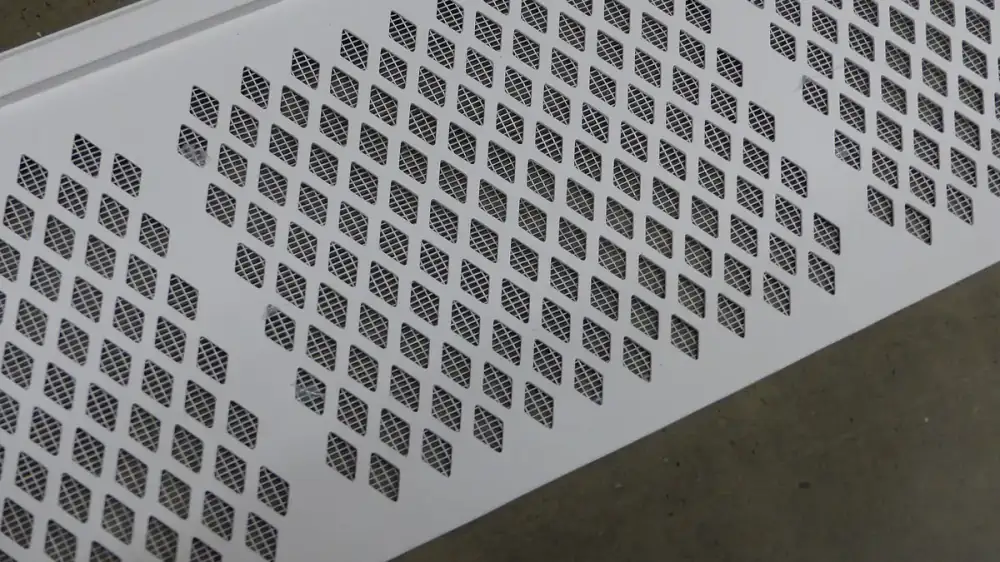
Every gutter guard works on the same principle: let roof water flow into the gutter while keeping debris out of the trough. The main families — mesh and micro-mesh, screen, reverse-curve, brush and foam — just manage that split in different ways, with different trade-offs in what they block and how much upkeep they need. No guard is maintenance-free: they reduce cleaning, not eliminate it.
An open gutter is indiscriminate. It catches whatever the roof sheds — water, certainly, but also leaves, seed pods, shingle grit and windblown dirt, all of it heading for the same trough. A gutter guard is any cover or insert that tries to sort that stream: keep the water, turn away the rest. That one job is the whole category, and every product on the shelf is just a different answer to it.
Hold that idea and the market stops looking bewildering. Once you know what a guard is trying to do, you can size up any type with a single question: how cleanly does it let water in while keeping debris out, and what does it ask of you in exchange?
The one problem every guard solves
Water and leaves come off a roof behaving nothing alike, and that difference is the crack every guard pries open. Water is cooperative — it will slip through a small hole, cling to a curved surface, or soak through a porous material. Leaves and twigs are broad, flat and light, so they tend to sit on a surface rather than pass through it.
That's the whole trick. The challenge is that leaves and water don't separate perfectly, so every guard has to choose which behavior to exploit and accept the compromise that comes with it.
The physics: why water and leaves part ways
Guards lean on one of three mechanisms. Some rely on opening size — holes small enough to admit water but too small for debris. Some rely on surface tension — water clings to a curved lip and wraps around into the gutter while debris carries straight off the edge. And some rely on a porous fill that water soaks through while solids stay on top.
None of the three is flawless, which is exactly why the category never settled on one design. Shrink the openings enough to stop fine grit and you also hand leaves a flat surface to pile on. Rely on surface tension and a hard downpour can overshoot the lip. Fill the trough with foam and fine seeds lodge inside it. Every design trades one strength for a matching weakness — the reason no single guard wins everywhere.
Five ways to make the split
Most guards fall into one of five families. Here's how each tackles the water-in, debris-out job.
| Guard type | How it works | Good at | Watch out for |
|---|---|---|---|
| Screen (perforated) | Larger holes let water and fine debris through; leaves sit on top | Blocking leaves and twigs, easy install | Fine grit and small pine needles pass into the trough |
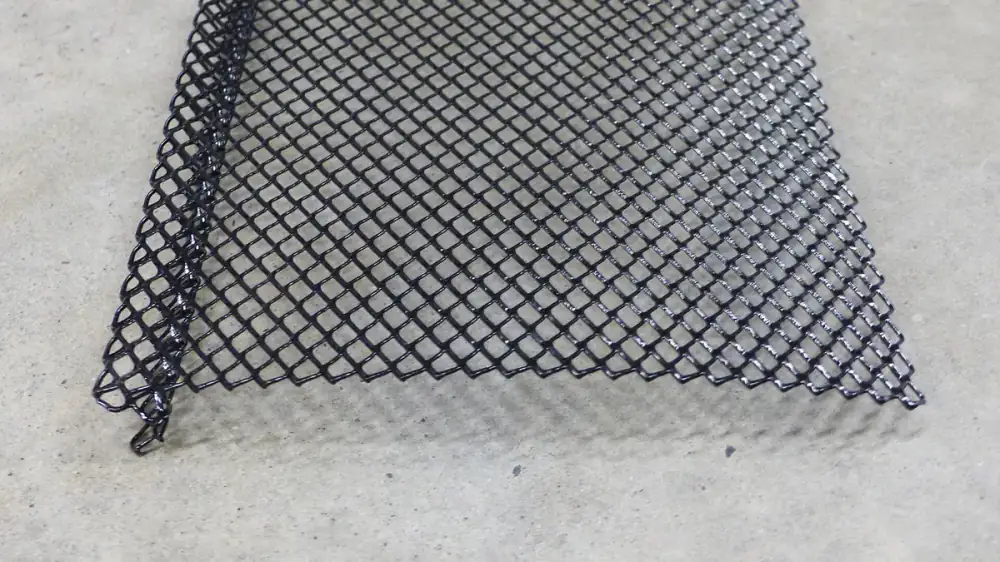
| Mesh / micro-mesh | Fine to very fine mesh blocks nearly all debris; water passes by surface tension | Stopping fine debris, grit and pine needles | Debris mats on the surface; can film over when damp |
| Reverse-curve (surface-tension) | Water wraps around a curved lip into the gutter; debris falls past | High-volume roofs, shedding leaves | Heavy rain overshoot; small debris riding the water in |
| Brush | Bristle inserts sit in the trough; debris catches on bristles, water flows below | Cheap, simple, drop-in fix | Debris tangles in bristles and must be pulled out |
| Foam | Porous foam block fills the gutter; water seeps through, debris stays on top | Low cost, easy DIY | Fine debris and seeds lodge in the foam; degrades over time |
Screens and micro-mesh
These two are what most homeowners actually install, and the only real difference between them is opening size. Screens use larger holes that stop leaves but wave fine material through; micro-mesh uses openings fine enough to block grit and pine needles, so debris collects on top instead. If you're deciding between them, our micro-mesh vs screen comparison works through the choice in depth, and the micro-mesh guide covers the finer type on its own.
Reverse-curve, brush and foam
Reverse-curve guards are the surface-tension design — a solid cover with a curved nose that steers water down and in while debris tumbles past. Brush guards look like oversized pipe cleaners laid in the trough. Foam guards are wedge-shaped blocks that fill the gutter. Each suits a different budget and situation; brush guards have their own guide for the drop-in end of the range.
What a guard buys you — and what it doesn't
In the right setting, a good guard pays its way. It can cut how often gutters clog by keeping most leaves and twigs out of the trough, stretch the interval between full cleanings from several times a year to an occasional check, slow the buildup that leads to overflow and fascia rot, and deny pests the wet debris bed they'd otherwise nest in. The common thread is reduction — a guard lightens the work and spreads it out.
What it can't do is where marketing tends to oversell. No guard eliminates cleaning: fine grit, pollen, shingle granules and needles still accumulate, frequently on top of the guard, so periodic clearing continues — a point we make directly in do gutter guards eliminate cleaning. No guard handles every debris type equally; one that shrugs off oak leaves may mat under needles or film over with pollen. No guard fixes a bad gutter — set over a sagging or leaking run, it hides the problem rather than solving it. And none behave identically in every climate, since snow, ice and heavy storms all change the picture.
Choosing with your own roof in mind
Because the trade-offs are real, the right guard is the one matched to your trees, your roof and your climate — not the one with the best pitch. Think about what actually falls on your roof (leaves, needles, grit, or a mix), how steep and high the roof is, and how much water it throws in a storm, then pick the design whose strengths line up with that.
Two cautions are worth keeping front of mind. First, installing over a damaged gutter just conceals a worsening problem, so sound out the gutter before adding any cover. Second, fitting a guard means working at the roof edge — and if the roof is steep or high, if a second story puts you well off the ground, if you can't set a ladder on stable, level footing, or if the system slides under the shingles in a way that could affect a roof warranty, that's a job to hand to a professional rather than improvise.
A gutter guard is a useful tool, not a magic lid. Once the water-in, debris-out principle behind all of them is clear, choosing one and living with it comes down to matching the design to your home — and accepting that the ladder comes out less often, not never.
Common questions
What is the basic principle behind every gutter guard?
All guards try to do the same thing: let roof runoff pass into the gutter while keeping leaves, twigs and other debris out of the trough. They differ only in how they manage that split — with fine mesh, larger perforations, a curved surface, bristles or a foam insert. The design determines how well water flows and how much debris is stopped.
What are the main types of gutter guards?
There are five broad families: mesh and micro-mesh, screen (perforated) guards, reverse-curve (surface-tension) guards, brush guards and foam inserts. Mesh and micro-mesh use fine or very fine screens; screen guards use larger holes; reverse-curve guards redirect water around a curved lip; brush guards sit in the trough like a pipe cleaner; and foam guards fill the gutter with a porous block.
Do gutter guards stop cleaning entirely?
No. Guards reduce how often and how much you need to clean, but none of them eliminate maintenance. Fine grit, pollen and pine needles still collect — often on top of the guard rather than inside — so a guarded gutter needs periodic checks and clearing, just less often than an open one.
Which type of gutter guard is best?
There's no single best type. Micro-mesh blocks the widest range of debris, screen guards handle leaves simply and cheaply, reverse-curve guards suit high-water roofs, and brush and foam are inexpensive quick fixes with real limits. The right choice depends on your trees, roof and climate, not on any one guard being universally better.
Can I install gutter guards myself?
Some can be, especially drop-in screen, brush and foam types. Others — many micro-mesh and reverse-curve systems — attach to the gutter or slide under the shingles and are better installed by a professional. Any install still means safe ladder work at the roof edge, so match the job to what you can do safely from the ground and a stable ladder.
Will gutter guards keep pests out of my gutters?
Some help. A tight micro-mesh or well-fitted cover leaves fewer gaps for birds, rodents and insects to nest in a debris-filled trough. But guards aren't pest barriers by design, and a guard sitting over trapped debris can still shelter pests, so keeping debris off the surface matters more than the guard alone.
Related reading

Common Gutter Guard Problems
Guards solve some problems and create others. Here are the most common gutter guard issues — overflow, surface debris, ice, poor fit — and how to spot them.

Micro-Mesh vs Screen Gutter Guards
Both block leaves, but only one stops fine grit and pine needles. Here's how micro-mesh and screen guards compare on debris, upkeep and fit.
Do Gutter Guards Eliminate Cleaning?
The honest answer is no. Guards cut how often you clean, not the need entirely. Here's what still gets in and why checks still matter.