Gutter Slope and Pitch, Explained
A gutter looks level from the street, but it isn't — and it shouldn't be. That barely-perceptible tilt is the whole reason water leaves your roof instead of sitting on it.
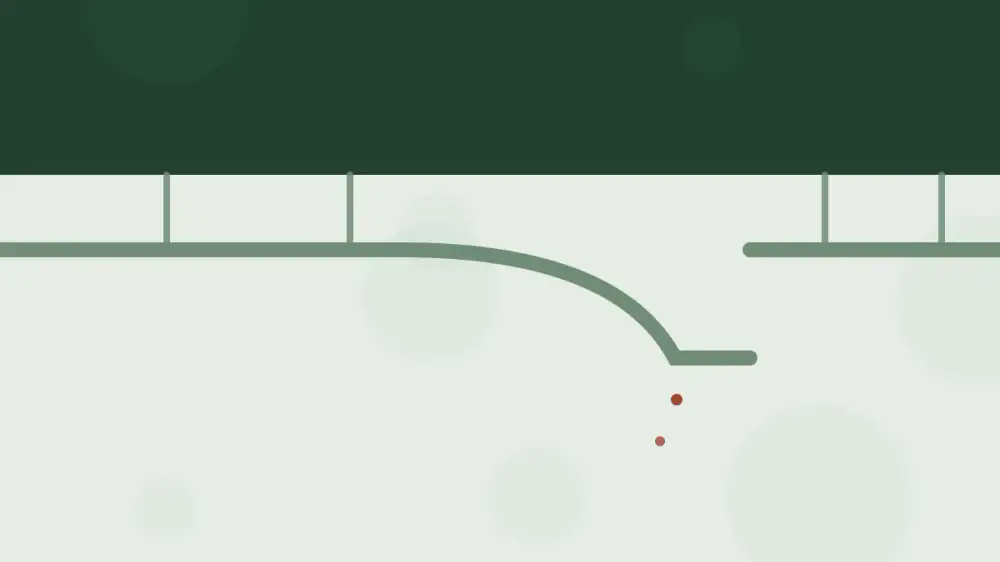
Gutters are hung with a slight, deliberate tilt toward the downspout so gravity keeps water moving instead of letting it pool. The right amount is the gentlest slope that fully drains the run — judged by result, not by a fixed number, since it depends on the run's length. Pitch goes wrong when it's too shallow, reversed, or lost to a sag, and the symptom is standing water or overflow. A little tilt is doing quiet, constant work.
Stand across the street and look at your gutters. They appear level, running dead straight along the fascia, parallel to the roofline. That appearance is intentional — and a little deceptive. A working gutter is not level. It's tilted, just barely, toward the downspout, by an amount small enough that your eye reads it as flat. That imperceptible tilt is called pitch, and it's the difference between a gutter and a long, narrow trough that collects rainwater and holds it.
Why a gutter can't be level
Water only moves downhill. Give it a perfectly flat channel and it has no reason to go anywhere; it spreads out, sits, and waits to evaporate or overflow. A gutter's entire job is to gather roof runoff and route it to a downspout that carries it away from the house. For that to happen, every drop has to have somewhere lower to go, all the way to the outlet.
So installers build in a slope. Not a dramatic one — a gutter tilted enough to see would look wrong and drain oddly — but a steady, continuous fall from the far end of the run down to the downspout. It's the same principle as a drainpipe or a driveway that sheds water: gentle, consistent, and always in one direction.
How much is enough
There's no single correct number, and anyone who quotes you one as gospel is oversimplifying. The right slope depends on how long the run is and how it was installed, because a longer gutter needs to keep falling over a greater distance to reach the same outlet. What stays constant is the goal, not the measurement.
The most reliable test isn't a level or a tape — it's rain. After a good storm, a properly pitched gutter drains out and leaves the trough nearly empty within a day. If water lingers in a spot, the slope has failed there, whatever the numbers say. That's why persistent standing water and pitch problems are really the same subject seen from two directions: the pooling is the evidence, the slope is the cause.
Which way it tilts, and why long runs are different
On a short run served by a single downspout, the whole gutter simply slopes toward that one exit. Straightforward.
Long runs are more interesting. A gutter that stretches across a wide roofline often has a downspout at each end, and it's pitched from a high point somewhere in the middle down to both. Water arriving at the center splits and drains in two directions, halving the distance any drop has to travel. This is partly a slope decision and partly a capacity one — spreading the outlets keeps the water shallow and moving, which is the same logic behind matching gutter size to the roof area feeding it. Slope and size are always in conversation.
The ways pitch goes wrong
Pitch fails in a handful of recognizable ways, and knowing them helps you read your own gutters.
Too little slope. The most common problem. A run that's nearly flat drains sluggishly, holds a film of water long after rain, and in a downpour can back up because the water can't clear fast enough. Sometimes it was installed too flat; sometimes it started fine and settled.
Reverse slope. Worse than flat — the gutter actually tilts away from the downspout, so water runs to the wrong end and stands against a closed corner. This is usually an installation error or the result of one end dropping over time.
A sag in the middle. Even a correctly pitched gutter develops a low spot if a section droops. The weight of trapped debris, standing water, and ice, or a hanger that has let go, pulls a stretch down into a dip that becomes a puddle. Sag and lost pitch are close cousins.
Too much slope. Less common but real. An exaggerated tilt looks wrong against the level roofline and can send water racing to the outlet fast enough to overwhelm it or overshoot, while leaving the high end running shallow.
Why the fascia and the back edge care about slope
Pitch doesn't only decide whether water drains — it influences where water goes when things aren't perfect. A gutter that holds water because the slope failed puts constant weight on the hangers and keeps the fascia behind it damp, which invites rot at the roof edge. And a sluggish, overfilled gutter is more likely to let water sneak over the back lip, one of the mechanisms behind water running behind the gutter and staining the fascia and siding. Good pitch keeps water where it belongs — in the trough, moving toward the exit, and off the wood.
Pitch is part of a working system
It helps to see slope not as a standalone setting but as one link in a chain. The trough catches water, the pitch carries it sideways, the outlet and downspout drain it away, and the hangers hold the whole thing at the correct angle year after year. Weaken any one of those and the others can't compensate; the way they depend on each other is the heart of how a gutter system fits together. Pitch is the part that turns a channel into a conveyor.
Reading your own slope from the ground
You don't need to climb up to get a sense of your pitch. Stand at one end of a run and sight along it toward the downspout. A healthy gutter reads as a straight line with a barely-there, steady fall in the draining direction. A visible dip, a wave, or a stretch that seems to rise as it approaches the outlet all signal trouble. Pair that with the after-rain test — where does water linger? — and you can usually tell whether your slope is doing its quiet job or has started to fail, long before it turns into a sagging, water-logged run that needs real work.
Common questions
How much should a gutter slope?
Only slightly — enough that water always moves toward the downspout rather than sitting still, but not so much that the tilt is obvious from the street. The exact amount depends on the length of the run and how it's installed, which is why it's best set by a professional. The practical test beats any number: after rain, the trough should drain and leave itself nearly empty.
Which way should a gutter slope?
Toward the nearest downspout. On a short run with one downspout, the whole gutter tilts in that direction. On a long run with a downspout at each end, the gutter is pitched from a high point in the middle down to both ends, so water splits and drains in two directions. The goal is always the same: no low spot where water can pool.
Can a gutter have too much slope?
Yes. Too much tilt looks wrong against the level roofline, and in a heavy rain the water can race to the downspout and overwhelm the outlet, backing up or overshooting. It can also concentrate flow so the far end of a long run runs shallow. The aim is the gentlest slope that reliably drains, not the steepest.
Why does my gutter pool water when it looks level?
Because level is the problem. A truly flat gutter has no reason for water to move, so it sits and stagnates. Gutters need that slight, deliberate tilt to drain. If yours looks perfectly level and holds water, it likely lost its pitch — often from a sag, a slipped hanger, or an installation that was flat to begin with.
Does slope affect whether gutters overflow?
It can. If the pitch is too shallow, water moves sluggishly and can crest the front edge before reaching the downspout, especially at peak flow. Slope and gutter size work together — the right pitch helps a correctly sized gutter drain, but it can't rescue a gutter that's simply too small for the roof.
How often does gutter pitch need adjusting?
A well-installed gutter can hold its pitch for many years, but it isn't permanent. Houses settle, hangers loosen, and the weight of debris and ice slowly pulls runs down. It's worth sighting along your gutters now and then, and any time you notice standing water or a visible dip, to catch a slipping pitch before it becomes a sag.
You might also like

How Trees Affect Gutter Maintenance
Leaves, pine needles, seed pods and shade each create a different gutter problem. Here's how tree cover reshapes your maintenance schedule.
Why Water Runs Behind Gutters
A missing drip edge, a gutter hung too low, or an overflowing clog — these three causes explain most water that ends up behind the gutter.
Signs Gutters Need Repair Instead of Cleaning
Sagging runs, leaking seams, loose hangers and standing water are repair problems, not cleaning problems. Here's how to tell them apart.