How a Downspout Drainage System Works
A gutter only does half the job. The other half is everything below it — outlet, downspout, extension and discharge — working as one chain to move water safely away from the house.
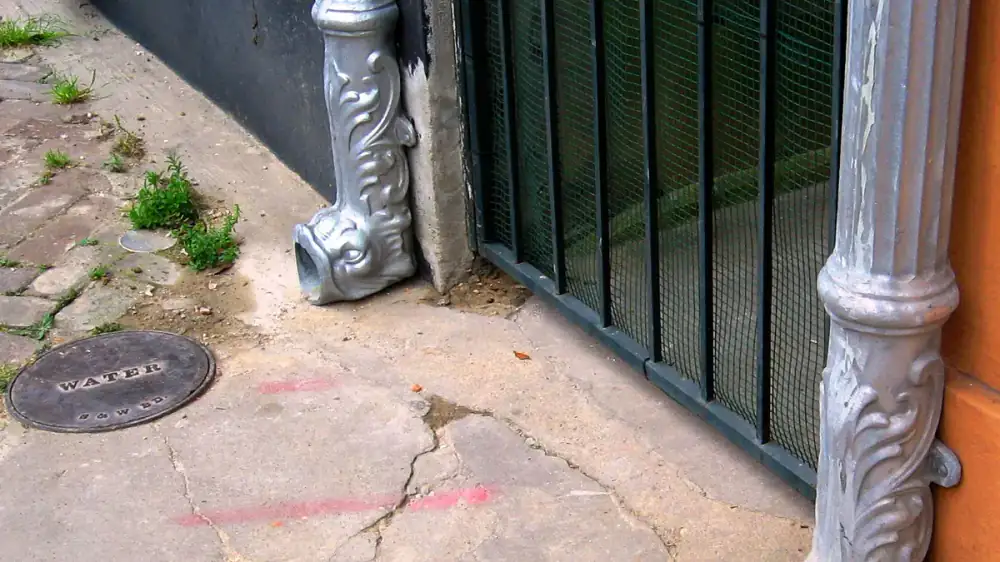
A downspout drainage system is a chain of connected parts that carries roof water from the gutter to a safe distance from the house: the outlet drains the trough, the downspout carries the water down, elbows steer it around the building, and an extension or drain at the bottom moves it away from the foundation. The whole thing only works if every link works — one blocked outlet or a discharge that dumps water at the wall breaks the chain and sends water exactly where it shouldn't go.
Catching rainwater is the easy, visible part, and it's the part most people picture when they think about gutters. But a gutter brimming with water it can't move is no more useful than no gutter at all — the water still ends up spilling over the eave and landing against the house. The actual protection happens after the catch, in the unglamorous run of parts that take the collected water down the wall and push it out to a safe distance. That's the downspout drainage system, and it deserves more attention than it usually gets.
The clearest way to understand it is to stop thinking of it as a collection of separate fittings and start thinking of it as a single path that water travels: in at the top, out at the bottom, ideally well clear of the foundation. Trace that path once, following the water from where it leaves the trough to where it finally hits the ground, and most so-called "gutter problems" resolve into something much more specific — a break at one identifiable point along the way.
Following the water down
Rather than catalog parts in the abstract, walk them in order, the way a raindrop would.
It starts at the outlet
The journey begins at the outlet, the hole in the bottom of the gutter where the trough empties into the downspout — the drain in the gutter's sink, essentially. Everything downstream depends on water reaching it in the first place. A gutter that's clogged or pitched wrong never delivers water to the outlet at all; an outlet packed with its own debris backs the trough up and sends it over the front edge, no matter how clear the pipe waiting below might be.
Down the vertical pipe
From the outlet the water drops into the downspout, the enclosed vertical pipe running down the side of the house. This is the workhorse of the whole assembly, and it's closed for a good reason — a sealed pipe moves a surprising volume of water without splashing it everywhere. It's also the single most common hiding place for a clog, precisely because the blockage is invisible: packed debris sits inside the pipe, giving no sign until the gutter above starts overflowing for no obvious reason. When that happens, the cure is usually a ground-level clearing, laid out in how to unclog a downspout safely.
Around the corners
Along the way the water is steered by elbows — the angled fittings that route it out from under the eave, down the face of the wall, and back toward the ground. They're unavoidable on most homes, but every bend is also a natural catch point where debris can lodge. A downspout with tight or numerous elbows is a frequent culprit when downspouts keep clogging.
Out and away at the bottom
The final link is the one homeowners forget most often, and it's the one that actually saves the foundation. At the base, an extension, splash block, or buried drain has to carry the water away from the house. Skip it and the downspout simply moves the problem from the roof to the wall: instead of overflowing up high, the water now pools right at the base. That's the direct cause of water pooling near the foundation, and the reason downspout extensions deserve as much attention as the pipe itself.
Reading the chain as a whole
Laid out side by side, the pattern in these parts becomes hard to miss: each one has a job, and each one has a characteristic way of failing.
| Part | What it does | What goes wrong |
|---|---|---|
| Outlet | Drains the gutter into the downspout | Clogs and backs up the trough |
| Downspout | Carries water down the wall | Hidden internal clogs |
| Elbows | Steer water around the house | Debris catches at the bends |
| Extension / drain | Carries water away from the wall | Missing or too short; pools at foundation |
| Discharge point | Releases water onto sloped ground | Too close; water runs back to the house |
The unifying lesson is that this is a chain in the strictest sense — any single failure breaks the whole thing. A spotless gutter still overflows if the outlet clogs beneath it. A flawless downspout still floods the foundation if the extension is missing at its foot. There is no such thing as a system that's "mostly working," because water only needs one broken link to end up against the house.
Where the water is supposed to finish
The destination the whole chain is aiming for is a discharge point well clear of the building, on ground that slopes away from it. How far "clear" needs to be depends on your grading and soil, but the principle never bends: water should leave the house and keep moving, not settle against the wall or drift back toward it. Getting the last few feet right is often the difference between a dry foundation and a chronically damp one.
Some homes route their downspouts into buried drain lines that carry the water off to a distant outlet, a dry well, or a storm drain. These are tidy and genuinely effective, but they add a link that clogs out of sight — a useful thing to remember on the day the surface all looks fine and yet water is still backing up somewhere it shouldn't.
When one downspout is carrying too much
A single downspout can only drain so much roof. On a large roof, or in a hard rain, one overwhelmed outlet lets the gutter spill before it can empty — which is exactly why big roofs are normally split among several downspouts, so no single pipe is asked to do too much. If you get persistent overflow at one spot despite a clean trough and a clear pipe, the outlet there may simply be handling more roof than it can. Seeing how gutters protect your home makes the stakes plain: the entire point is keeping water off the fascia, siding, and foundation, and a single overloaded downspout quietly undoes all of it.
Spotting a break without leaving the yard
Nearly all of this is diagnosable from the ground during a steady rain — no ladder, no roof. The trick is to watch the water and let its behavior point to the broken link:
- Water backing up at the outlet while the downspout stays dry means the blockage is at or below the outlet.
- A dry downspout in the rain while the gutter above overflows means water isn't making it through the pipe.
- Pooling at the base of the downspout means the discharge is too close or absent.
- Erosion or a wet stripe on the ground below the outlet means water is landing and sitting instead of moving off.
- Overflow at the same spot every storm hints at an undersized or clogged outlet.
- Water running back toward the house after discharge means the ground there slopes the wrong way.
Note how much you can conclude just from where the water misbehaves — that's the whole advantage of understanding the system as a path. The one firm limit is height: nearly everything here reads from the ground, and anything that would require a ladder or the roof to inspect is work to hand off. A clog sitting high in a downspout or buried in an underground line, an outlet that needs resizing or rerouting, added downspouts, or regrading to fix a bad discharge slope — those belong to someone who can safely reach and assess them.
Trace the chain once — outlet, downspout, elbow, extension, discharge — and you'll never look at a "gutter problem" quite the same way again. More often than not the trough is doing its part faithfully, and the real break is hiding somewhere in the path the water takes on its way to leaving the house safely.
Answers to common questions
What are the parts of a downspout drainage system?
The chain runs from the gutter outlet — the hole where the trough drains — into the downspout, the vertical pipe that carries water down. Elbows steer it around the house, and at the bottom an extension, splash block or buried drain carries the water away from the foundation to a safe discharge point. Each part only works if the ones before and after it do too.
Where should downspout water discharge?
Well away from the foundation — far enough that the water can't run back toward the house or soak the soil against the wall. The exact distance depends on your grading and soil, but the principle is constant: get the water clear of the building and onto ground that slopes away, not into a puddle at the base of the wall.
Why does water pool at the bottom of my downspout?
Usually because the discharge is too close to the house or missing entirely. A downspout that just drops water at the base of the wall creates a puddle right where you least want one. Adding an extension or drain that carries the water away, onto ground that slopes off, is the fix.
Can one downspout handle a whole roof?
It depends on the roof area and rainfall, but a single downspout serving too much roof will struggle — the gutter overflows before the outlet can drain it. Large roofs are usually divided among several downspouts so no one pipe is overwhelmed. Persistent overflow at one spot can be a sign the outlet is undersized or clogged.
How do buried drain lines fit in?
Some systems route the downspout into an underground pipe that carries water to a distant discharge point, a dry well or a storm drain. It's tidy and moves water well clear of the house, but a buried line can clog out of sight and is hard to clear from the surface, so it needs occasional attention like any other part of the chain.
How do I keep the whole system working?
Keep every link clear: a clean gutter feeding a clear outlet, an unobstructed downspout, and a discharge that carries water away. Check it in the rain from the ground — water should exit the bottom and move off, not back up at the outlet or pool at the base. Most failures are one blocked link breaking the chain.
You might also like

How Trees Affect Gutter Maintenance
Leaves, pine needles, seed pods and shade each create a different gutter problem. Here's how tree cover reshapes your maintenance schedule.
Why Water Runs Behind Gutters
A missing drip edge, a gutter hung too low, or an overflowing clog — these three causes explain most water that ends up behind the gutter.
Signs Gutters Need Repair Instead of Cleaning
Sagging runs, leaking seams, loose hangers and standing water are repair problems, not cleaning problems. Here's how to tell them apart.