How Do Gutters Protect Your Home?
Gutters look like a minor trim detail, but they quietly control where thousands of gallons of roof runoff go every year. Here's the damage they prevent.
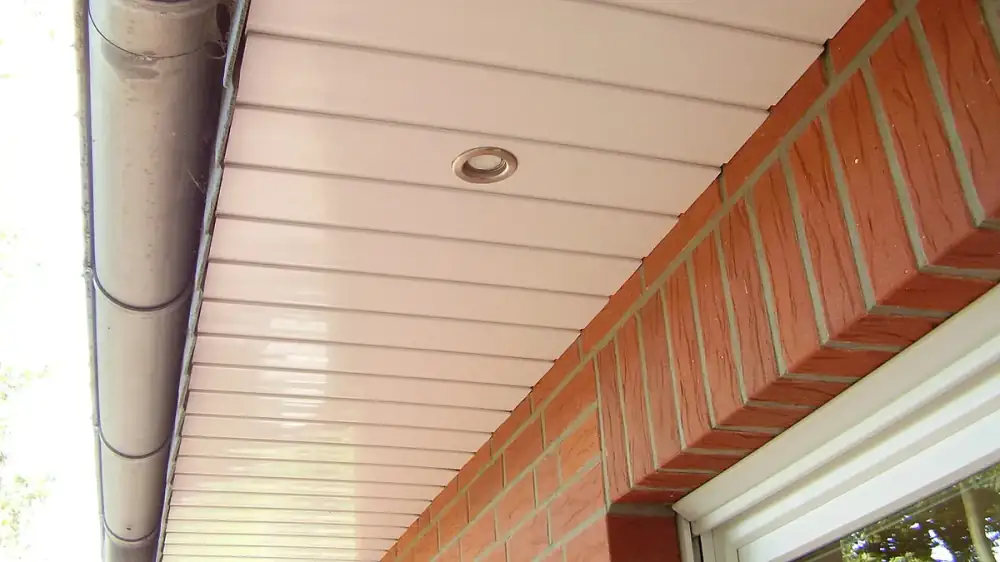
Gutters protect your home by catching roof runoff and routing it away from the fascia, siding and foundation before it can do damage. Without them, water falls straight along the walls and foundation, leading to rot, staining, erosion and settling. They only work, though, when the trough and downspouts stay clear.
Consider how much water a roof actually handles. Every inch of rainfall that lands on it has to go somewhere, and a modest roof can shed hundreds of gallons in a single ordinary storm. Left to its own devices, all of that water runs off the edge in a continuous curtain and lands in the one place you'd least choose for it — the narrow strip of soil pressed right up against the foundation. A gutter's entire purpose is to intercept that curtain before it lands and send it somewhere it can't do harm.
It's a simple idea, and gutters carry it out so quietly, tucked up at the roof edge and out of daily view, that it's easy to forget they're working at all. You tend to notice them only in the moment they stop — and by then the water they were holding back has usually already gone looking for the house.
The curtain of water, and where it wants to go
To see what gutters are protecting against, picture the house through a full storm with no gutters on it. Water sheets off the entire roof and drops in a line along the drip edge, hammering the same band of earth over and over. It splashes soil and grime up onto the lower siding. It carves little trenches in the flower beds. Most consequentially, it soaks the ground hard against the foundation, saturating the very soil whose job is to stay stable and support the house.
Some homes get away with it — a well-draining lot, a generous overhang, and coarse soil can absorb a lot of abuse. But most houses, over enough years, quietly pay for uncontrolled runoff in basement dampness, stained and softening siding, and settling around the foundation. Gutters exist to take that curtain of water and hand it off to a controlled path instead of letting it fall wherever gravity aims it.
It's a system, not a single part
The gutter you can see is only one link in a short chain, and each link has a distinct job to do:
- The trough — the gutter itself — catches water coming off the roof edge and channels it sideways toward the downspouts.
- The downspouts take that gathered water and carry it down to ground level.
- The extensions or splash blocks move it the final few feet, away from the foundation and onto ground that can drain it.
Break any one link and the water simply finds the house again. A clear trough feeding a clogged downspout still overflows. A flawless downspout that dumps its water right at the base of the wall still soaks the foundation. Protection isn't the gutter alone — it's the whole path working end to end.
The parts of the house that depend on it
When that path holds, here's specifically what stays dry that otherwise wouldn't.
The fascia and soffits
The fascia is the board the gutter hangs from; the soffit is the underside of the overhang behind it. Both are usually wood or a wood product, and both sit exactly in the firing line of overflowing or backed-up water. Steady moisture here means peeling paint first, then soft spots, then outright rot — and rotted fascia can no longer hold the gutter it supports, which kicks off a second, worse round of damage as the run begins to pull loose.
The siding and trim
When runoff sheets off the roof or spills over a clogged gutter, it splashes down onto the walls, showing up over time as staining, streaking, and moisture creeping in behind the siding. A quieter version happens when water sneaks in behind the gutter rather than into it — why water runs behind gutters explains how that particular failure works.
The foundation and the soil around it
This is the one that matters most. Roof runoff concentrated at the base of the walls keeps the surrounding soil soaked, and that repeated cycle of saturating and drying is what drives foundation settling, cracking, and basement or crawlspace moisture. By gathering the water and releasing it well away from the house, gutters keep that soil far more stable. Placement is everything here — downspout extensions are what carry the water the last, decisive few feet beyond the danger zone.
The walkways, entries and landscaping
Uncontrolled runoff also chews up flower beds, undercuts paths, and turns the ground by the front door into a splash zone. Gutters keep that water organized and headed somewhere chosen, rather than letting it carve its own route across the yard.
When protection turns into harm
Here's the twist that surprises people: a gutter can fail in two directions, and the second is worse than simply not having one. Gutters fail either by being absent, or by being present but clogged, damaged, or poorly pitched — and that second category can do more damage than bare eaves, because a blocked gutter holds water against the very wood it was meant to keep dry and dumps concentrated overflow in one spot instead of spreading it thin.
| Problem | What happens to the house |
|---|---|
| No gutters at all | Runoff erodes soil at the drip line, splashes siding, and saturates the foundation zone |
| Clogged trough | Water backs up, overflows the front edge, and runs behind onto the fascia |
| Blocked downspout | The whole run overflows even if the trough is clear |
| Poor pitch or standing water | Debris and moisture linger, accelerating corrosion and rot |
| Water dumped at the foundation | Soil stays saturated, driving settling and basement moisture |
The takeaway is worth sitting with: a neglected gutter isn't neutral. It can be actively worse than no gutter, because it turns a drainage device into a water trap parked right against the parts of the house most vulnerable to water.
Catching the signals early
Most signs that a gutter has stopped protecting the house are visible from the ground, if you know the moment to look — which is during and just after a steady rain. Watch for water spilling over the front edge instead of draining to the downspout, and for streaks or stains on the fascia and siding, especially below seams and corners. Look for peeling paint or soft, darkened wood at the roof edge; for eroded soil, splashed dirt, or shallow trenching directly below the gutter line; for water pooling at the base of a downspout or against the foundation; and for any visible sag or dip in a run, which usually means trapped weight or loose hangers. Any one of these means water is reaching the house, and it's worth a closer look before the next storm rather than after.
Keeping the protection intact, happily, takes nothing exotic. Gutters go on doing their job as long as you keep the trough and downspouts clear and sound — which mostly means routine gutter cleaning on a schedule that suits your trees and climate, plus a quick look after big storms. Each time you clean, confirm three things: the trough is empty, water actually exits the bottom of every downspout, and that water lands well away from the wall. Walking the perimeter a couple of times a year — or following an annual gutter inspection checklist — lets you catch a loose hanger or a separated seam while it's still a small fix.
Some problems, though, outgrow a bucket and a hose. It's worth bringing in help when safe access from the ground or a stable ladder isn't possible, or the home is tall or steep; when you find rotted fascia, separated seams, or a sagging run that cleaning won't cure; when water reaches the basement or foundation despite clear gutters, which can point to pitch, sizing, or drainage problems that deserve a professional's eye; and when you're weighing whether the system is worth repairing at all — an honest look at repair versus replacement is a sensible starting point.
Common questions
What is the main job of a gutter?
A gutter catches the water shedding off your roof and carries it, through the downspouts, to a point where it can drain safely away from the house. Without that channel, runoff falls straight along the foundation and splashes back onto the siding, concentrating water exactly where you least want it.
What happens to a house without gutters?
Roof runoff drops in a sheet along the drip line, eroding soil, splashing dirt and moisture onto the lower siding, and saturating the ground next to the foundation. Over time that shows up as basement moisture, stained or rotting siding, and settling near the foundation. Some homes on well-draining lots cope, but most do not.
Do gutters really protect the foundation?
Yes, indirectly but importantly. By collecting runoff and discharging it several feet from the house, gutters keep the soil around the foundation from repeatedly soaking and drying. That cycle is what drives settling, cracking and basement seepage, so controlling where the water lands matters as much as the gutter itself.
Can clogged gutters cause more harm than no gutters?
They can. A blocked gutter holds water against the fascia and roof edge and dumps overflow in concentrated spots rather than spreading it out. That trapped, standing water is what rots wood and, in winter, freezes and pries the system loose. A gutter only protects the house when the trough and downspouts are clear.
Where should gutter water actually go?
Away from the foundation. The downspout should discharge onto a splash block or extension that carries water several feet out, ideally onto ground that slopes away from the house. Water that pools at the base of the downspout defeats the whole purpose of the system.
Do I still need gutters if my roof has a big overhang?
A generous overhang helps by pushing the drip line farther from the wall, but it does not control where the water goes once it hits the ground. On most homes you still want gutters to collect and redirect runoff, especially near entries, walkways and any below-grade space like a basement or crawlspace.
Keep reading

How Trees Affect Gutter Maintenance
Leaves, pine needles, seed pods and shade each create a different gutter problem. Here's how tree cover reshapes your maintenance schedule.
Why Water Runs Behind Gutters
A missing drip edge, a gutter hung too low, or an overflowing clog — these three causes explain most water that ends up behind the gutter.
Signs Gutters Need Repair Instead of Cleaning
Sagging runs, leaking seams, loose hangers and standing water are repair problems, not cleaning problems. Here's how to tell them apart.