Annual Gutter Inspection Checklist
Once a year, give your gutters and downspouts a proper going-over. This ground-level checklist covers what to check, the warning signs that matter, and when to call a pro.
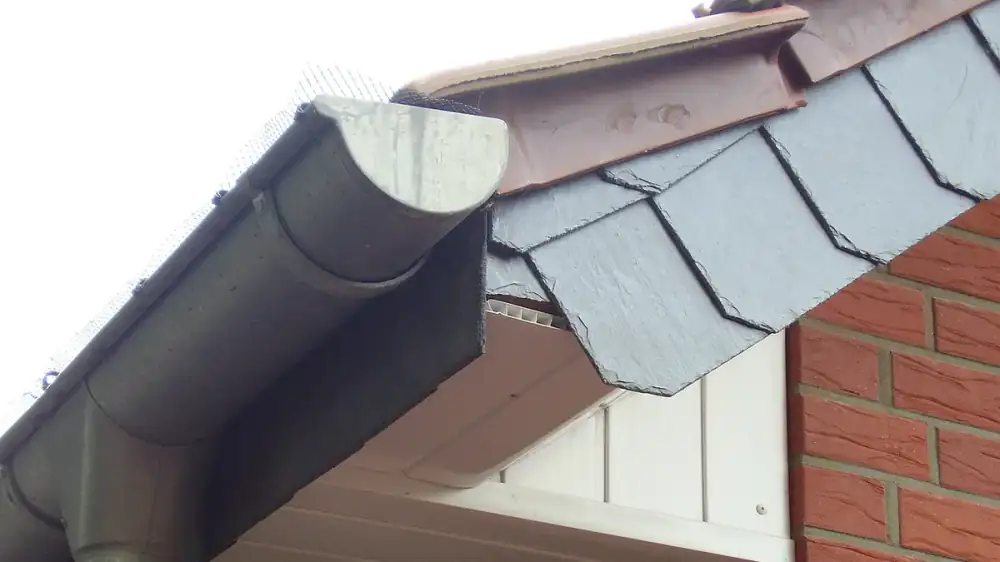
Treat the annual inspection as a judgment of whether the system is still sound, not a repeat of cleaning. Sight along each run for sag and tilt, confirm the gutters are anchored and pitched toward the outlets, look behind them at the fascia, and watch the water actually leave the downspouts and drain away from the foundation. Most of this is a ground-level look with binoculars during a rain; hand anything needing roof access or repair to a professional.
A gutter is easy to think of as a passive trough, but it is really a small machine with a job: intercept everything the roof sheds and route it to the ground, well clear of the house. Like any machine, it wears. Fasteners back out, the pitch drifts, sealant dries and cracks, and the wood it hangs from softens where water keeps finding it. Cleaning keeps a working system working. The annual inspection is a different question entirely — is it still working at all?
The distinction matters because a spotless gutter can still be failing. You can clear every leaf from a run that is quietly pulling off the fascia, sitting an inch too low, or leaking at a corner miter you never look at. So this once-a-year pass is deliberately structured around the system rather than the debris, and it is built to be done almost entirely from the ground.
Walk the perimeter before you touch anything
Start with a slow lap of the house and let your eyes do the work first. Stand back far enough to see a whole run at once — across the street or at the far edge of the yard is not too far — and sight down the line the way a carpenter checks a board for a warp.
You are looking for the run that no longer sits true. A dip in the middle that holds a shadow of standing water. A section that tilts forward, its front lip lower than its back. A stretch that has drifted away from the fascia so a sliver of daylight shows behind it. Any place where one length sits noticeably lower than its neighbor is a hanger starting to let go. Binoculars turn this from a squint into a genuine inspection, and they let you read the upper runs on a two-story wall without ever setting a foot off the ground.
A dry day is best for this first look, because you are reading shape and alignment, not flow. If the gutters are packed with debris, clear them first or the pitch and the seams are simply invisible under the mat. For how often that clearing should happen in the first place, see how often gutters should be cleaned.
What holds it up, and what seals it shut
Two hidden things decide whether a gutter lasts: the hardware that carries its weight and the joints that keep it watertight. Both fail slowly, and both are worth a deliberate look rather than a glance.
Run your eye along the hangers, brackets and spikes. Bent straps, a fastener that has crept out a quarter inch, a bracket with a gap opening behind it — these are the small tells that a run is losing its grip, usually well before it sags enough to notice from the street. Ice and a heavy summer downpour both test that hardware hard, so a fastener that looks marginal now is one to reseat before the season turns.
Then the seams. Every corner miter, every joint where two sections meet, and every end cap is a place water can find its way out. Look for gaps, separation, and sealant that has gone hard and shrunk back from the metal. Rust blooms, hairline cracks and pinholes tend to show up at the low points where water lingers longest. A drip mark or a stain on the wall directly below a joint is often the first evidence of a leak you would otherwise miss on a dry day.
Read the wood behind the gutter
The board the gutter hangs on — the fascia — and the panels tucked under the eave — the soffits — are where a gutter problem stops being a gutter problem and becomes a repair. Water that spills behind a run, rather than over its front, lands here, and it does its damage out of sight.
Scan the fascia for peeling paint, dark vertical streaks, and any stretch that has gone soft or bowed into a sag. Check the soffits for staining, discoloration or a bulge that hints at moisture trapped underneath. Pay special attention to any spot where you already suspect the gutter has been overflowing at the back, because that is precisely where rot takes hold first. While you have the binoculars up, glance at the shingle edge too — a damaged or lifted edge feeds extra water into the gutter and skews everything downstream.
Two companion pieces go deeper here: how to inspect the roof edge from the ground and, for the mechanism itself, how gutters damage fascia when they overflow.
Follow the water all the way down
A flawless trough is only half a system. Where the water goes after the downspout decides whether your gutters are protecting the house or quietly undermining it. This deserves its own step rather than a footnote.
Confirm each downspout is connected top to bottom and has not worked loose at a joint. Flush it and watch the outlet — water should leave the bottom in a strong, steady stream, not just gurgle out the top. Follow the extension and make sure it carries the discharge several feet from the wall, onto ground that slopes away rather than back toward the foundation. After a rain, look for the tell that ties it all together: pooling water or soft, saturated ground right against the house.
Save the real test for the rain
If you do nothing else, watch the system work under a genuine load. A steady rain is the one moment the gutters cannot fake being fine.
Stand back and look for water spilling over the front lip instead of reaching an outlet — the signature of a clog or a lost pitch. Watch for water sheeting down behind the gutter and streaking the fascia. Note any joint or corner that streams rather than passing water cleanly through. Then check that every downspout is discharging hard and the drainage is carrying it away. For a repeatable, more detailed version of this same routine, the guide to how to inspect your gutters is worth keeping alongside this checklist.
None of this asks you to climb. The value of the annual pass is that it turns vague worry into a specific list — this hanger, that seam, this downspout — that you can either fix or describe accurately to someone who can. Where the answer is roof access, a second-story run, a steep pitch, or a repair like rotted fascia, a separated seam or a pitch that needs correcting, that is the moment to bring in a professional. Catching those before the next heavy rain or the first hard freeze is the entire reason the yearly check earns its place.
Answers to common questions
How is an annual gutter inspection different from cleaning?
Cleaning removes debris so water can flow; inspection judges whether the whole system is sound. An annual inspection looks at the gutters, hangers, seams, fascia and downspouts as a system — checking pitch, attachment, sealing and drainage — rather than just clearing the trough. You often do both at once, but the inspection is what catches problems cleaning alone can't fix.
When is the best time to do an annual gutter inspection?
Late fall is a strong choice because it confirms the system is sound heading into winter, when clogged or loose gutters do the most damage. Late spring is another good option, after winter has tested everything. The key is picking a consistent time each year and pairing the inspection with a rain, so you can see how water actually behaves.
Can I inspect my gutters from the ground?
Much of it, yes. Sagging runs, tilt, separation from the fascia, overflow, water behind the gutter, staining and drainage problems are all visible from the ground, often better with binoculars. A close look inside the trough or at the seams may need safe ladder access — and if that isn't possible, that part of the inspection is a job for a professional.
What are the warning signs my gutters are failing?
Watch for sagging or tilting runs, gutters pulling away from the fascia, water spilling over the front edge or running behind the gutter, separated seams, peeling paint or rot on the fascia, and pooling at the foundation. Any of these means the system isn't moving water where it should, and the cause is worth finding before the next heavy rain.
How often should gutters actually be inspected?
A thorough inspection once a year is a sensible baseline, paired with quick checks after major storms and during heavy rain. Homes under heavy tree cover or in storm-prone areas benefit from more frequent looks. The annual inspection is the deep pass; monthly glances and post-storm checks fill the gaps between.
When should I call a professional for my gutters?
Call a pro when safe ladder placement isn't possible, when the work is on a second story or steep roof, or when you find damage the inspection reveals — rotted fascia, loose or pulled-away runs, separated seams, incorrect pitch or standing water that won't drain. These are repairs, not cleaning, and often need proper access and tools.

Winter Exterior Home Maintenance Checklist
A grouped, printable winter checklist for snow, ice, frozen gutters and storm damage — built entirely around safe, ground-level observation and knowing when to call a pro.

Autumn Exterior Home Maintenance Checklist
A grouped, printable fall checklist for leaves, pine needles, gutter guards, downspouts, roof edge and freeze prep — with an emphasis on safe, ground-level work.

Post-Storm Exterior Inspection Checklist
A grouped, printable checklist for post-storm home exteriors, focused on safe ground-level observation and knowing when to call a roofing professional.