Why Exterior Problems Come in Clusters
Exterior problems rarely arrive one at a time. One small failure sets off several others downstream — which is why fixing the symptom you can see so often isn't enough.
Exterior problems cluster because the outside of your house is one connected water-handling system. A single failure upstream — a clogged gutter, a lost pitch, a short downspout — sends water where it shouldn't go, and that one failure produces several visible symptoms downstream: stained fascia, damp walls, growth, pooling at the foundation. The symptoms scatter across the house, but they usually share one root cause a few steps back. Fixing the cluster means tracing the water uphill and correcting the source, not treating each mark on its own.
Homeowners often describe it the same way: "Everything seems to be going wrong at once." The gutter's overflowing, there's a stain on the fascia, the north wall has gone green, and there's a wet patch by the foundation — and it all appeared, it seems, in the same bad season. It feels like terrible luck, or like the house is falling apart on every front simultaneously.
It's almost never that. In the great majority of cases, those four "separate" problems are not separate at all. They're one problem wearing four faces. Understanding why that happens — and how to read it — is the difference between chasing symptoms around your house forever and fixing the thing that's actually causing them.
Your house is a water-handling system
The single most useful way to think about a home's exterior is as a system whose entire job is to move water. Rain lands on the roof, sheds to the edge, gets caught by the gutter, runs to the downspout, and is carried away from the foundation. Every part hands water to the next part. When the whole chain works, water travels from the sky to a safe distance from the house without ever touching anything it can damage.
The consequence of that design is simple but easy to forget: when one link fails, the water doesn't stop — it just goes somewhere it wasn't meant to go. And wherever it goes next, it starts a new problem. Because the parts are connected, a single break sends water down an unintended path that touches several components in sequence. One cause, many symptoms. That's the anatomy of a cluster.
The anatomy of a cascade
Take the most ordinary failure there is: a gutter clogs with leaves. Not dramatic, not urgent, easy to postpone. Follow the water and watch what happens.
- The clogged gutter can't carry the water, so it overflows, spilling over the front edge or backing up behind the trough.
- That overflow runs down the fascia and behind the gutter, wetting the wood at the roof edge that's supposed to stay dry — the exact condition behind fascia rot.
- The same water sheets down the siding, keeping a strip of wall permanently damp. On a shaded face, that's an open invitation for algae, which is why green growth keeps returning in a vertical stripe below the overflow.
- Meanwhile, water that does reach the ground is now dumping in a concentrated spot instead of being carried away, saturating the soil and leading to pooling near the foundation.
- And where the overflow has been soaking the eaves, moisture reaches the underside of the roof edge and leaves dark stains on the soffits.
Five problems. Three of the most expensive zones on the house — roof edge, walls, foundation — all touched. One cause: a gutter that needed cleaning.
Why the symptoms scatter
Part of what makes clusters so confusing is that the symptoms don't appear next to each other. The clog is at the roof edge; the pooling is at ground level, maybe on a different side of the house entirely, wherever the downspout happens to discharge. The green streak might be around a corner from the stain. Because the effects are physically spread out, they don't look related — they look like four independent things breaking.
Gravity is why they scatter. Water always moves down and out, and it can travel a surprising distance from the failure before it produces a visible mark. So the symptom you notice first is often the one furthest from the cause — the wet patch on the ground, not the leaves in the gutter forty feet up and over. Reading the exterior as a whole rather than symptom by symptom is the mindset the whole-house approach to warning signs is built on.
Reading the cluster backward
Once you accept that the symptoms share a source, finding it becomes a straightforward exercise: trace the water uphill.
Start at the lowest, most obvious symptom and ask, at each step, "what's delivering water here?" Pooling at the base points you to a downspout. The downspout points you to the gutter it drains. The gutter points you to a clog, a lost pitch, or a seam. Keep following the water against gravity and you'll usually arrive, within a few steps, at a single upstream failure that explains everything below it.
Watching the house in a steady rain accelerates this enormously, because it shows you the water's actual route rather than the marks it left behind. You can literally see the overflow start at the clog and follow it down to the wet spot on the ground — the whole cascade in real time.
What this means for fixing things
The practical payoff of thinking in systems is that it tells you where to spend your effort. If you treat each symptom on its own — scrub the green, seal the stain, regrade the pooling spot — you'll do a lot of work and fix nothing, because the water that caused all of it is still arriving. Within a season, the marks come back, often with new ones. That's the treadmill of symptom-chasing.
Fix the upstream cause instead, and the whole cluster tends to resolve together. Clear the clog, restore the gutter's pitch, extend the downspout — and the overflow stops, the fascia dries, the wall stops feeding algae, the soffit stops staining, the pooling ends. One repair, five problems solved, because you addressed the link that fed them all.
This is also the real reason the small, boring maintenance tasks matter out of all proportion to their size. The chores that sit at the top of these chains — cleaning gutters, keeping downspouts clear, making sure water discharges well away from the house — are exactly the ones homeowners most commonly ignore, precisely because a clean gutter feels optional right up until the season it isn't. But an hour spent at the top of the system prevents a cluster of repairs at the bottom of it.
So the next time it feels like everything is going wrong at once, resist the urge to fight on every front. Step back, look at the exterior as one connected system, and follow the water uphill. Odds are strong that behind four alarming symptoms sits one small, fixable cause — and that fixing it makes all four go quiet together.
Frequently asked questions
Why do several exterior problems seem to appear at once?
Because the exterior of a house is a connected water-handling system, and a single failure upstream produces several symptoms downstream. A clog in one gutter can lead to overflow, a stained fascia, a damp wall, and pooling at the foundation all at once. The problems look separate because they show up in different places, but they usually share one root cause a few steps back.
How do I find the root cause when several things are wrong?
Trace the water uphill. Exterior problems follow gravity, so start at the lowest symptom and work upward, asking what's delivering water to each point. Pooling at the base leads you to a downspout; the downspout leads you to the gutter; the gutter leads you to a clog or lost pitch. The root cause is usually at the top of that chain, even though the most alarming symptom is often at the bottom.
If I fix the visible symptom, won't that solve it?
Usually not, if the symptom is downstream of the real cause. Cleaning a stain or sealing a damp wall treats the effect while the source keeps working. The water that caused the mark is still arriving, so the problem returns — often alongside new ones as the untreated cause spreads its effects further. Fixing the upstream failure is what actually stops the cluster.
Does one clogged gutter really cause that much trouble?
It can, because of where the water goes when the gutter stops doing its job. Overflow runs down the fascia and siding, keeps walls damp enough to grow algae, and dumps concentrated water at one spot on the ground. None of that is dramatic on its own, but together they touch the roof edge, the walls, and the foundation — three expensive areas — from a single, cheap-to-fix cause.
Are clustered problems a sign of neglect?
Not necessarily, but they are a sign that a small task got missed long enough for its effects to spread. That's why the quiet, easily-postponed chores matter so much: they sit at the top of these chains. Keeping the upstream parts — gutters, downspouts, drainage — working is what prevents a single lapse from turning into a cluster of repairs.
When should a professional look at a cluster of problems?
When the cluster involves the roof edge, height, or the foundation, or when you've traced it upstream as far as you safely can and still can't find or reach the source. A professional can confirm the root cause and assess whether the downstream symptoms have caused hidden damage — to fascia, soffits, or the structure — that isn't visible from the ground.
Keep reading

Why Green Growth Keeps Returning on Siding
Algae and mold return because cleaning removes the growth but not the shade and moisture that feed it. Fixing those conditions is what makes it stop.
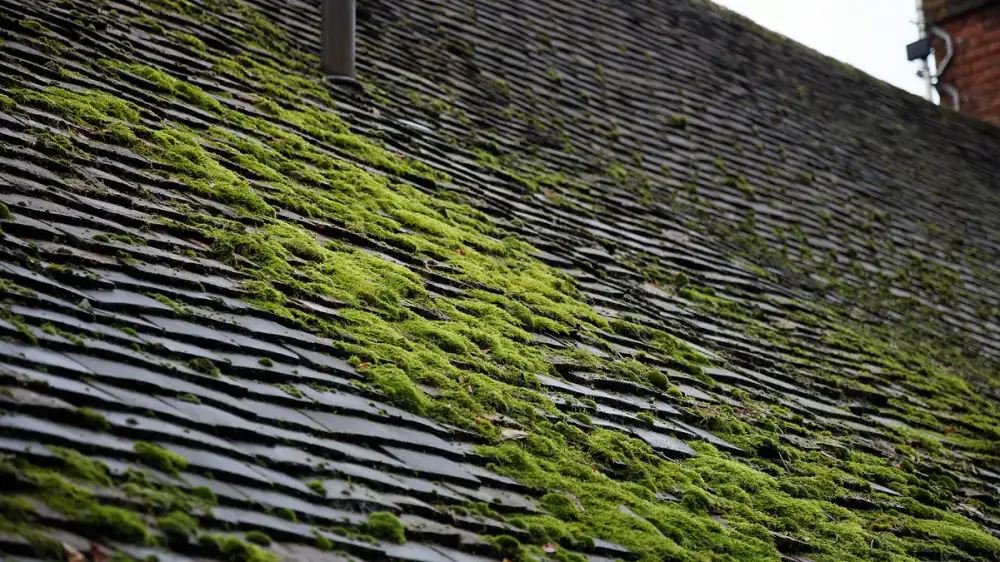
Moss Growing on the Roof: What to Do
Moss takes hold on shaded, damp roof sections and holds moisture against the shingles — but removing it from the roof is risky work for a professional.

Efflorescence: The White Residue on Brick
The white powder on brick is efflorescence — mineral salts drawn to the surface by moisture moving through the masonry and left behind as water evaporates.