The Most Overlooked Part of Your House
It runs along the bottom of your roof, a few inches wide, and almost nobody looks at it. Yet the roof edge quietly decides how well everything below it survives.
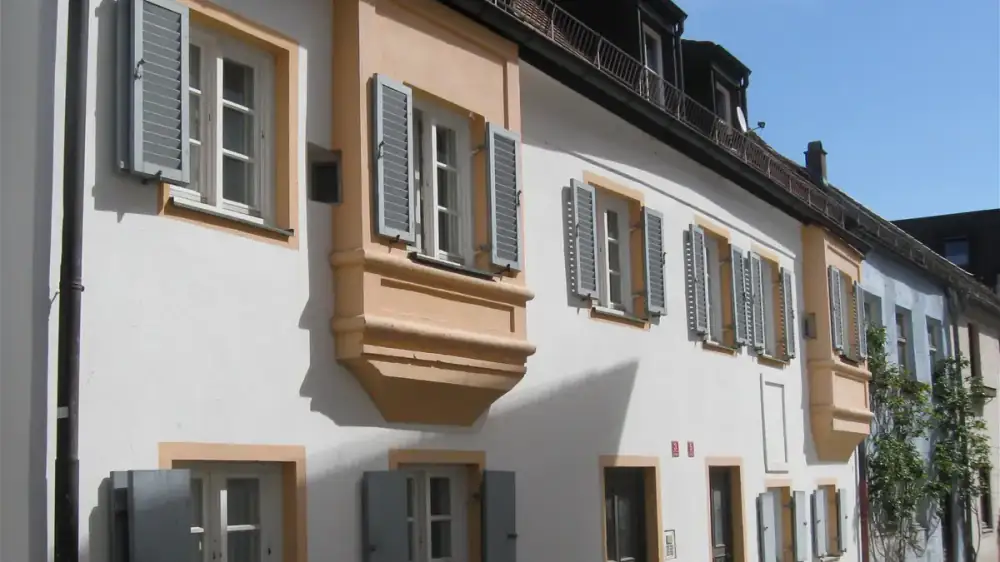
The roof edge — the fascia, soffit and drip edge along the bottom of your roof — is the part of the house that manages roof runoff and seals the structure against weather and pests. It gets overlooked because it has no moving parts, sits above eye level, and fails silently over years rather than all at once. Ignore it and the water it was quietly steering away starts finding the wood, the walls and the framing instead.
Ask most homeowners to name the parts of their house they worry about and you'll get a familiar list: the roof, the furnace, the foundation, maybe the gutters if it's been a wet year. Nobody says the roof edge. Almost nobody could point to it with confidence. And yet this thin band of board and metal — a few inches deep, running the entire perimeter of the roof — is doing more to protect everything below it than its size would ever suggest.
That gap between how much the roof edge matters and how little attention it gets is the whole story. It's not that the roof edge is unimportant. It's that it's easy to ignore, and it stays easy to ignore right up until the moment it isn't.
What the roof edge actually does
Stand at the corner of your house and look up at where the roof ends. That lower lip is a small assembly of parts working together. The drip edge is a strip of metal flashing at the very edge that gives runoff a clean line to drop from. The fascia is the board behind it, capping the ends of the rafters, holding your gutters, and closing off the roof edge against weather. The soffit is the panel underneath, tucked into the overhang, sealing the gap between the fascia and the wall while letting air move into the attic.
None of that is glamorous. But consider what's passing through this zone. A roof is a large surface, and every drop of rain that lands on it has to leave somewhere. It leaves at the edge. That means the roof edge is the single busiest point for water on the entire house — the funnel through which an entire storm's worth of runoff is concentrated into a narrow band and handed off to the gutters. If you wanted to design the one place where getting the details right matters most, you'd design the eave. These parts don't work in isolation, either; they function as a chain, which is why it helps to understand how the roof edge works together as a single system.
Why we don't look
If the roof edge is so important, why does it go unwatched for years at a time? The reasons are almost psychological.
It never asks for anything. A furnace rattles. A faucet drips. A door sticks. Nearly everything in a house that needs attention finds a way to announce itself. The roof edge has no moving parts and no failure mode that makes noise. It just weathers, quietly, on its own schedule.
It's above your eye line. You walk past your fascia a hundred times a week and never see it, because you're looking ahead, not up. The soffit is even more hidden — you have to physically tilt your head back to notice it exists. Out of sight really does mean out of mind here.
It fails in slow motion. Roof-edge problems don't happen in an afternoon. Paint dulls, then blisters. Wood darkens, then softens. A gap opens a millimeter at a time. Because there's no dramatic before-and-after, there's no moment that jolts you into looking. By the time the change is obvious, it has usually been underway for a season or two — which is exactly how a tiny roof edge leak becomes a big repair.
It looks fine from the curb. From the street, a weathered roof edge and a healthy one are nearly indistinguishable. The trouble is almost always tucked behind the gutter or up under the overhang, in the places curb appeal never reaches.
The cost of overlooking it
Here's the uncomfortable part. The roof edge doesn't just protect itself — it protects everything behind and below it. When it's doing its job, roof water is delivered cleanly to the gutter and away from the house. When it stops doing its job, that same water goes looking for a new path, and the new path always runs inward.
A failed drip edge lets runoff curl back onto the fascia. A clogged gutter sends water sheeting down and, worse, behind the gutter where it soaks the board out of sight. Persistent moisture is the entire recipe for fascia rot, and rot rarely stays put — it spreads to the soffit, then the roof sheathing, then the rafter tails, then the wall. What started as a neglected inch of trim becomes a structural repair. The broader pattern, of small exterior failures cascading into large ones, is worth understanding on its own; our guide to how water damages a home exterior traces it end to end.
The maddening thing is how avoidable it is. The roof edge doesn't demand much. It mostly needs to be seen now and then, before a small problem becomes a load-bearing one.
Learning to see it
The fix for a blind spot is simply to look — and the roof edge rewards even a casual, untrained glance. You don't need tools or a ladder to start. Twice a year, walk the perimeter of your house and deliberately look up at the edge of the roof. You're watching for change more than for any specific defect: a streak of staining that wasn't there before, paint that's started to peel, a section of gutter beginning to sag, a soffit panel that looks darker or looser than its neighbors, a gap where two parts should meet tightly.
That's genuinely most of it. If you want a repeatable routine, our walkthrough on how to inspect the roof edge from the ground turns this into a five-minute lap of the house. The point isn't to become an expert. It's to close the gap that lets the most overlooked part of your house stay overlooked until it's expensive.
A roof edge that's noticed occasionally almost never becomes a crisis. A roof edge that's never noticed at all eventually becomes one. For a few inches of board and metal doing the work of the whole perimeter, that's a fair trade for a couple of upward glances a year.
Answers to common questions
What exactly is the roof edge?
It's the strip where the roof stops and the wall begins — usually made up of the fascia board that caps the ends of the rafters, the soffit panel that closes the underside of the overhang, and the drip edge, a thin metal flashing at the very lip. Gutters hang off this assembly. Together these small parts control where roof water goes and keep weather and pests out of the structure behind them.
Why do homeowners ignore the roof edge?
Because it never asks for attention. It has no moving parts, no switches, no seasonal ritual, and it looks the same for years while it slowly fails. It also sits above eye level, so you have to consciously look up to see it. Most people only notice the roof edge the first time water shows up somewhere it shouldn't — by which point the neglect has usually cost something.
Is the roof edge really that important if it's so small?
Yes, and the size is misleading. A few inches of trim manages the single most destructive force acting on a house: rainwater running off a large roof. Get the edge right and that water leaves cleanly. Get it wrong and the same water finds the fascia, the soffit, the wall and eventually the framing. Small part, outsized job.
How often should I actually look at my roof edge?
A couple of deliberate looks a year is plenty for most homes — once in spring after the freeze-thaw season and once in fall once the leaves are down. Add a look after any big storm. You're not inspecting for perfection; you're checking that nothing has changed since last time. Staining, sagging or peeling that wasn't there before is the signal worth acting on.
Can I check the roof edge myself?
The looking part, yes — most of it is visible from the ground with nothing more than your eyes and maybe binoculars. Walk the perimeter and study the underside of the overhang and the face of the fascia. Leave any climbing, probing on a ladder, or work at height to someone equipped for it. The goal at ground level is to notice change early, not to make repairs.
Keep reading
How Gutters Damage Fascia When They Overflow
Overflow sends water onto and behind the fascia, rotting the board and loosening hangers — then the gutter sags and overflows more. Here's the cascade and how to stop it.
Signs Soffits Have Moisture Damage
Staining, sagging, peeling paint, pests and mold under the eaves all signal soffit moisture damage. Here's what causes it and when to call a pro.
Water Stains Below the Roof Edge
Stains under the eave are a map of misdirected water — overflow, water behind the gutter, drip edge trouble, ice dams or condensation. Here's how to read them.