How to Inspect Your Gutters Safely from the Ground
You can catch most gutter problems early without ever leaving the ground. Here's a simple ground-level routine — what to look for, what each sign means, and when to hand the risky part to a pro.
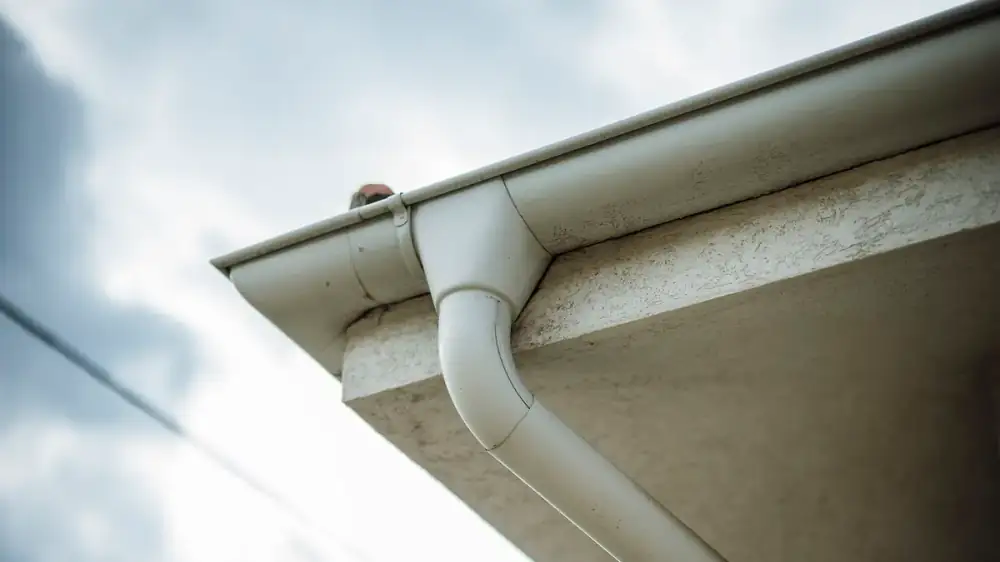
You can catch most gutter problems from the ground, without a ladder. Watch how water behaves during rain, sight along each run for sag and dips, look for plants, rust, and stains, and check that each downspout flows freely and drains away from the house. Do it twice a year and after big storms. Leave the climbing, clearing, and repairs to a professional — the inspection is the safe part; the ladder work isn't.
Here is a maintenance job that costs nothing, needs no tools, and prevents more expensive repairs than almost anything else you can do for a house: standing in the yard on a schedule and knowing what to look at. Gutters are unusually honest. They announce nearly every problem they have long before it becomes a repair bill, and they do most of that announcing where you can see it from below.
The case for looking instead of climbing
It is tempting to think a real inspection means getting up there and peering into the trough. In practice, the opposite is true. A gutter far enough gone to matter tells on itself from the ground: a clog spills water over the front edge, a sag shows as a dip in the line, a blocked outlet leaves a trickle where there should be a stream, and rot stains the wood below. From a ladder you are pressed too close to read the whole run, and you have traded that limited view for real fall risk. So the smartest sequence is to gather the information from below, then bring height into the picture only for the clearing and repairs that genuinely require it.
Rain is your best diagnostic
If you can time part of your inspection to a steady rain, do it — nothing else comes close. Stand well back from the house, out of the runoff, and watch the system actually work.
- Water spilling over the front edge means a clog or a low point holding water back; the causes and fixes are in overflowing gutters.
- Water sheeting behind the gutter and down the fascia points to a drip-edge gap or packed debris at the rear — see why water runs behind gutters.
- Water pooling at one spot while the nearest downspout barely runs suggests a blockage right at that outlet.
- A strong, steady stream from every downspout is the sight you want: proof water is making the whole trip.
A few minutes watching real water beats an hour of dry inspection.
Reading the line of the run
On a dry day, the geometry of the gutter tells its own story. Stand at one end of a run and sight along its length. A sound gutter reads as a straight line carrying a slight, even tilt toward the downspout. Break that line into three failures to watch for: a dip or wave partway along, which means a sagging section or a loosened hanger; a widening gap between the gutter's back edge and the fascia, which means a run starting to pull away; and a stretch hanging visibly lower than its neighbors.
Sag is worth taking seriously because it feeds on itself — a low spot holds water, the extra weight deepens the sag, and the overflow follows. The mechanics are laid out in why gutters sag and in standing water and why pitch matters.
The tells you can catch on a dry day
Even without rain, wear and neglect leave visible fingerprints:
- Plants or grass sprouting from the trough mean there is enough packed soil-like debris up there to hold moisture and germinate seeds — a gutter well past due for clearing.
- Rust streaks or discoloration on metal gutters signal standing water and the corrosion it breeds.
- Dark grit or shingle granules washing from a downspout or staining the wall below it.
- Peeling paint or stains on the fascia clustered around the overflow points.
Following the water to the ground
A clean trough still fails if the water cannot get away, so trace each downspout end to end. At the top, watch during rain for water backing up at the outlet. Along the pipe, listen and look for a strong flow rather than a dribble. At the base, check where the water actually lands — it should be carried clear of the house, not spilling at the foundation, which is exactly the job downspout extensions do. Pooling, eroded soil, or a scoured channel at the discharge point all mean the water is not getting far enough away. If a particular outlet blocks again and again, the reasons are worth understanding in why downspouts keep clogging.
The board everything hangs on
Finally, run your eye along the fascia — the board the gutter fastens to — and the soffits underneath the eaves. Peeling paint, streaks, or discolored wood suggest moisture that should not be there. Soft, sagging, or crumbling wood points to rot; what causes fascia rot covers how it takes hold. Gaps or stains at the corners where runs meet are also worth noting. Fascia trouble matters more than it looks, because wet wood cannot grip a hanger — let it go and the gutters lose the very thing holding them to the house.
Turning it into a rhythm
An inspection helps most as a habit rather than a rescue mission. A workable year looks like this:
- Spring — check for damage left by ice and snow load, clear the last of winter's grit, and confirm everything drains. It folds naturally into a spring exterior maintenance checklist.
- Fall — the most important look of the year, done after the leaves drop so the gutters enter winter clear. Pair it with a fall gutter and downspout checklist.
- After major storms — high wind and heavy rain load and test a gutter at once, so a quick look afterward catches anything new.
- More often under trees — homes beneath heavy canopy or near pines fill far faster, as how trees affect gutter maintenance explains.
When a finding shouldn't wait
Most of what you spot can ride until the next scheduled cleaning. A few things should not. Overflow that returns to the same spot every rain, a sag that is visibly worsening or a run pulling away from the house, fascia you can see rotting or staining, water pooling against the foundation or new dampness in the basement, or a downspout that no longer flows even in a downpour — these have crossed from inspection findings into the signs your gutters need repair.
And that is the natural handoff point. The looking is the safe, do-it-yourself half of the job; the fixing is often not. Clearing gutters on a high or steep roof, re-hanging a sagging run or correcting its pitch, repairing the fascia behind the trough, or working anywhere you cannot set a ladder on stable, level ground — all of that belongs to someone equipped for height. Think of it as a clean division of labor: you do the looking, on a schedule, with both feet on the ground, and a professional does the climbing. That split is what keeps small gutter problems from quietly becoming the expensive kind.
Questions people also ask
Can I really inspect gutters without a ladder?
Yes — most gutter problems reveal themselves from the ground. Watching how water behaves during rain, sighting along the runs for sag, and checking the base of each downspout will surface the great majority of issues. A ladder is needed to clear and repair what you find, but the inspection itself is largely a ground-level job, and it's the safest way to do it.
What's the best time to inspect gutters?
The single most revealing time is during and just after a steady rain, when you can see exactly where water overflows, backs up, or fails to exit the downspout. Between storms, a dry inspection lets you sight along runs for sag and scan the fascia for stains. Combining a wet-weather look with a dry one gives you the fullest picture.
How often should I inspect my gutters?
A good baseline is twice a year — once in spring and once in fall — plus a look after any major storm. Homes with heavy tree cover or nearby pines benefit from more frequent checks, since debris accumulates faster. The point of a regular cadence is to catch small problems before they compound into sagging runs or fascia damage.
What are the most important things to look for?
Watch for water overflowing or running behind the gutter during rain, a visible dip or sag in the runs, plants growing in the trough, rust or staining, and weak or missing flow at the base of the downspouts. Also scan the fascia and soffits for peeling paint or discolored wood. Each of these points to a specific, addressable problem.
Should I climb up to look inside the gutters?
For a routine inspection, no. Climbing onto a ladder or roof introduces real risk for information you can mostly gather from the ground. Signs like standing water, sag, plant growth, and downspout flow are all visible or inferable from below. Leave ladder and roof access for the actual cleaning and repair work, and hand the risky parts to a professional.
When should I call a professional after inspecting?
Call a professional when your ground inspection turns up problems that need height to fix — clearing high or steep-roof gutters, re-hanging a sagging run, repairing fascia, or correcting pitch — or when you simply can't set a ladder safely. The inspection tells you what's wrong; a professional handles the work that can't be done safely from the ground.
Related guides

How Trees Affect Gutter Maintenance
Leaves, pine needles, seed pods and shade each create a different gutter problem. Here's how tree cover reshapes your maintenance schedule.
Why Water Runs Behind Gutters
A missing drip edge, a gutter hung too low, or an overflowing clog — these three causes explain most water that ends up behind the gutter.
Signs Gutters Need Repair Instead of Cleaning
Sagging runs, leaking seams, loose hangers and standing water are repair problems, not cleaning problems. Here's how to tell them apart.