Early-Spring Thaw Inspection
As snow and ice melt, they reveal winter's damage and test every drainage path at once. This ground-level thaw inspection helps you catch problems safely, while fixes are still small.

The thaw is the one window each year when you can watch your home shed a season of water in real time, so use it. From the ground, watch the gutters and downspouts handle the melt, confirm the runoff drains well clear of the foundation, and read the fresh stains, cracks and loosened parts winter left behind. Study the roof edge with binoculars, stay off wet roofs and soft ground, and pass any roof access or loose-gutter repair to a professional.
Most of the year you have to imagine how your home handles water. During the thaw, you get to see it. A whole winter's worth of snow and ice turns to liquid over a handful of mild days, and all of it has to move at once — off the roof, through the gutters, down the spouts, across the grade, and away. That concentrated flow traces every path the water can take and lights up every place it gets stuck. There is no better time to learn how the house actually drains, and no better time to see the damage that only becomes visible once the snow pulls back.
The catch is that the same conditions making the thaw so revealing also make it a bad time to climb. Roofs are wet, the ground is soft and unstable, and shaded surfaces stay slick. So this inspection is built to be done entirely with your feet on the ground, ideally over two visits — one while the melt is running hard, and a second once things dry enough to read the stains clearly. Binoculars do the reaching for you.
Catch the melt while it is running
The value of the thaw is watching the system under a genuine load, and that load does not last. Plan the first lap for a mild day when the snow is visibly receding and water is on the move, and walk the full perimeter with your eyes up.
This is the best chance all year to watch your gutters do their actual job. Look for a run spilling over its front edge or streaming from a seam — under a heavy melt, that almost always means a clog or a plug of trapped ice, not a passing overflow. Check that each downspout is genuinely clear and not still iced shut at the outlet, since a spout can look fine at the top while frozen solid at the bottom. Confirm the extensions are in place and carrying meltwater well away from the wall. And sight down each run for the sag or separation that a winter of snow load can pull loose. Note any staining behind or beneath a gutter, the fingerprint of overflow that ran through the cold months unseen. Once the ice is gone from the troughs, how to inspect your gutters sets up the season ahead properly.
Read the roof edge from below
You can learn a great deal about how winter treated the roof without leaving the ground, and the thaw hands you a specific tell that only appears now.
With binoculars, scan the shingle edge for missing, lifted or curled shingles and any debris still lodged there. Then look for the thaw-specific warning: ice still riding on the gutter, or water backing up onto the shingles above it. That backup is the signature of an ice dam, where meltwater refreezes at the cold eave and pushes water uphill under the shingles. Check the fascia for peeling paint, dark streaks or a soft, sagging line where winter overflow ran, and the soffits for staining or a bulge that means trapped moisture. Do not climb for a closer look; a damaged edge is a roofing professional's call. For the structured version, see how to inspect the roof edge from the ground, and if ice built up over winter, ice dams forming at the roof edge explains what you are looking at.
Where all that water ends up
This is the heart of the thaw inspection, because the melt is really a test of one question: does the water leave, or does it pool against the house? A thaw dumps a season of frozen water in a short window, and if it drains toward the foundation instead of away, it soaks in and finds every gap.
Confirm the downspouts and their extensions discharge several feet from the foundation, not right beside it. Watch for pooling or soft, saturated ground against the wall as the snow recedes — that is the clearest sign water is not getting away, whether from short extensions, a grade tilted toward the house, or a clogged yard drain. Check that the grade still slopes away on every side. Clear the window wells and yard drains so meltwater escapes rather than backing up. Then step inside and read the basement or crawl-space walls for new dampness, staining or a musty smell, because that is where a drainage failure announces itself first.
What winter cracked open
As the snow pulls back it exposes the structural wear that freeze-thaw quietly did all season, and this is the moment it is easiest to see.
Look for new cracks, spalling or heaving in concrete driveways, steps and walkways, where repeated freezing lifts and splits the slab. Check masonry, brick and foundation walls for fresh cracks or crumbling mortar. Inspect the caulk around windows, doors and penetrations for gaps that opened over the winter. Walk each wall for cracked, loose or warped siding, and for the spots where wind-driven snow pushed in behind it. Note any green or black growth on shaded walls and the slick moss that collects on shaded paths, which is as much a slip hazard as a cosmetic one.
Deciding what to fix now and what can wait
The thaw tends to produce a long list, so the last step is sorting it by urgency rather than by how alarming it looks. The organizing principle is simple: anything that moves water comes first, because it does fresh damage with every rain, and spring rain is close behind the melt.
A clogged downspout, a loosened or sagging gutter, or water pooling at the foundation all go to the top of the list — those are the findings that punish delay. Cosmetic cracks and peeling paint can wait for warmer, drier weather; in fact, patching a freeze-thaw crack in the cold and wet rarely holds, and a proper dry-weather repair will outlast a hasty smear. The high-risk work is where you hand off: roof access, any snow or ice removal, ice dams, and gutters that have loosened, sagged or separated all belong with a professional, and often with drier, safer conditions. From the ground you can spot and describe every one of these clearly, which is exactly what makes the eventual repair faster.
If you are stepping through the melt right after a hard winter, the late-winter exterior checkup pairs naturally with this one, and once the ground firms up, the full spring exterior maintenance checklist takes over. A short call now, while the problems are still small and visible, is far cheaper than a fall or a hidden leak left to spread through the rainy season.
Answers to common questions
What is an early-spring thaw inspection?
It is a walk-around done as snow and ice melt, to see how meltwater moves and what winter left behind. From the ground you watch gutters and downspouts handle the melt, check that runoff drains away from the foundation, and look for stains, cracks and loosened components that the thaw has exposed. It is the moment to catch drainage problems before spring rain arrives.
How much of a thaw inspection can I do from the ground?
Most of it. Overflowing gutters, meltwater pooling at the foundation, ice-loosened runs, fascia stains and freeze-thaw cracks are all visible from the ground, often better with binoculars. Thaw leaves surfaces wet and soft ground unstable, so keep both feet down and hand any roof access or tall-ladder work to a professional.
When should I do a thaw inspection?
Do it as the melt is actually happening, on a mild day when snow is receding and water is moving. That timing lets you watch gutters and drainage under a real load rather than guessing. A second look after the melt, once things dry, helps you see stains and damage more clearly. Avoid inspecting during active ice or high wind.
Why is drainage the priority during a thaw?
Because a thaw dumps a season's worth of frozen water in a short window, and it all has to go somewhere. If gutters are clogged, downspouts are still iced, or runoff drains toward the house, that meltwater soaks the foundation and finds every gap. Confirming water moves away from the house is the single most valuable thing you can check during the thaw.
What should I look for on the roof edge as ice melts?
From the ground, with binoculars, scan for missing, lifted or curled shingles, ice still riding on the gutter, and any water backing up onto the shingles above the gutter, which points to an ice dam. Note stains on the fascia and soffits where winter overflow ran. Do not climb up for a closer look; leave roof access and repairs to a roofing professional.
The ground stays wet after the snow melts. Is that a problem?
It can be. Soft, saturated ground right against the foundation after a thaw suggests water is not draining away, often from short downspouts, a grade that slopes toward the house, or a clogged yard drain. Note where it pools, confirm downspout extensions carry water several feet out, and address the drainage before spring rain adds to the load.
What should I do with what the thaw reveals?
Sort your findings by urgency. Anything that moves water, such as a clogged downspout, a loosened gutter or pooling at the foundation, comes first because it causes new damage with every rain. Cosmetic cracks and paint can wait for warmer, drier weather. For roof-edge damage, ice dams or loose gutters, bring in a professional before the rainy stretch settles in.
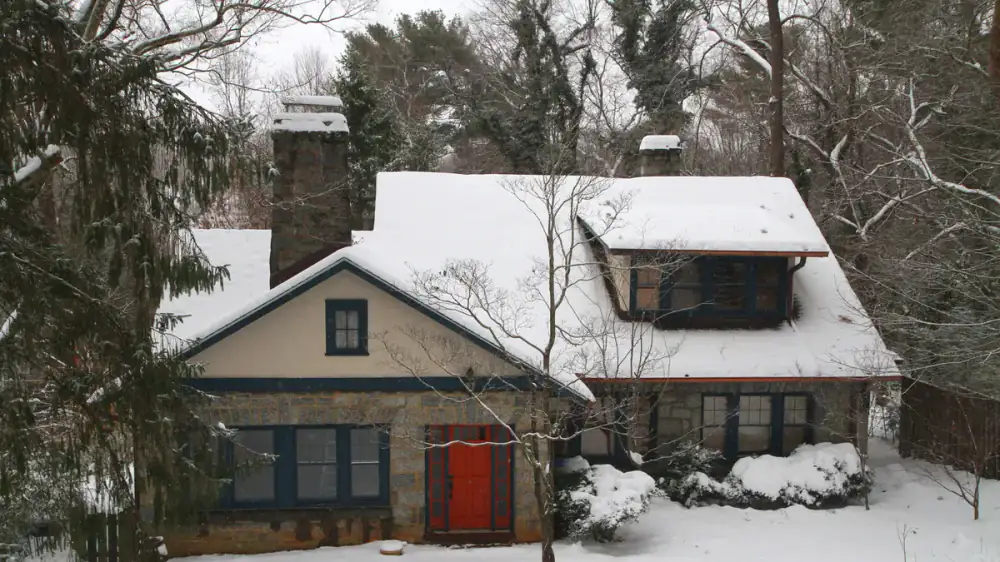
Winter Exterior Home Maintenance Checklist
A grouped, printable winter checklist for snow, ice, frozen gutters and storm damage — built entirely around safe, ground-level observation and knowing when to call a pro.
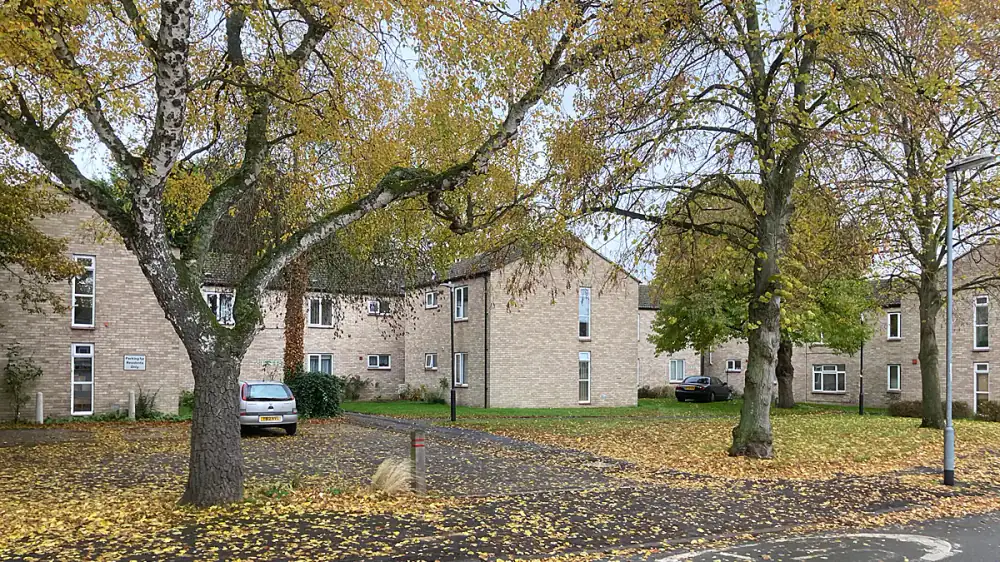
Autumn Exterior Home Maintenance Checklist
A grouped, printable fall checklist for leaves, pine needles, gutter guards, downspouts, roof edge and freeze prep — with an emphasis on safe, ground-level work.
Post-Storm Exterior Inspection Checklist
A grouped, printable checklist for post-storm home exteriors, focused on safe ground-level observation and knowing when to call a roofing professional.