Exterior Maintenance for Homes Near Trees
Living under a canopy is worth it — but trees mean more debris, more shade and more work for your home's exterior. Here's the extra maintenance, on a seasonal cadence.

A house under trees needs the same exterior care as any other — just more of it, more often. Canopy means gutters that fill in weeks, roof debris that traps moisture, shaded walls that grow green, and branches that hand pests a route to the roofline. Do the ground-level cleaning and watching yourself, spread it across the year rather than saving it for one weekend, and leave every bit of real limb work to a certified arborist.
Nobody plants shade trees and regrets it. But a mature canopy changes the arithmetic of maintaining the house beneath it, because the tree is not a fixed object — it is a machine that produces leaves, needles, seed pods, twigs and shade on a rolling schedule, and drops most of it onto your roof. The point of this guide is not to talk you out of trees. It is to match the way you maintain the house to the way the canopy actually behaves.
Everything a canopy sends downward
It helps to picture what a tree over the house is really doing. It is dropping solid debris that lands in gutters and roof valleys. It is casting shade that keeps surfaces from drying between rains. And it is reaching — branches grow toward the roof, rub against it, and eventually touch it. Almost every extra chore below traces back to one of those three: debris, damp, or contact. Sort your worries that way and the work stops feeling random.
Most of it is squarely within a homeowner's reach: clearing, rinsing, scanning from the ground with a pair of binoculars. The single exception, which the rest of this piece keeps returning to, is anything involving the limbs themselves.
Gutters fill on the tree's clock, not the calendar
If you take one thing from this article, make it this: under a canopy, the calendar is the wrong tool for scheduling gutter cleaning. An open-lot house might get by with one clearing a year. A house under oaks or maples can need three or four, and a house near pines needs attention more or less continuously, because conifers shed needles all year rather than in one autumn burst.
Watch the gutters during a hard rain — water sheeting over the front lip is the plainest possible signal that debris has built back up. Check the downspout outlets too, since packed leaves plug an outlet as readily as they fill the trough, and a plugged outlet backs the whole run up. For how canopy density should drive your interval, see how trees affect gutter maintenance alongside the baseline in how often gutters should be cleaned.
Gutter guards change this picture without fixing it. Under heavy cover, leaves mat across the top of a guard and shed water clean past the gutter, while fine needles and grit still work their way through. Think of guards as something that stretches the interval between full cleanings and reduces how much lands inside — not as a reason to stop looking. Sweep the guard surface after storms, when a canopy unloads the most at once.
Debris that never makes it into the gutter
A lot of what falls never reaches the trough at all. It lodges in roof valleys, collects behind the gutter, and settles into the angle where roof meets wall — and wet debris sitting on a roof holds moisture against the shingles and decking until rot has somewhere to start.
From the ground, scan valleys and the back edge of the gutter for packed leaves and needles, and use binoculars to check the shingle edge for the nicks and gouges that falling twigs leave. Keep an eye out for any branch actually resting on the roof; a limb that rubs in the wind sands through shingles and dents gutters over a season. A repeatable version of this ground scan lives in how to inspect the roof edge from the ground.
The green that shade grows
Shade is the quiet half of the tree problem. By blocking sun and slowing airflow, a canopy keeps walls, roofs and hardscape damp for hours or days longer than they would otherwise stay — and damp, shaded surfaces are precisely where algae, moss and mildew move in. North-facing walls and any surface under a dripping branch or downspout stay wettest and grow the most.
You will not out-clean the shade; it comes back because the conditions never change. The right response is gentle and regular rather than harsh and occasional — a soft-wash approach kept up on a rhythm, not a single aggressive blast that risks driving water behind the cladding. The trade-offs are laid out in pressure washing vs soft washing, and method choices in how to remove algae from exterior walls.
Branches as a highway for pests
Insects and rodents prefer not to cross open ground if they can help it, and an overhanging branch gives them an alternative: a bridge straight to the roof edge, the gutters and the soffits, where a small gap is all they need. Piles of tree debris against the foundation compound it, offering both shelter and moisture.
From below, note which branches touch or overhang the roof, and check soffits, vents and the roof edge for the openings a bridging pest would use. Sealing those gaps is homeowner work; getting the branches off the roof is not — it belongs to the same professional who handles the limbs themselves.
The line you don't cross: the limbs
Here is where the honest caution goes. Everything above is observation and ground-level cleaning. Cutting limbs near a roof or power lines is a different category of task entirely — height, heavy and unpredictable wood, and often the house or a utility line right there to catch a falling branch. It is one of the more reliable ways homeowners get seriously hurt.
So draw the line clearly: from the ground you look, and a certified arborist acts. Note dead, cracked, split or leaning limbs near the roofline; note anything overhanging the roof or rubbing the house; and then hand that list to an arborist rather than a ladder. This is also the person to call for a tree that leans toward the house or has died — assessment is exactly their job.
Spreading the work across the year
Because a canopy generates work continuously, the sane approach is to spread it rather than dread one enormous cleanup. In spring, clear the winter's debris from gutters and roof, look for algae as things warm and damp, and note which limbs shifted over the cold months — the spring exterior maintenance checklist folds this into the wider list. Through summer, wash shaded walls and hardscape, check guards after each storm, and keep a running note of overhanging limbs for the arborist, as in the summer exterior maintenance checklist.
Fall is the heavy season: clear gutters after the main drop and again if your cover is dense, keep guards swept, and get roof debris off before the first freeze, following the autumn exterior maintenance checklist. Through winter, mostly watch — from the ground — for limbs loaded with snow or ice, and for debris that has frozen into ice dams at the roof edge. And when the trees have caused actual damage rather than just mess — a gutter pulled loose by packed weight, fascia gone soft, or moisture finding its way in — that is when a gutter or roofing professional earns the call, well before you ever consider going up after it yourself.
Questions homeowners ask
How much more often do I need to clean gutters if I live under trees?
Considerably more. A home under mature trees can fill its gutters within weeks of a leaf drop, and homes near pines often need attention year-round because needles shed continuously. Where an open-lot home might manage one cleaning a year, a tree-shaded home may need three, four or more, plus checks after storms. Let how fast your gutters fill set the schedule, not the calendar.
Do gutter guards solve the problem of trees dropping debris?
They help but don't solve it. Guards reduce how much debris enters the gutter, but leaves can mat over the guard surface and shed water past it, and fine needles and grit still get through. Under heavy tree cover, guards need regular checking and clearing — they lower the frequency of full cleanings, not the need for them.
Why do shaded walls grow more algae and moss?
Tree canopy keeps walls, roofs and hardscape damp by blocking sun and airflow, and damp shade is exactly what algae, moss and mildew need to grow. North-facing and heavily shaded surfaces stay wet longest and grow the most. Regular gentle cleaning and keeping debris off surfaces helps, but the shade itself means it will keep coming back.
Can trees really help pests get into my house?
Yes. Branches touching or overhanging the roof act as bridges that let insects and rodents reach the roof edge, gutters and soffits, bypassing the ground. Overhanging limbs also drop debris that holds moisture against the house. Keeping branches from contacting the roof — work best done by an arborist — removes one of the easiest routes pests use.
Should I trim tree branches near my roof myself?
Significant limb work near a roof or power lines should be left to a certified arborist. It involves height, heavy limbs, and often proximity to the house and utilities — a combination that causes serious injuries and property damage. From the ground you can note dead, cracked, leaning or overhanging limbs and have an arborist assess and handle them.
When should I call a professional for tree-related home maintenance?
Call an arborist for any limb removal, overhanging branches, or dead or leaning trees near the house. Call a gutter or roofing pro when trees have caused damage — packed gutters that loosened, debris-driven rot, or moisture problems — or when a task needs roof access. Ground-level cleaning and observation you can often do yourself; height and heavy limbs you should not.
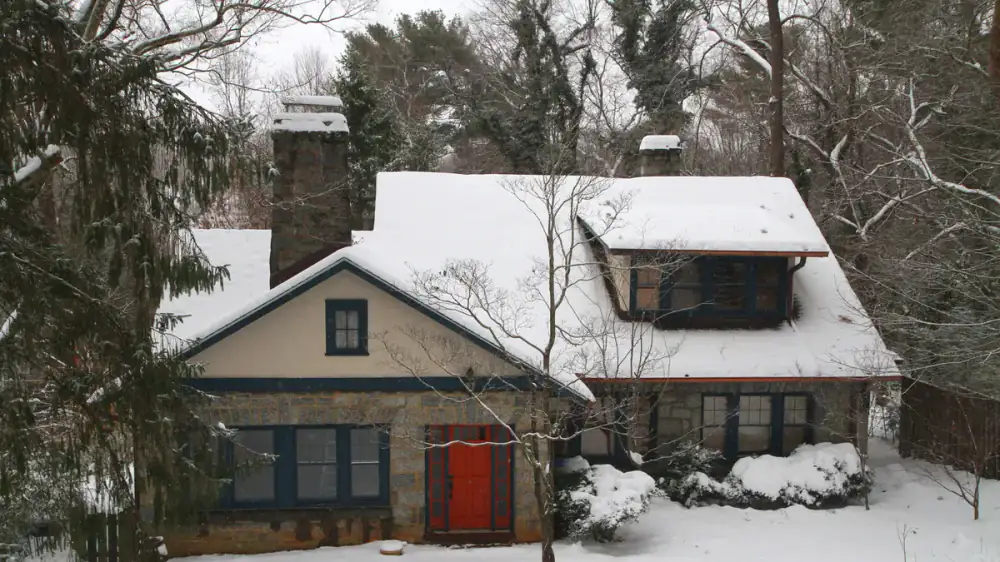
Winter Exterior Home Maintenance Checklist
A grouped, printable winter checklist for snow, ice, frozen gutters and storm damage — built entirely around safe, ground-level observation and knowing when to call a pro.
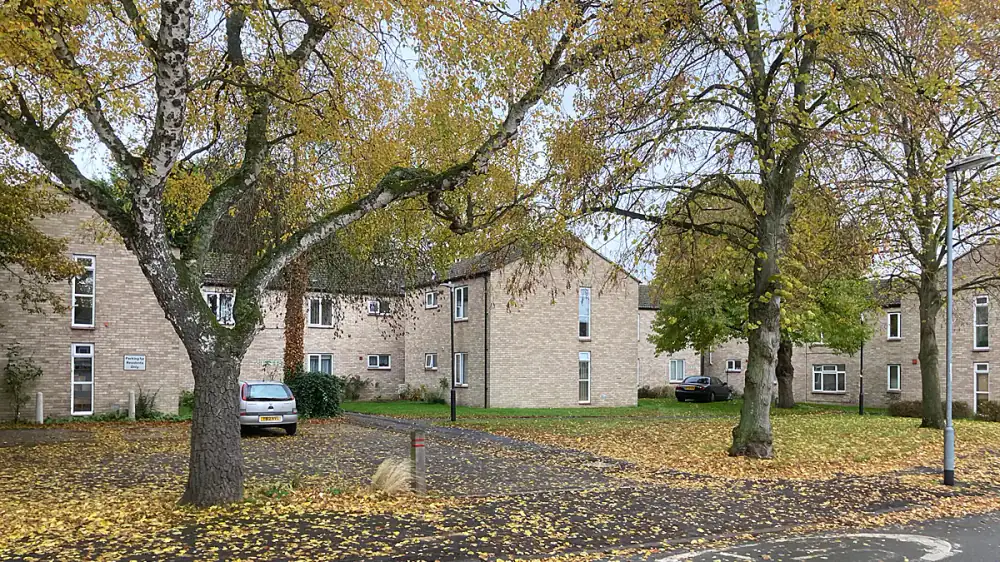
Autumn Exterior Home Maintenance Checklist
A grouped, printable fall checklist for leaves, pine needles, gutter guards, downspouts, roof edge and freeze prep — with an emphasis on safe, ground-level work.
Post-Storm Exterior Inspection Checklist
A grouped, printable checklist for post-storm home exteriors, focused on safe ground-level observation and knowing when to call a roofing professional.