Leaning or Cracked Chimney: What to Do
A chimney that's tilting or cracking is telling you something structural is wrong. Here's how to read the signs from the ground, why it's urgent, and why this is a call for a pro — fast.
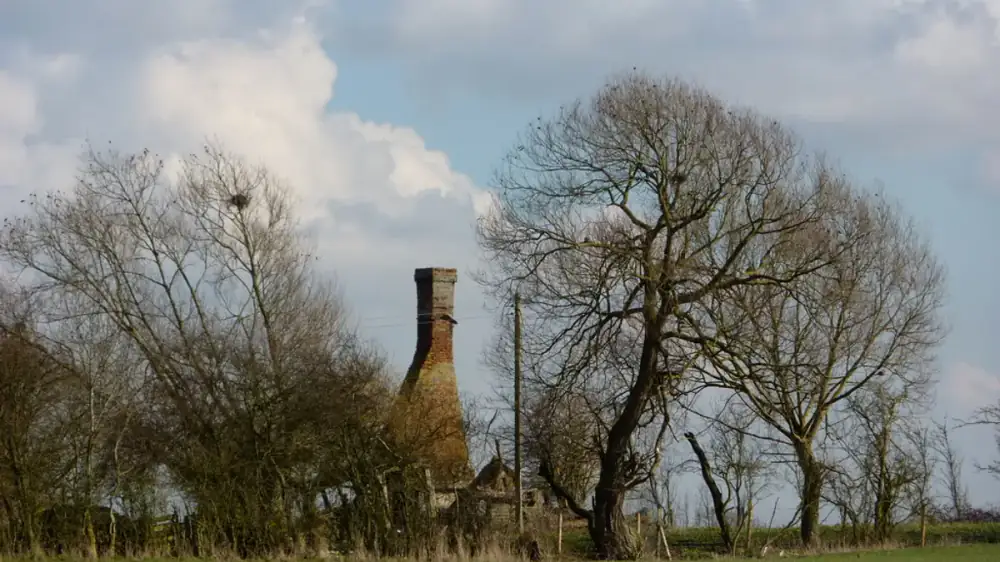
A chimney that's leaning, tilting, or showing wide cracks is announcing a structural problem — usually at the footing or from years of water damage. You can read the signs safely from the ground: a visible tilt against the line of the house, a gap opening at the wall, or stair-step cracks marching through the mortar. This is not a wait-and-see situation. Keep people clear of the base and get a qualified professional out promptly, because structural chimney work belongs strictly to the pros.
Most of what goes wrong with a chimney is slow, cosmetic, and forgiving of a few months' delay. A lean or a serious crack is none of those things. It's the masonry itself reporting that something at or near its base has shifted or given way — and because a chimney is a tall, heavy column of brick balanced at the highest point of the house, that report earns a fast response. The reassuring part is that you can recognize the trouble entirely from the ground. You never need to climb to know you're looking at something that shouldn't be ignored.
What pulls a chimney out of plumb
A chimney is really just a stack of masonry that depends on staying vertical. When it stops being vertical, the reason is almost always down low or deep inside the structure rather than up at the top:
- A settling or cracked footing. The concrete pad the chimney stands on can sink or split, and the entire stack tips to follow it.
- Soil movement. Ground that shifts, erodes, or drains poorly under the footing drags the chimney out of line with it.
- Water damage. The same long-term moisture behind efflorescence on a chimney eats away at mortar, brick, and eventually the footing itself.
- Separation from the house. The tie between chimney and building can deteriorate, freeing the stack to pull away.
Because the base bears the full weight of everything above it, even a small movement down there is magnified into an obvious lean by the time your eye reaches the top.
Reading the lean from the yard
You can gather a lot without stepping off the grass. Back up until you can see the whole stack, then judge it against the true vertical lines of the house — the corner, the wall, a downspout. Binoculars fill in the fine detail. Here's what to look for:
- A visible tilt where the chimney no longer parallels the corner or wall of the house.
- A gap between the chimney and the house wall, sometimes showing a thin strip of daylight or fresh separation.
- Stair-step cracks climbing diagonally through the mortar joints in a zigzag.
- Vertical cracks running straight through the bricks themselves rather than around them.
- Bulging, bowing, or crumbling masonry anywhere along the stack.
- Loose or fallen bricks at the base or lying on the roof.
Not every crack carries the same weight
A hairline is not a catastrophe, and treating all cracks alike leads to both needless panic and dangerous complacency. What matters is the pattern. The table below sorts what you might see by how much concern it earns.
| What you see | Concern level | What it may mean |
|---|---|---|
| Fine surface hairlines | Lower | Minor weathering; worth monitoring |
| Wide stair-step cracks in mortar | Higher | Possible movement or settling |
| Vertical cracks through bricks | Higher | Structural stress |
| Gap opening at the house wall | Urgent | Chimney pulling away |
| Visible lean or tilt | Urgent | Structural failure risk |
Why the clock matters here
Structural movement has a nasty habit: it rarely stops on its own, and more often it speeds up. A slight lean widens, a hairline gap opens into a real one, and stressed masonry begins to shed bricks. Layer the sheer height and weight of a chimney on top of that, and the stakes stop being theoretical — falling masonry and a stack separating from the roof are genuine hazards to people and property below. That's the whole reason a leaning or badly cracked chimney is a prompt-action item and not something to keep half an eye on over the coming years.
If recent weather might have played a part, it's worth cross-referencing chimney storm damage: what to check — but don't let a convenient storm story tempt you into filing a genuine lean under "minor."
Your first moves
Once you've spotted the signs, there's a short sequence worth following before anyone arrives:
- Clear the base. Treat the ground below and around a leaning chimney as a potential falling-masonry zone, and keep people and pets out of it.
- Observe from a distance. Document what you can with photos from safe footing and through binoculars. Do not climb up for a closer look.
- Leave repairs alone. Bracing, patching, or repointing a chimney that's already moving is neither safe nor effective as a do-it-yourself job.
- Call a qualified professional promptly. A structural assessment needs both expertise and roof-level access, and the sooner it happens, the more repair options tend to remain on the table.
Getting it assessed
Bring in a qualified chimney or masonry professional right away if you see a clear lean, a gap opening between the chimney and the house, wide stair-step or vertical cracking, or bulging and crumbling brick. These are structural warning signs, and evaluating them safely takes training and roof access — while you wait, keep everyone clear of the base. Whether the answer turns out to be stabilization, partial repair, or a rebuild depends entirely on the cause and the severity, and that's a determination only a professional can make after examining the structure and its footing. Cost varies with the same factors: the underlying cause, how far the stack has moved, and the condition of the footing beneath it. Resist the urge to guess in either direction — that it's surely fine, or surely a teardown — because guessing helps no one here.
For where this fits into ongoing upkeep once the immediate concern is resolved, see the seasonal chimney inspection guidance and the broader chimney care guides.
Common questions
Why would a chimney start to lean?
A leaning chimney usually points to a foundation or structural problem. Common causes include a settling or cracked chimney footing, soil movement beneath it, water damage that has weakened the masonry or footing, or deterioration where the chimney ties into the house. Because the chimney is heavy and tall, even small movement at the base shows up as a noticeable lean higher up.
Is a leaning chimney dangerous?
It can be. A chimney that's pulling away from the house or tilting is a structural concern, and in serious cases a real safety hazard. Falling masonry and separation from the roof are risks that grow the longer the problem is ignored. A visible lean is a reason to keep people away from the base and to call a professional promptly rather than wait.
What kinds of cracks should worry me?
Fine surface hairlines are common and less urgent, but wide, stair-step cracks through the mortar joints, vertical cracks running through bricks, a gap opening between the chimney and the house wall, or crumbling and bulging masonry are more serious. These patterns can indicate movement or structural stress and warrant a professional assessment.
Can I check a leaning chimney myself?
You can observe it safely from the ground — that's exactly the right approach. Step back and look at the chimney against the vertical line of the house, check for a gap where it meets the wall, and use binoculars for cracks and displaced brick. What you should not do is climb up to inspect or attempt any repair; structural chimney work is strictly for professionals.
How urgent is a leaning or cracked chimney?
Quite urgent. Structural movement tends to accelerate, and a chimney is heavy masonry at the highest point of the house. A noticeable lean, a widening gap, or serious cracking should prompt a call to a qualified professional promptly. It's not a problem to monitor casually over years — early assessment can prevent a dangerous failure and costlier repairs.
Can a leaning chimney be repaired, or must it be rebuilt?
It depends entirely on the cause and severity, which is why a professional assessment comes first. Some situations can be stabilized or repaired; others, where the footing or masonry is badly compromised, may require partial or full rebuilding. Only a qualified professional who can evaluate the structure and its footing can determine the right course.
What should prompt an immediate call about a leaning or cracked chimney?
A clear lean, a gap opening between the chimney and the house, wide stair-step or vertical cracks, or bulging and crumbling masonry all warrant an immediate call. These are structural warning signs, and assessing them requires expertise and roof-level access. Keep people away from the base in the meantime and get a qualified professional out promptly.
Related reading
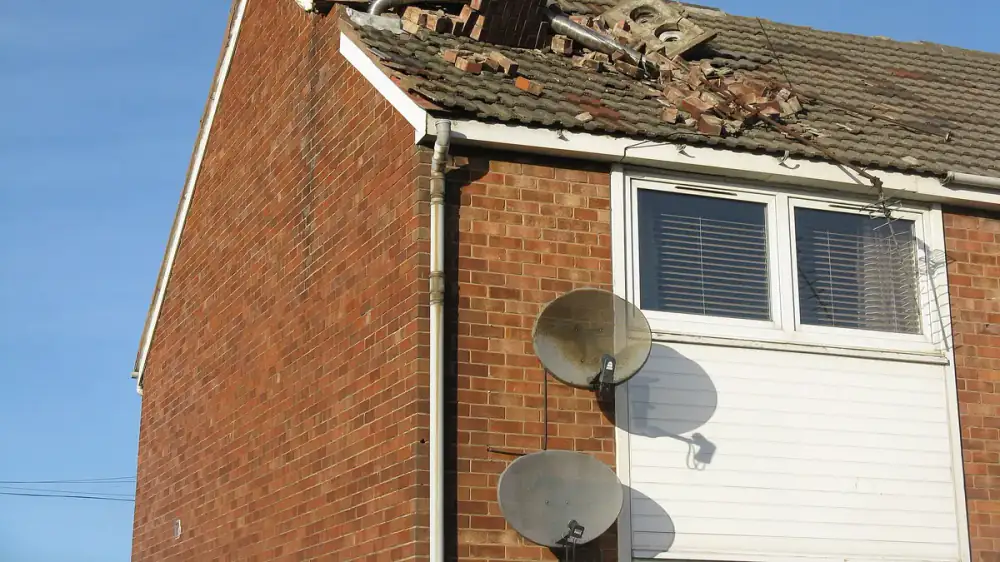
Chimney Storm Damage: What to Check
Storms dislodge caps, crack crowns, and lift flashing. Here's a ground-level, post-storm chimney check — what to look for, what to do, and when to call a pro.
Seasonal Chimney Inspection From the Ground
A short binocular check each season catches most chimney trouble early. Here's what to look for from the ground, a simple cadence, and when to book a pro sweep.
Roof Vents and Vent Covers Explained
Roof vents let the attic breathe, and their covers keep weather out while air keeps moving. Here are the common types, what covers do, and how to spot damage safely.