Cleaning Your Siding Before You Paint
Paint doesn't fail because it was cheap. It fails because it was asked to stick to something it was never going to stick to. Most of that gets decided before the first coat.

Washing siding before painting is what decides how long the paint lasts, because paint bonds to the surface, not to the dirt, algae, mildew or chalky residue sitting on it. Clean all of that off with a method suited to the material — usually a low-pressure, solution-based wash rather than high pressure that can drive water behind the siding — kill any organic growth rather than painting over it, and then let the surface dry thoroughly before the first coat. Skip this and the best paint still peels.
Homeowners who've had a paint job fail early almost always blame the paint. It was the wrong brand, the cheap line, a bad batch. Occasionally that's true. Far more often, the paint was fine and the surface was the problem — the wall was asked to hold a coating over a layer of dirt and growth that guaranteed it would let go. And nearly all of that is decided before anyone opens a can.
Painting is the visible, satisfying part. The washing beforehand is the unglamorous part that actually determines the outcome. Get the prep right and ordinary paint lasts. Get it wrong and premium paint fails on schedule.
Paint sticks to the surface, not to the dirt
The core principle is almost too simple: a coating can only bond to what it's touching. If the siding is coated in dirt, algae, mildew, pollen, grease or a fine powder of degraded old paint, then the new paint bonds to that — and that layer is loose, weak, and on its way off the wall. When it goes, the paint riding on top of it goes with it. This is why so much early peeling isn't an adhesion mystery; it's paint that adhered perfectly well to something that itself wasn't attached.
So the goal of pre-paint cleaning isn't cosmetic. Nobody's going to see the clean siding — it's about to be covered. The goal is to strip away everything that would sit between the paint and the actual surface, so the coating grips the material it's supposed to grip.
The four things that have to come off
Different contaminants cause different failures, and it helps to know what you're removing.
General dirt and grime is the obvious one — a film of dust, pollen and road grit that any paint would struggle to bond through. A thorough wash handles most of it.
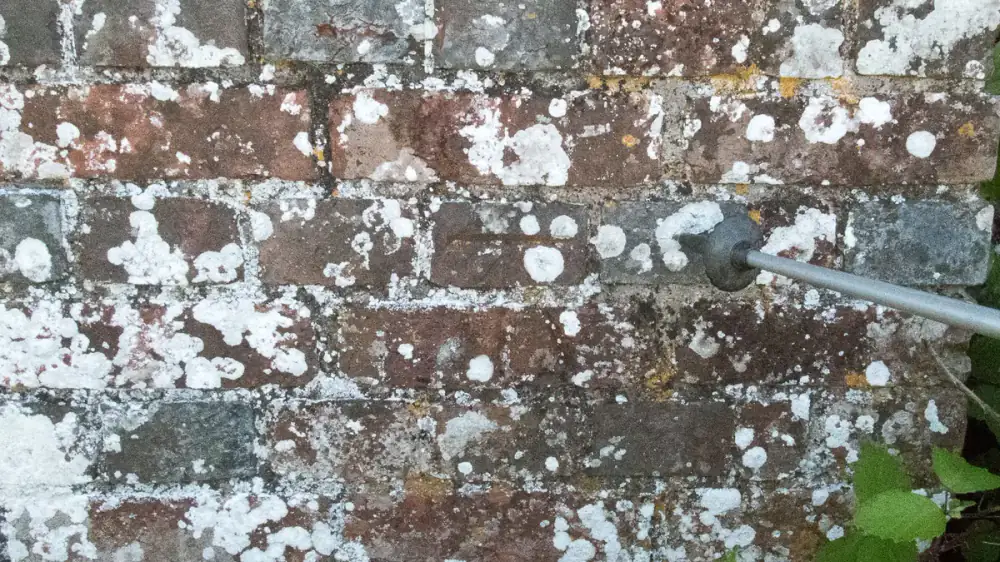
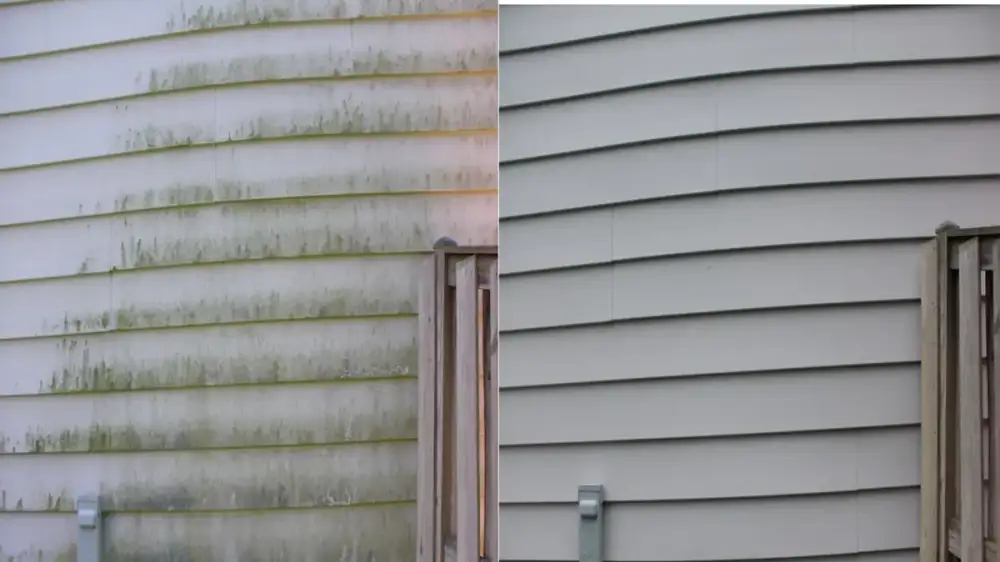
Algae and mildew are the sneaky ones, because they're alive. Paint over them and you've sealed living growth under the film, where it can keep going and push the paint off from beneath. They can't be buried; they have to be killed and removed. Treating them as growth — with an appropriate solution, the way removing algae from exterior walls describes — is the only prep that holds, because painting over the top just delays and hides the failure.
Chalking is the one people miss entirely. As older paint weathers, its surface breaks down into a fine, powdery residue — rub the siding and it comes off chalky on your hand. New paint will not bond to loose powder. If your palm comes away dusty, that chalk has to be washed off, or you're essentially painting onto talc.
Grease and oils, common near grills, garages, kitchen vents and at hand-height around doors, repel paint outright and need a degreasing clean, not just a rinse.
Match the method to the material
Here's where pre-paint cleaning goes wrong in the other direction. Determined to get the surface truly clean, people reach for maximum pressure — and create the exact problem they're trying to prevent.
High pressure on siding can crack panels, gouge wood and, worst of all before painting, drive water behind the siding into the wall assembly. That trapped moisture doesn't announce itself. It waits until there's a fresh coat of paint sealing the surface, then works its way out as blistering, bubbling and peeling — a paint failure that's really a moisture failure. Understanding how pressure washing can damage siding matters doubly here, because you're not just risking the siding; you're seeding a defect into the paint you're about to apply.
For most siding, a lower-pressure, solution-based wash is the better prep. It lifts dirt, growth and chalk without the force that opens seams and pushes water where it shouldn't go. The logic behind how soft washing works — chemistry doing the cleaning at low pressure — is well suited to prep, because it cleans thoroughly without compromising the wall you're about to coat. The material guides the method: a durable, sound surface tolerates more than an aged or delicate one, and something like vinyl siding has its own tolerances worth respecting before any wand comes out.
Then the hardest part: wait for it to dry
If washing is the prep step people skip, drying is the step people rush. Both matter, but drying may be the more common cause of failure, because it's invisible — a wall can feel dry to the touch while it's still holding moisture underneath.
Paint applied over damp siding is paint set up to fail. Trapped moisture can't escape through the fresh film, so it lifts the coating as blistering and peeling, and it undermines adhesion from the start. Porous surfaces hold water longer than smooth ones and need more time. The only reliable approach is to give the siding a genuine stretch of dry weather after washing, let it dry all the way through, and follow the paint manufacturer's guidance on surface conditions — they specify it for a reason.
This is where weather stops being a background detail and becomes part of the plan. The same conditions that make for good cleaning also make for good drying, so it's worth thinking about how weather affects cleaning results when you schedule the whole project. A mild, dry, breezy spell after the wash is what lets the surface reach the state paint actually needs.
Where to hand it off
Pre-paint prep raises the height question quickly, because most of a house isn't reachable from the ground. Second-story siding, gable ends and anything that needs a ladder or scaffold to clean properly is work where both the washing and the eventual painting carry real fall risk, and it's reasonable to bring in professionals for the parts that are high off the ground. The prep on those surfaces is no less important — it's just riskier to do yourself.
The prep sequence in brief
- Assess the surface — dirt, algae, mildew, chalking, grease. Rub a hand over it to check for chalk and growth.
- Choose the gentlest effective method, usually a low-pressure solution wash, matched to the material.
- Kill and remove organic growth rather than painting over it.
- Rinse thoroughly, so no cleaning residue is left to interfere with adhesion.
- Let it dry completely, through and through, in a dry spell, per the paint maker's guidance.
- Then paint.
The paint job everyone remembers is the one that still looks good five or six years on. That result is bought almost entirely in the days before the first coat — in a clean, sound, dry surface that gives the paint something real to hold onto. The color is what you see. The wash is why it stays.
Questions homeowners ask
Do I really have to wash siding before painting?
Yes, if you want the paint to last. Paint bonds to the surface, not to whatever is sitting on it — dirt, algae, mildew, chalky residue and grease all become a weak layer between the paint and the wall. Skipping the wash is the single most common reason a fresh paint job peels or flakes early.
How long should siding dry after washing before I paint?
Long enough to be thoroughly dry all the way through, not just to the touch — this usually means giving it a proper stretch of dry weather, and porous surfaces need longer than smooth ones. Painting over trapped moisture leads to blistering and adhesion failure, so err on the side of waiting and follow the paint manufacturer's guidance.
What is chalking, and why does it matter for paint?
Chalking is the fine, powdery residue older paint leaves as its surface breaks down — rub the siding and it comes off on your hand. Paint won't bond to that powder, so it has to be washed off first. If your hand comes away dusty, the surface needs cleaning before any new coat goes on.
Can I pressure wash siding to prep it for paint?
Cautiously, and often it's the wrong tool. High pressure can crack panels, gouge wood and drive water behind siding, where trapped moisture later wrecks the paint you're about to apply. A lower-pressure, solution-based clean usually prepares the surface better without the water-intrusion risk. Match the method to the material.
Should I clean off algae and mildew, or will the paint cover it?
Clean it off, and treat it as living growth rather than a stain to bury. Painting over algae or mildew traps it under the film, where it can keep growing and push the paint off from beneath. It needs to be killed and removed with an appropriate cleaning solution first, not sealed in.
Related guides

Pressure Washing vs Soft Washing
One relies on force, the other on cleaning solution at low pressure. Matching the method to the surface is what protects siding, roofs and trim.
How to Remove Algae from Exterior Walls
That green film is a moisture problem, not just dirt. Here's why gentle cleaning beats blasting, how to protect plants and windows, and how to stop it coming back.
Can Pressure Washing Damage Siding?
The same force that strips dirt can crack panels, peel paint and push water into the wall. Here's how siding gets damaged — and the safer way to clean it.