How to Clean Vinyl Siding Safely
Vinyl siding cleans up beautifully with gentle methods — and gets damaged fast with aggressive ones. The trick is keeping water on the panels, not behind them.
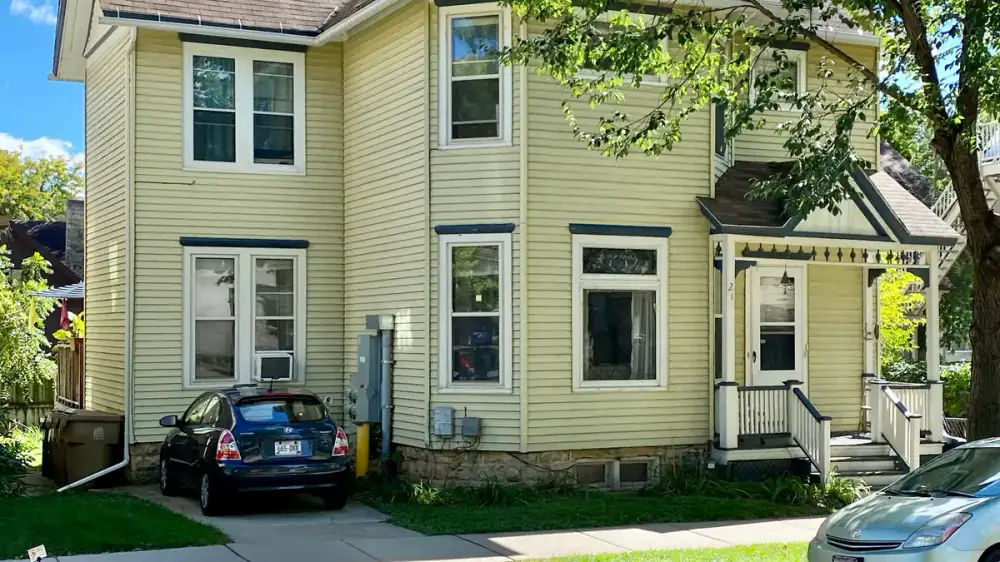
Clean vinyl siding with gentle, low-pressure methods and an appropriate cleaning solution, not high-force pressure washing. The biggest risk isn't cracking a panel — it's forcing water up behind the overlapping panels, where it can reach the wall. Apply cleaner from the bottom up, keep the stream aimed straight on or slightly downward, and rinse from the top down to avoid streaks.
To clean vinyl siding well, it helps to spend a moment on how it's built. The panels overlap like clapboards: the lower edge of each course hangs over the top of the one below. That geometry is brilliant at shedding rain — water running down the wall slides harmlessly over each lap and away. But flip the direction, and the same geometry works against you. Water aimed upward slips under those laps and gets in behind the siding. Almost everything worth knowing about cleaning vinyl safely follows from that one fact, so it's worth keeping front of mind the entire time you work.
Chemistry does the cleaning; force does the damage
Vinyl responds beautifully to a cleaning solution and poorly to raw force. The dirt, algae and mildew that dull the surface break down chemically, and a gentle rinse carries them off. There is simply no cleaning task on a vinyl wall that requires the concentrated force of a pressure washer — and reaching for one trades a job you can do safely for a set of risks you didn't need to take on. That's why vinyl is a textbook soft washing surface: low pressure plus the right solution cleans it thoroughly while keeping water on the panels, where it belongs.
Cracking or denting a panel with too much force is possible, but it isn't the failure that should worry you most. The more common and more consequential problem is water intrusion. Because the panels overlap, a stream angled upward — exactly what happens when you're cleaning a high wall from below — pushes water up behind the siding, where it can reach the housewrap, sheathing and wall cavity. There it lingers out of sight and can seed the kind of slow moisture damage that only announces itself months later, long after you've forgotten the afternoon that caused it. It's also a reason to think about what's above and below the wall: overflowing gutters and damp roof edges add to a wall's moisture load, so keeping your gutters clear is part of keeping siding healthy in the first place.
The safe routine is not complicated, and its logic is entirely about direction and timing. Rinse loose dirt off first with a gentle stream. Apply your cleaning solution working from the bottom of the wall upward — starting low keeps the cleaner from running down over dry panels and streaking them. Let it dwell long enough to break down growth, but never long enough to dry on the surface. Then rinse from the top down, keeping the stream aimed straight on or tilted slightly downward so it never drives up into the seams. Work in sections small enough that no area dries before you rinse it, and keep the pressure low throughout — if you're using any powered equipment at all, fit a wide-angle tip and keep your distance. The job is to apply and rinse, not to blast.
Green growth, streaks, and the plants below
Two cosmetic frustrations account for most complaints after a wash, and both have straightforward causes.
The green film and dark speckling that appear on siding — heaviest on shaded, north-facing and tree-covered walls — are living organic growth, not just dirt, and that changes what works. Plain water or plain force strips the visible layer and leaves the growth behind, so it's back within a season. Treating it as a chemistry problem is what actually holds: an appropriate cleaner addresses the organism itself, and the same low-pressure methods used to remove algae from exterior walls apply directly to vinyl. If growth keeps returning fast, the culprit is usually persistent moisture and shade, not a cleaning failure.
Streaking, meanwhile, is almost never about the cleaner — it's about timing and technique. Apply bottom to top, rinse top to bottom. Keep the surface wet and don't let cleaner dry before you rinse it. Avoid working in direct sun on hot panels, which dries solution too fast to rinse cleanly. And rinse thoroughly, so no residue is left to dry into a line. Don't forget the living things at the base of the wall, either: cleaning solutions can scorch shrubs and grass, so wet down the plants and soil before you start and rinse them again afterward to dilute any runoff.
| Do | Don't |
|---|---|
| Use low pressure and an appropriate cleaner | Use a high-pressure jet on the panels |
| Aim the stream straight on or slightly down | Aim water upward into the seams |
| Apply cleaner from the bottom up | Let cleaner dry on the surface |
| Rinse from the top down | Rinse unevenly or skip sections |
| Wet and protect nearby plants | Ignore landscaping below the wall |
| Test a small area first | Assume every cleaner is safe on every finish |
| Leave high walls to a pro | Overreach from a ladder to hit upper stories |
Reading the wall — and knowing your limit
Cleaning is also a chance to notice what the wall is telling you. Water sheeting behind the panels or seeping from the seams as you rinse means you're aiming too high — adjust before you do any more of it. Cracked, dented or loosened panels point to too much force somewhere along the way. Green or black staining that returns within weeks, soft or musty spots around the wall, and peeling paint or stains on nearby trim and soffits all suggest moisture may already be getting behind the siding and sharing a source. None of those are cleaned away; they're diagnosed.
The clearest limit, though, is height. Ground-floor walls are well within reach of a careful homeowner. Second stories and anything genuinely off the ground are a different matter — not only because ladders and falls are dangerous, but because reaching an upper wall from a ladder is precisely what forces you to aim water upward into the seams, the single most common way water ends up behind the panels. That combination is why upper stories are worth hiring out, along with any wall where you suspect water has already gotten behind the siding and want it assessed rather than just cleaned, or where heavy growth calls for cleaning solutions handled and contained responsibly. If finishing the job means overreaching from a ladder, that's the moment cleaning stops being maintenance and starts being a risk not worth taking.
Questions people also ask
Can I pressure wash vinyl siding?
It's generally not recommended. High pressure can crack panels, and — more commonly — it drives water up behind the overlapping panels where it can reach the wall assembly. Vinyl siding is usually cleaned with low-pressure or soft washing methods instead, which clean thoroughly without the risk.
What's the best way to clean green algae off vinyl?
Green algae is a living growth, so it needs a cleaning solution rather than plain force. A gentle, low-pressure approach with an appropriate cleaner treats the growth itself, while blasting it only removes the visible layer and lets it return. Work from the bottom up, then rinse from the top down.
Why does my vinyl siding streak when I clean it?
Streaking usually comes from cleaner drying on the surface before it's rinsed, or from rinsing unevenly. Working in sections, keeping the surface wet, avoiding direct sun on the panels you're cleaning, and rinsing thoroughly from the top down all help prevent streaks.
Which direction should I clean and rinse vinyl siding?
A common approach is to apply cleaner from the bottom up to avoid streaking, let it work, then rinse from the top down so dirt runs off cleanly. Keep water aimed slightly downward or straight on, never upward into the seams where panels overlap.
How often should vinyl siding be cleaned?
It varies with climate, shade and tree cover. Homes in damp or shaded spots may need it yearly to keep algae and mildew in check, while others go longer. Watch the shaded and north-facing walls, which tend to green up first.
Should I hire a professional to clean my siding?
Upper stories, second-floor walls and hard-to-reach areas are worth hiring out, both for safety and because reaching them from a ladder invites aiming water upward into the seams. Ground-floor walls are often manageable for careful homeowners.
Related reading

Pressure Washing vs Soft Washing
One relies on force, the other on cleaning solution at low pressure. Matching the method to the surface is what protects siding, roofs and trim.
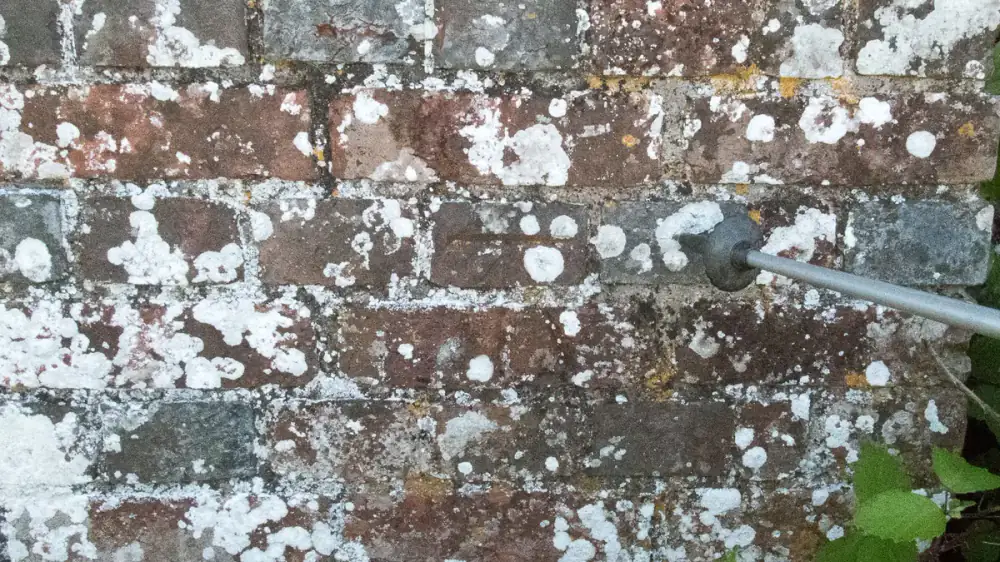
How to Remove Algae from Exterior Walls
That green film is a moisture problem, not just dirt. Here's why gentle cleaning beats blasting, how to protect plants and windows, and how to stop it coming back.
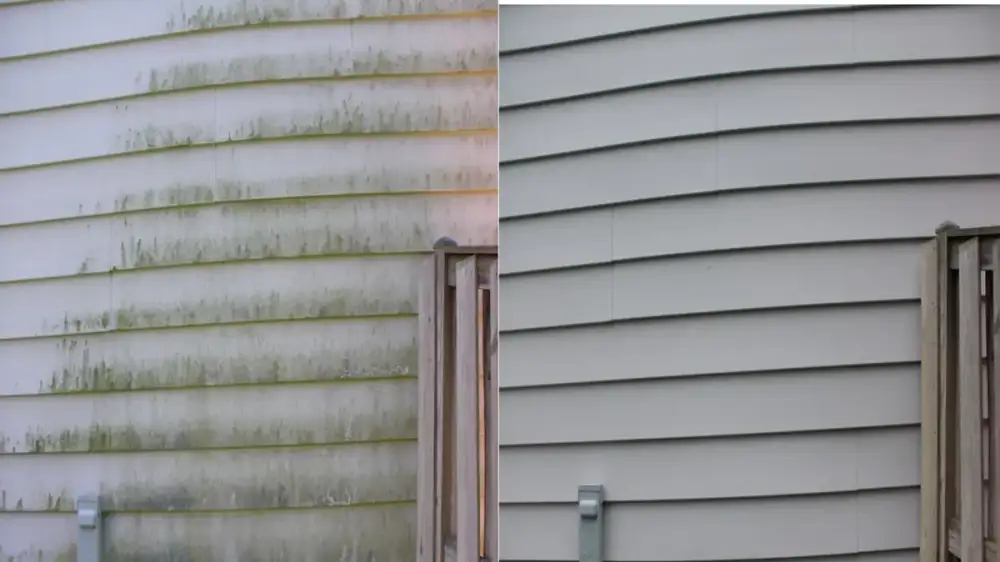
Can Pressure Washing Damage Siding?
The same force that strips dirt can crack panels, peel paint and push water into the wall. Here's how siding gets damaged — and the safer way to clean it.