What a Pressure Washer Nozzle Color Means
Those little color-coded tips aren't a suggestion. Each one changes what your pressure washer does to a surface — and one of them has no business near a house at all.
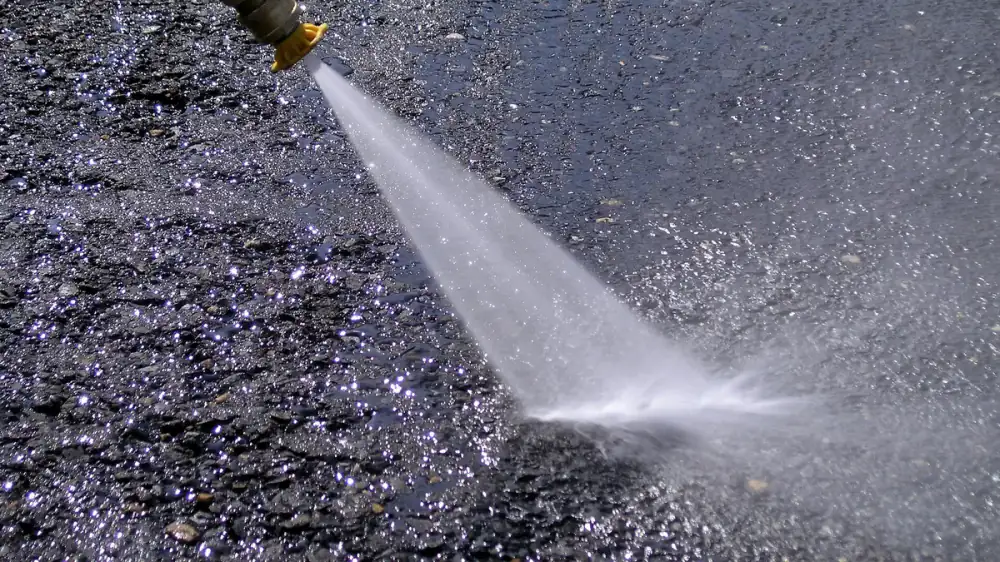
Pressure washer nozzle colors are a code for spray angle — how wide the water fans out. The standard set: red is a zero-degree pinpoint (most concentrated and dangerous), yellow a narrow fan, green a medium fan, white a wide fan (gentlest of the cleaning tips), and black the widest, lowest-pressure soap tip. Narrower means more force in a smaller spot. For a house, start with the widest tip that works and avoid the red zero-degree tip entirely.
Almost every pressure washer ships with a little set of color-coded nozzle tips, and almost everyone treats them as interchangeable — grab whichever, snap it on, start spraying. That's a mistake, because those colors aren't decoration or a difficulty setting. Each one fundamentally changes what the machine does when the water hits a surface, and the difference between two of them can be the difference between a clean driveway and a gouged one.
The good news is that the code is simple and consistent, and once you understand what it's telling you, choosing the right tip becomes obvious. The better news is that for cleaning a house, most of the tips you want to avoid are easy to identify by color and leave in the box.
The color code is really an angle code
Here's the single idea that unlocks all of it: the color tells you the spray angle — how wide a fan the water comes out in. That's it. The same machine, pushing the same amount of water, spreads that water across a wide arc with one tip and concentrates it into a fine point with another.
And that changes everything, because force spread over a wide fan is diffuse and gentle, while the same force squeezed into a pinpoint is concentrated and aggressive. Think of it like the difference between pushing on a surface with your open palm versus the tip of a pencil — same push, wildly different effect. The nozzle isn't changing how hard the machine works; it's changing how tightly that work lands.
The common tips, from most concentrated to gentlest:
- Red — zero degrees. A single, pinpoint jet. All the force in the smallest possible area. The most aggressive and the most dangerous tip in the set.
- Yellow — a narrow fan. Still concentrated, still capable of stripping and gouging, useful mainly on tough, durable surfaces.
- Green — a medium fan. A middle ground; a reasonable general-purpose tip for hard surfaces, used with care.
- White — a wide fan. The gentlest of the cleaning tips, spreading the force out enough to be far kinder to most surfaces.
- Black — the widest, lowest pressure. The soap tip: its very wide angle drops the pressure and, on many machines, draws detergent into the stream.
Wider is (almost always) safer on a house
Once you see the tips as an angle scale, the guidance for cleaning a home writes itself: start with the widest tip that gets the job done, and only step narrower if you genuinely have to. Wider angles spread the force so it's much less likely to gouge wood, crack a panel, strip a finish or drive water behind siding — the same catalog of harm covered in how pressure washing can damage siding, most of which traces back to too much concentrated force in one spot.
That means the white tip is your default for gentle surface cleaning, the green tip is a step up in aggression for hard, durable surfaces used carefully, and the black tip is what you reach for to lay down cleaning solution. Whenever you do go narrower, test in an inconspicuous spot first and keep some distance — even a modest tip held too close acts far more aggressively than the same tip at a sensible standoff.
The red tip: mostly a tool to leave alone
The zero-degree red tip deserves its own warning, because it's the one most associated with both surface damage and personal injury. It concentrates the entire output into a single point, which is precisely why it can etch concrete, gouge wood, split siding and cause serious injury to you or a bystander in an instant. For general home exterior cleaning, there is almost no legitimate reason to use it. The honest advice is to leave it off the wand entirely — the risk vastly outweighs any speed it offers on the surfaces around a typical house.
The black tip is where soft washing begins
It's worth lingering on the black soap tip, because it reframes what a pressure washer is for. Its whole purpose is low pressure — a wide angle that gentles the stream right down and lets you apply a cleaning solution to a surface. That's the moment a pressure washer stops being a force tool and starts being an applicator.
This matters because so much effective exterior cleaning isn't about force at all. The reason soft washing works is that the cleaning power comes from the solution, not the pressure, and the black tip is often how that solution goes on. If you find yourself reaching for narrower and narrower tips to blast growth off a wall, that's usually a sign the job actually wants the black tip and a good solution instead — chemistry and dwell time doing what force was failing to do.
The nozzle is only half the decision
Choosing a tip is not a substitute for choosing whether high pressure belongs on the surface at all. Plenty of materials shouldn't meet a pressure washer regardless of which tip is fitted — the list of surfaces that should not be pressure washed doesn't get shorter just because you switched to a wide fan. The tip controls how concentrated the force is; it doesn't make a fragile surface durable.
So the real sequence is: first decide whether the surface should see pressure at all, then, if it should, pick the widest tip that will do the work. That second decision is downstream of the broader choice between pressure washing and soft washing — get that right, and the nozzle question often becomes "the wide one" or "the soap one" by default.
A quick working guide
- Red (0°): avoid on home exteriors — too concentrated, too dangerous.
- Yellow (narrow): tough, durable surfaces only, with care.
- Green (medium): general hard-surface cleaning, used cautiously.
- White (wide): the gentle default for surface cleaning.
- Black (soap): applying cleaning solution at low pressure.
The tips look like an accessory. They're really a control dial for how much your machine can help or hurt a surface. Read the color as an angle, default to wide, respect the surface underneath, and the most dangerous tip in the set stays exactly where it belongs — unused.
Questions homeowners ask
What do the pressure washer nozzle colors mean?
Color signals spray angle — how wide a fan the water comes out in. The common set is red for a zero-degree pinpoint, yellow for a narrow fan, green for a medium fan, white for a wide fan, and black for the widest, lowest-pressure soap tip. Narrower fans concentrate force into a smaller area; wider fans spread it out and are gentler on surfaces.
Which nozzle is safest for washing my house?
The wider ones — white, and green with care — plus the black soap tip for applying solution. Wider angles spread the force so it's less likely to gouge, strip or drive water behind materials. Start with the widest tip that does the job and only step narrower if you truly need to, testing in an inconspicuous spot first.
Is the red zero-degree nozzle ever appropriate on a house?
Practically never. The red tip concentrates all the force into a single point, which can gouge wood, crack siding, etch concrete and injure you or a bystander. It's the tip most associated with damage and injury. For general home exterior cleaning there's almost no reason to use it — leave it off.
What's the black nozzle for if it's the lowest pressure?
Applying detergent or cleaning solution. Its very wide angle drops the pressure and, on many machines, is what draws soap into the stream, letting you lay down a solution at low pressure so the chemistry can do the cleaning. It's the tip that turns a pressure washer into more of a soft-wash applicator.
Does the nozzle matter more than the machine's power rating?
The nozzle is a huge part of what actually reaches the surface, because it decides how concentrated that force is. The same machine is gentle with a wide tip and aggressive with a narrow one. Rather than chasing a single power number, focus on choosing the widest effective tip, keeping distance, and following the guidance for your machine and the surface.
Pressure Washing vs Soft Washing
One relies on force, the other on cleaning solution at low pressure. Matching the method to the surface is what protects siding, roofs and trim.
How to Remove Algae from Exterior Walls
That green film is a moisture problem, not just dirt. Here's why gentle cleaning beats blasting, how to protect plants and windows, and how to stop it coming back.
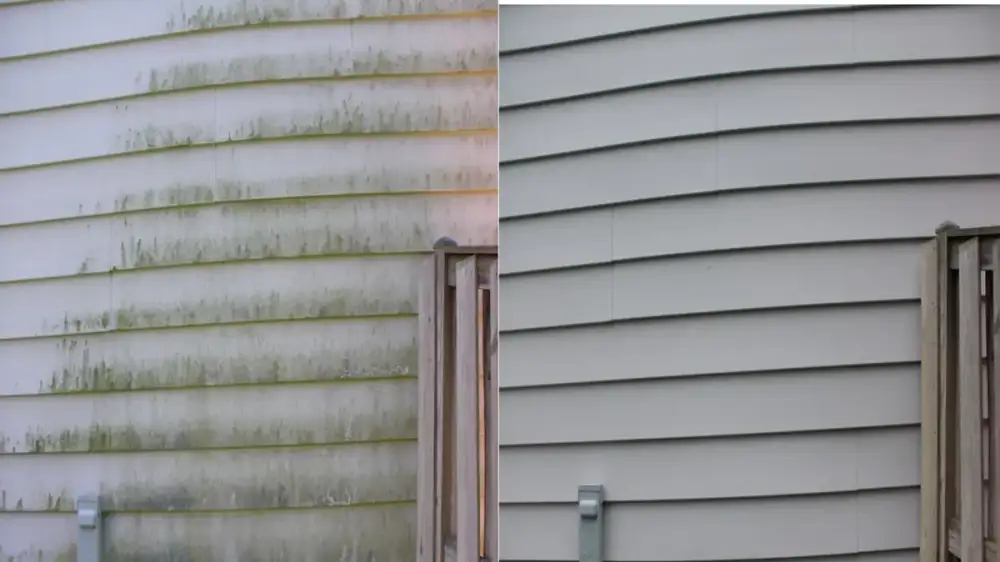
Can Pressure Washing Damage Siding?
The same force that strips dirt can crack panels, peel paint and push water into the wall. Here's how siding gets damaged — and the safer way to clean it.