DIY vs Professional: Exterior Work
The honest dividing line for exterior tasks is not skill but safety. Here is a framework for what to do yourself at ground level and what to hand off.
The split between doing exterior work yourself and hiring it out has almost nothing to do with how handy you are. It is a question of safety. A task you can finish with both feet on the ground is usually fair game for a homeowner; the moment it demands a roof, a real height, or equipment that can hurt you, it belongs to someone trained for it. The sweet spot for most people is doing all the ground-level inspection and prevention themselves and paying for the rest.
There is a whole culture, online and in the aisles of the hardware store, that frames home maintenance as a test of grit — as though hiring help were a small personal failure. It is a bad frame, and occasionally a dangerous one. The question that actually matters is not "am I capable of figuring this out?" but "can I do this without risking a serious fall?" Falls from ladders and roofs rank among the worst injuries in all of home maintenance, and there is no gutter clean, no stain, no bargain on labor that is worth one. This guide draws the line plainly, so you can throw yourself into the genuinely useful half and let the rest go without a second thought.
The whole framework in one sentence
If you carry away nothing else, carry this: the work worth doing yourself is the work you can do standing on the ground. That is not the consolation prize it sounds like. A startling amount of the most valuable maintenance on a house is ground-level work — watching the gutters run during a downpour, glassing the roof edge with binoculars, checking where the downspouts actually put their water. Those three habits alone tell you most of what you need to know about the health of the exterior, and not one of them needs a ladder.
Height is what flips the equation. A slip from a second story, a foot sliding on a wet roof, an overreach that tips a ladder — any of these can change a life. Once a task requires putting yourself up there, the money you would save by doing it yourself stops being a real number, because it is set against a cost you cannot afford.
Sorting the common jobs
Use the table below as a starting framework rather than gospel, and when a task sits on the fence, let it fall toward the professional column.
| Task | Where it falls | Why |
|---|---|---|
| Watching gutters during rain | DIY (ground) | No height; reveals most problems |
| Inspecting the roof edge with binoculars | DIY (ground) | Inspect from the ground |
| Checking downspout discharge | DIY (ground) | Simple, high-value check |
| Positioning downspout extensions | DIY (ground) | Downspout extensions are ground-level |
| Cleaning ground-level walls gently | DIY (ground) | Low risk with soft methods |
| Single-story gutter cleaning | Depends on access | Safe only with stable, level ladder footing |
| Second-story or steep-roof gutter cleaning | Professional | Serious fall risk |
| Any roof-surface work | Professional | Height, slope, fragile surfaces |
| Fascia, soffit or drip-edge repair | Professional | At height; structural |
| Pressure washing at height | Professional | Height plus recoil and damage risk |
| Chimney inspection and repair | Professional | Height and specialized knowledge |
Just how much falls on the safe side
It is easy to read a table like that and feel boxed in, so it is worth dwelling on how much genuinely useful work sits in the DIY rows. From the ground you can run the monthly exterior home checks and catch trouble while it is still small, watch your gutters behave and judge how often they really need cleaning, learn to spot the signs your gutters need repair before a failure, clean ground-level walls and hard surfaces with gentle methods (see pressure washing vs soft washing), and keep water moving away from the base of the house before it becomes pooling near the foundation. Do those consistently and you intercept the majority of exterior problems while they are still cheap — which is the entire point of maintenance.
What actually defines the professional side
The far side of the line is not defined by difficulty. It is defined by three specific things, and recognizing them is all the judgment you need.
The first is height — anything that puts you well off the ground, from second-story gutters to high roof edges, belongs to people equipped to work up there safely. The second is roofs, which deserve their own category: there is rarely a safe amateur route onto one, because slope, slick surfaces and fragile materials combine into a uniquely unforgiving place to lose your footing. The third is damaging equipment and structural repair — high-pressure washers that kick back, and any fix to fascia, flashing or structure, carry a double risk of hurting you and wrecking the very thing you meant to save. Whenever one of these three is in the room, the math is not close: the price of hiring is trivial beside the price of a fall or a botched repair.
The hybrid most homeowners should land on
None of this forces an all-or-nothing choice, and the smartest arrangement for most people is deliberately split down the middle. Do the ground-level inspection and prevention yourself; hire out the height and the repairs. You keep most of the savings, you keep your footing, and you gain a quieter benefit that pays off every time you pick up the phone: because you have been watching your own house closely, you can describe a problem accurately instead of guessing. When that day comes, how to evaluate an exterior contractor covers the questions worth asking and the warning signs worth heeding. Handing off the risky half is not a compromise — it is the correct answer to an honest safety question.
Questions people also ask
What exterior tasks are safe to do myself?
Anything you can do with both feet on the ground: watching gutters during rain, inspecting the roof edge with binoculars, checking downspout discharge, cleaning ground-level walls and hard surfaces gently, and positioning downspout extensions. These are low-risk and genuinely worth doing yourself.
When does a task cross into professional territory?
The moment it requires getting on the roof, working at a height where a fall would be serious, or using equipment that can cause damage or injury. Second-story work, steep or slick roofs, and anything involving structural repair belong to professionals regardless of how confident you feel.
Is ladder work DIY or professional?
It depends. A short step on stable, level ground to reach a single-story gutter can be reasonable for many people. Overreaching, working near power lines, leaning ladders against gutters, or climbing to a second story is where the risk outweighs the savings — that is professional territory.
What makes roof work so different?
Roofs combine height, slope and often slick or fragile surfaces, and a fall from one is among the most serious home-maintenance injuries. There is rarely a safe do-it-yourself way onto a roof, which is why this site keeps all roof tasks — inspection included where possible — at the professional end.
Can I save money by doing the safe parts and hiring out the rest?
Yes, and that is often the smartest approach. Doing the ground-level inspection and prevention yourself, then hiring a professional for the height and repair work, gives you most of the savings without the risk. It also means you know your home well enough to describe problems accurately.
How do I choose a professional once I decide to hire?
Look for references, proof of insurance and a written scope of work, and get more than one opinion. Requirements vary by location, so check your local rules. The companion guide to evaluating an exterior contractor walks through sensible questions and general red flags.
More from this section

Prioritizing Exterior Maintenance on a Budget
When funds are limited, spend where they prevent the most damage. Here is how to rank exterior tasks so a small budget does the most good.
Reading Exterior Warning Signs
Most exterior problems announce themselves early. Here is how to read the signs across the whole house and where each one points.
Exterior Maintenance for Coastal Homes
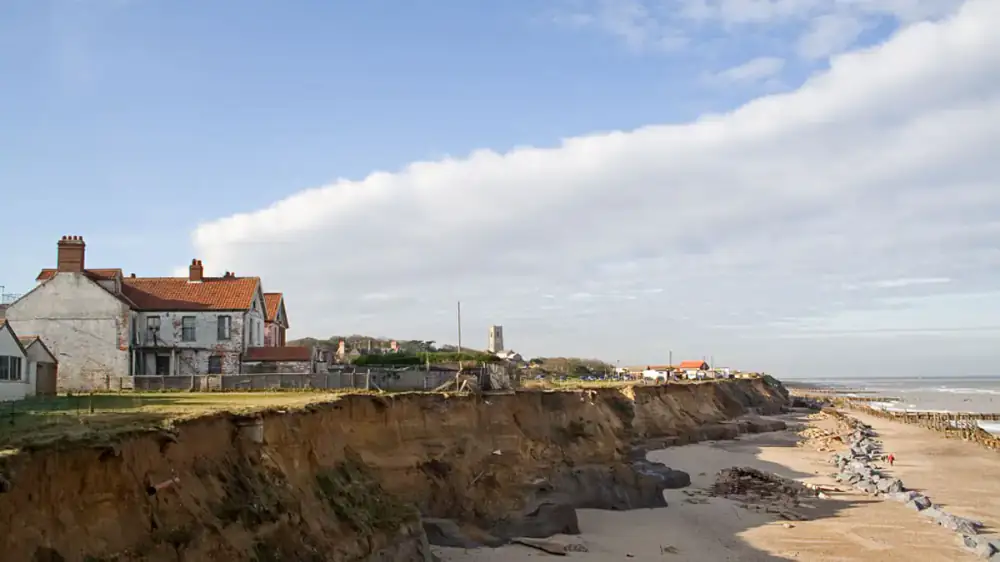
Salt air, corrosion and wind-driven rain make coastal homes their own category. Here is how to rinse, choose materials and check more often.