Gutter Guards and Bird Nesting
A gutter guard that seals the trough removes the open, sheltered channel birds nest in — but gaps, edges and downspouts still invite them. Here's the honest picture.
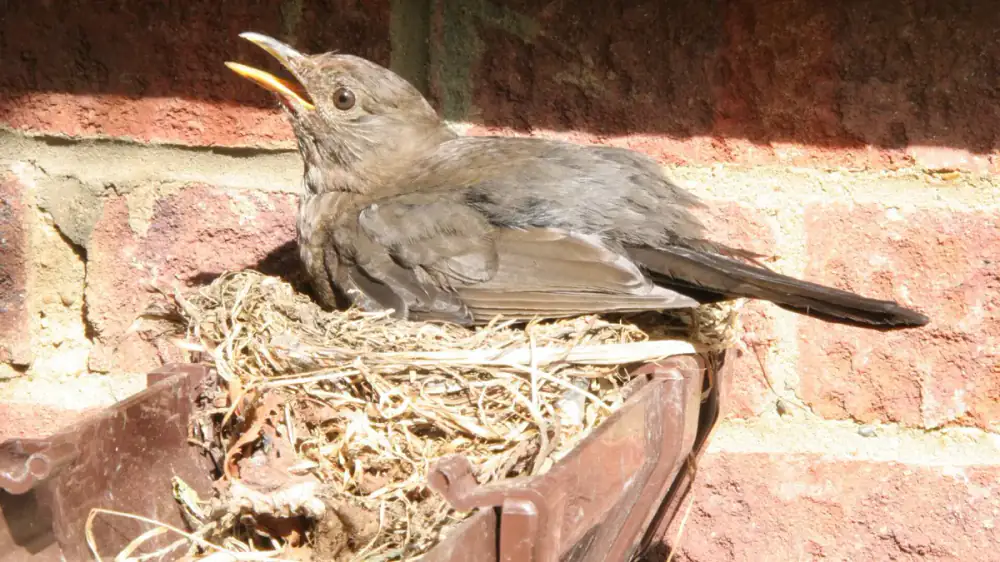
Gutter guards help deter bird nesting, but they don't guarantee it. Covering the trough removes the open, sheltered channel birds look for, so a well-fitted solid or fine-mesh guard makes the gutter far less attractive. The catches: birds can still use gaps at the ends, under eaves, and behind downspouts, and a guard matted with debris can become a nesting platform itself. And whatever you do, take a humane approach — never disturb an active nest, which may be legally protected. The best result is prevention: guard before nesting starts, and keep the surface clear.
There are really two questions tangled together here, and they have different answers. One is a design question — can a guard make your gutter a worse place to raise a brood? The other is a timing-and-conscience question — what do you do if a bird has already moved in? A guard can help enormously with the first. It has almost nothing to say about the second, which turns out to be the part that matters most.
We don't sell guards, so treat this as an honest read on how covering the trough changes a bird's decision, where that logic breaks down, and how to behave if you're already too late for prevention.
What a bird sees in an uncovered gutter
To a nesting bird, an open gutter is close to purpose-built accommodation. It offers three things at once: shelter under the overhang, protected from weather and from predators looking down; a long, firm channel that cradles a nest and keeps it from tumbling; and, conveniently, a supply of the leaves and twigs a nest is made from, already delivered and collecting in the trough. Add the standing water and soft, rotting debris of a neglected gutter and the appeal only grows — for birds and for the insects and rodents that keep them company. Our guide to birds nesting in the gutters walks through why it happens and the mess it leaves behind.
Understanding that list of attractions tells you exactly what a guard has to take away.
Closing the channel is what does the work
The whole deterrent effect of a guard comes down to a single change: cover the trough and the open channel stops existing. No accessible gap, no loose building material sitting inside, no sheltered ledge to build on. A bird arriving to scout the roofline simply finds a closed surface instead of an invitation, and moves along.
How completely a guard achieves that varies by type. Solid covers and fine micro-mesh close the trough entirely, which is why they deter best — there's nothing left to exploit. Micro-mesh does double duty, because it also keeps the wet debris out that draws pests in the first place; our explainer on how gutter guards work covers why a sealed surface changes the whole equation. Coarse screens and loose drop-in designs are weaker: their wide openings still let a determined bird through, or give it something to perch and build on top of. The tighter the closure, the less there is to work with.
The key word in all of this is before. A guard's real strength is preventing a bird from ever choosing your gutter — which means the value is in fitting one during a quiet stretch, not scrambling to install one in spring when the birds have already arrived.
Where the deterrent leaks
Balance means admitting a guard doesn't seal a whole house. A roofline has openings a gutter guard never reaches, and birds are patient about finding them:
- Ends and corners of a poorly fitted guard, where a small gap is all it takes.
- Under the eaves and behind downspouts, beyond where the guard covers.
- On top of the guard itself when leaves and twigs mat across the surface and turn it into a ready-made platform in a sheltered corner.
- At lifted or damaged sections where the guard has pulled away from the trough and reopened the channel.
That third point is worth dwelling on: a neglected guard can actively supply nesting material on its own surface, undoing much of what it was fitted to do. The takeaway is plain — a well-fitted guard that gets cleared periodically deters far more reliably than a loose or forgotten one. No guard removes that upkeep entirely; a good one just shrinks it.
You can usually spot birds treating your gutters as real estate from the ground: repeated chirping and activity along the roof edge in spring, straw or twigs poking out of the trough or from behind a downspout, droppings streaking the fascia below one section, or a single spot that keeps overflowing where a nest is blocking flow.
Matching the guard to the deterrent you want
| Guard type | Trough coverage | Deterrent strength | Why |
|---|---|---|---|
| Solid cover | Full | Strong | No open channel at all |
| Micro-mesh | Full | Strong | Seals the trough and keeps debris out |
| Fine screen | Most | Moderate | Small gaps remain possible |
| Coarse screen | Partial | Weak | Birds pass through or perch on top |
| Drop-in / wide gap | Loose | Weak | Access left at edges and openings |
The pattern is consistent with everything above: the more completely a guard shuts the trough, the harder it is for a bird to make use of it.
If a bird got there first, timing decides everything
This is the part no product spec addresses. If there's already an active nest — eggs or chicks present — the guard question is on hold, full stop. Many wild birds are legally protected, and both the ethical and often the lawful course is to leave an active nest alone until it empties on its own. Do not remove it, do not seal it in, and do not fit a guard over a trough a bird is currently using. If you can't tell whether a nest is active, or whether the species is protected where you live, get advice before you touch anything.
Once the nest is genuinely vacant, the sequence is straightforward: clear the debris, check that the trough underneath is sound, and then consider a guard to discourage a repeat next season. Fitted at that point, a guard is one of the kindest deterrents available — it quietly makes the space unappealing so birds choose elsewhere, rather than displacing or harming them mid-brood. Prevention, timed outside the nesting season, is gentler than any removal.
There's a safety dimension folded into all of this too. Anything that involves the roof edge — inspecting for a nest, clearing a matted surface, fitting a guard on an upper story or a steep pitch — is height work, and a nest is never worth a fall. If the gutters are high, the roof is steep, or you can't reach a section from a stable position, that's the point to bring in help. A wildlife or pest specialist can advise on an active or protected nest and local rules; a gutter professional can confirm the trough is sound, fit a guard that closes the gaps birds exploit, and time the work outside nesting. If you're still weighing whether the deterrent is worth the outlay, our look at whether gutter guards are worth it sets it in context.
So: does a guard stop birds nesting? A well-fitted, well-kept one is a genuinely strong deterrent, because it erases the open channel that makes a bare gutter so tempting. Just go in with clear eyes — gaps and edges remain, a matted surface undoes the benefit, and any nest already in place deserves patience rather than a ladder. Guard ahead of the season, keep the top clear, and your gutters become a much less inviting address.
Questions people also ask
Do gutter guards stop birds from nesting in gutters?
They help significantly but don't guarantee it. A guard that covers the trough removes the open, sheltered channel birds look for, so a well-fitted solid or micro-mesh guard makes the gutter far less attractive for nesting. But birds are resourceful — gaps at the ends, under eaves, behind downspouts, or on top of a debris-covered guard can still offer a spot. Covering the trough is a strong deterrent, not a sealed guarantee.
Which gutter guards deter nesting best?
Solid and fine-mesh guards that fully cover the trough deter nesting best, because they leave no open channel and no easy access to the space birds want. Coarse screens and drop-in designs with wide openings or gaps are weaker deterrents, since determined birds can still get through or nest on top. The tighter and more completely a guard closes the trough, the less inviting the gutter becomes.
Can birds still nest on top of gutter guards?
Yes, if debris builds up on the surface. A guard covered in leaves and twigs can become a platform a bird will use, especially in a sheltered corner. This is one more reason the surface still needs clearing — no guard eliminates that upkeep. A clean guard surface is far less attractive than one matted with the very nesting material birds are looking for.
What should I do if birds are already nesting in my gutter?
Take a humane approach and don't disturb an active nest with eggs or chicks — many birds are legally protected, and the right course is to wait until the nest is naturally empty. Once it's vacant, the debris can be cleared and the gutter checked, and that's the time to consider a guard to discourage a repeat. If you're unsure whether a nest is active or protected, get advice before touching it.
Are gutter guards a humane way to deter birds?
Yes — done right, they're among the most humane options, because they simply make the space unattractive rather than harming birds. A guard removes the sheltered channel before nesting starts, so birds look elsewhere naturally. The humane part is timing: install or work on guards outside active nesting, and never seal in or disturb a nest already in use. Prevention beats removal for both you and the birds.
Do gutter guards keep other pests out too?
Covering the trough and keeping it free of wet debris does reduce the standing water and nesting material that attract many pests, not just birds. A guard that keeps the gutter clearer gives insects, rodents and birds less to work with. It's not pest-proofing — gaps and surface debris still offer footholds — but a well-kept guard makes the gutter a much less inviting home overall.
Related reading
Common Gutter Guard Problems
Guards solve some problems and create others. Here are the most common gutter guard issues — overflow, surface debris, ice, poor fit — and how to spot them.

Micro-Mesh vs Screen Gutter Guards
Both block leaves, but only one stops fine grit and pine needles. Here's how micro-mesh and screen guards compare on debris, upkeep and fit.
Do Gutter Guards Eliminate Cleaning?
The honest answer is no. Guards cut how often you clean, not the need entirely. Here's what still gets in and why checks still matter.